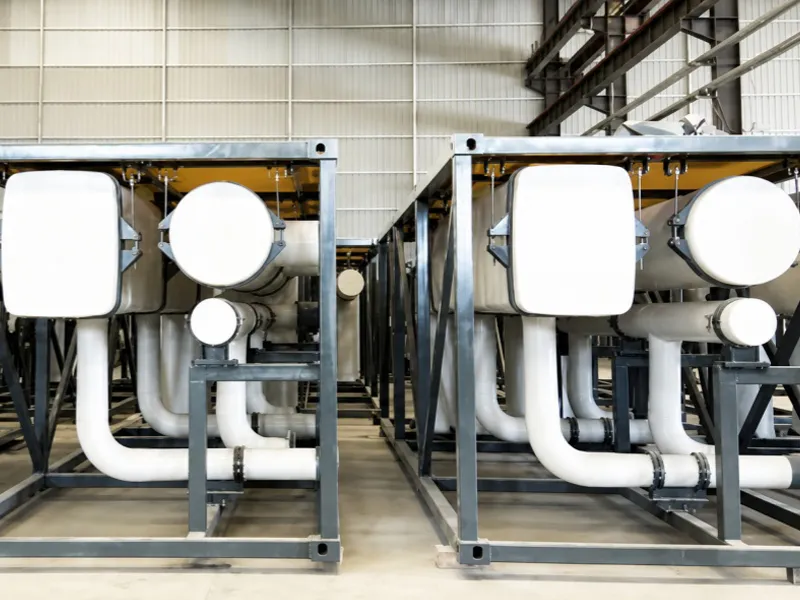
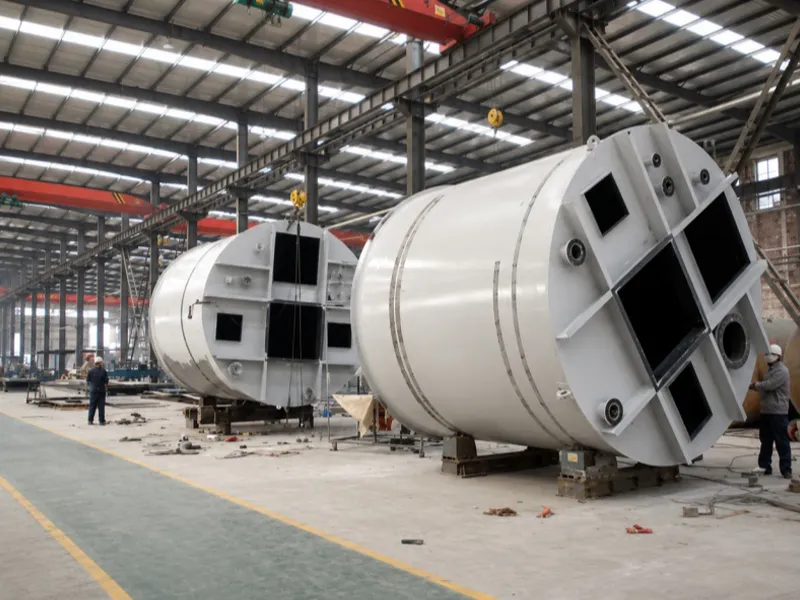
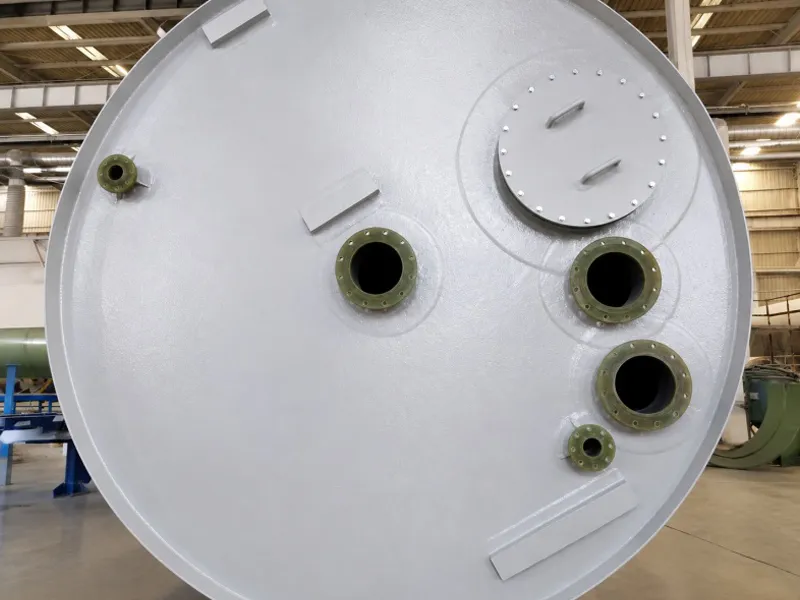
This project serves an industrial off-gas treatment system for a copper-processing company in Kazakhstan. Material transfer, reagent preparation and hydrometallurgical operations in the production area generate exhaust gas containing fine particulates, moisture and corrosive components. The gas must therefore be enclosed, collected, treated by wet scrubbing and then discharged through a centralized exhaust system.
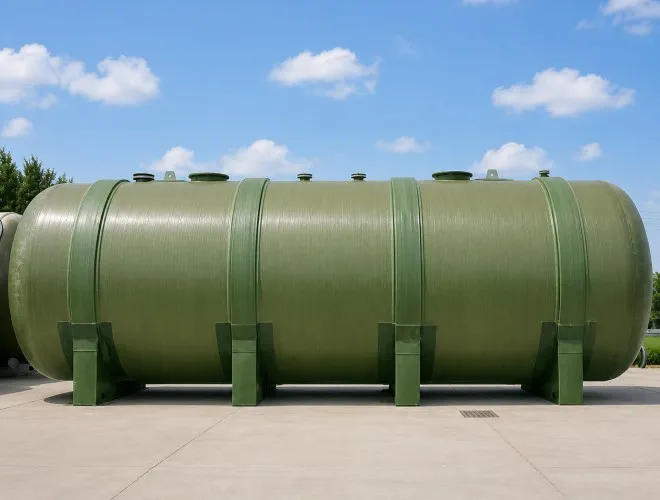
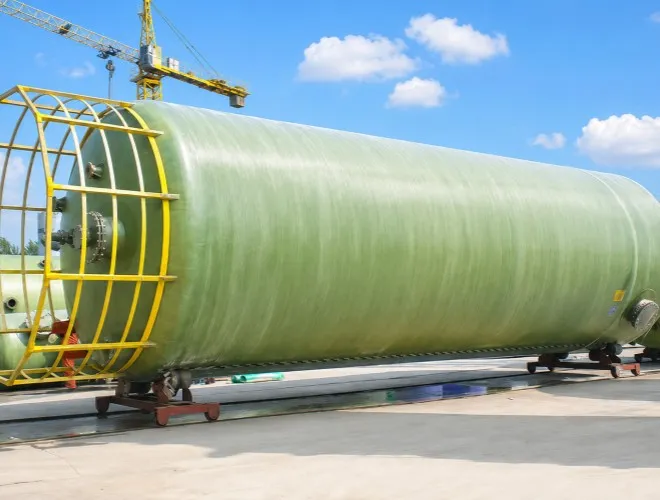
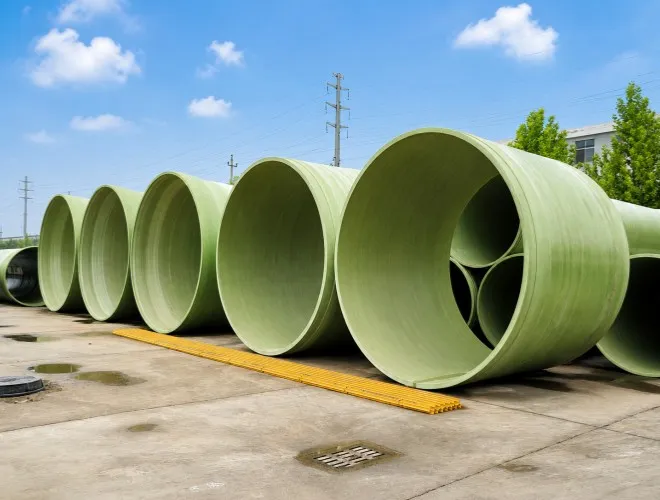
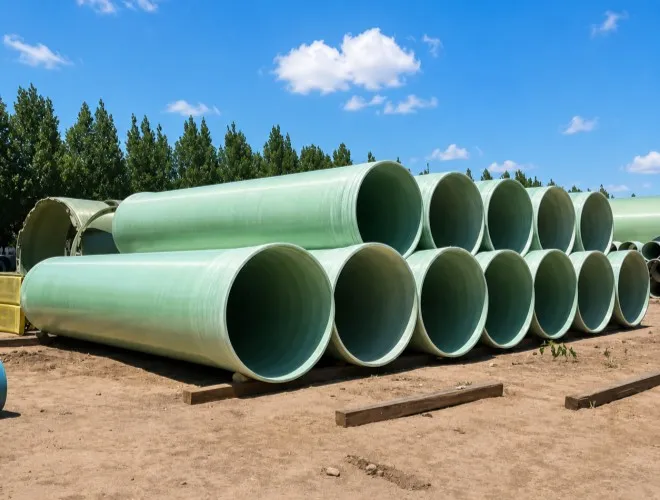
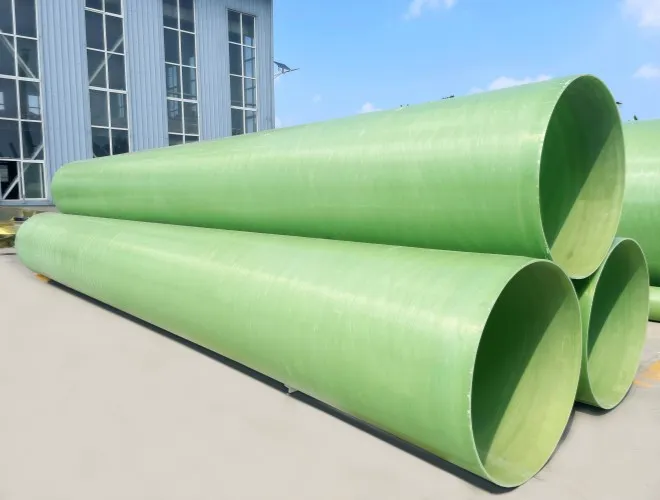
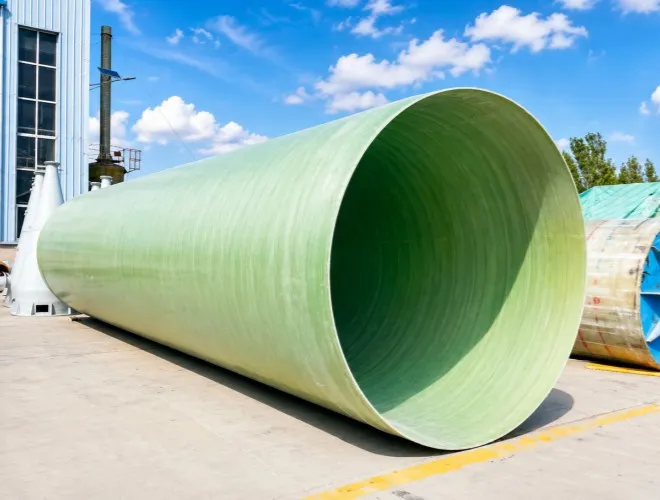
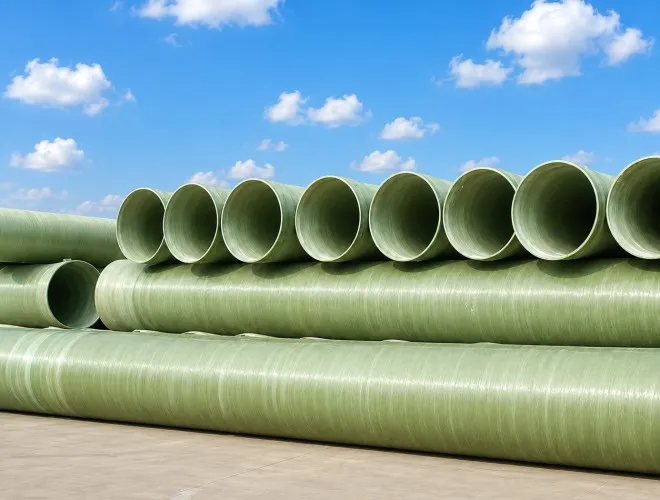
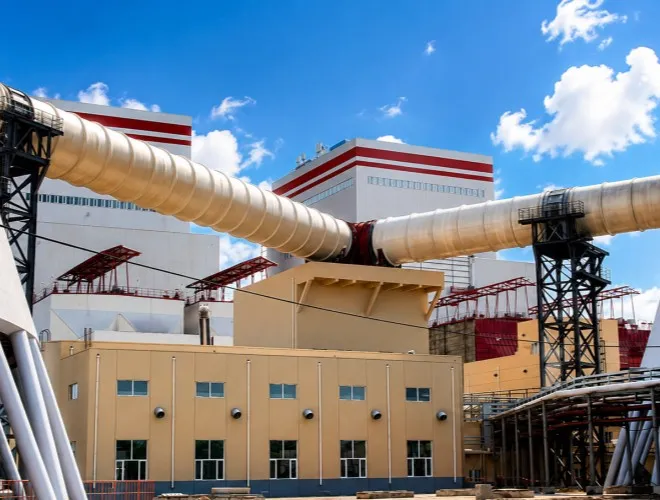
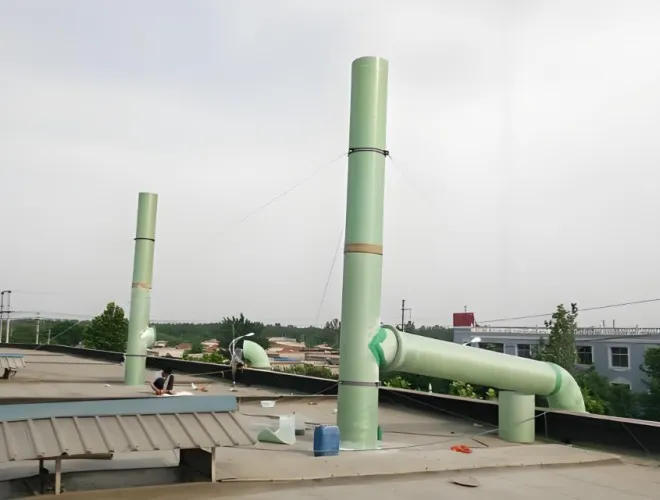
Yingnai supplied FRP scrubber exhaust ducts, air-collection ducts for the process area and a complete steel support system. The equipment was installed between the emission collection points, wet scrubber, induced-draft fan and exhaust stack, providing gas conveyance, equipment connection and structural support for the ductwork.
Based on the required airflow, plant layout and equipment interface conditions, the project adopted the following desensitized engineering configuration:
System design airflow of approximately 55,000 m³/h
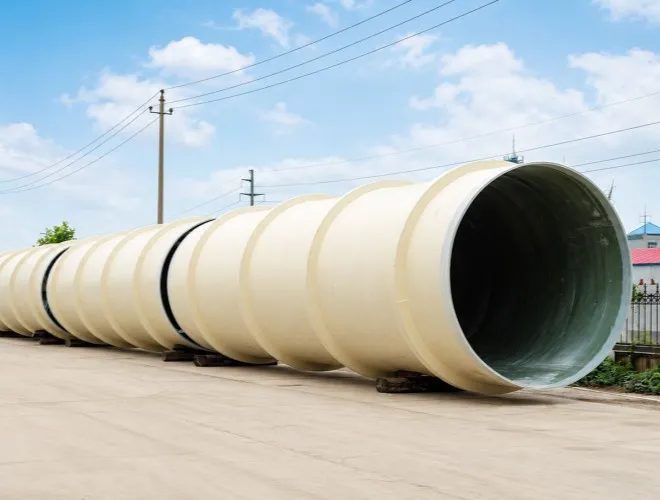
FRP main exhaust duct diameter of approximately 1,600 mm at the scrubber outlet
Total main exhaust duct length of approximately 32 m
Process air-collection duct diameters ranging from approximately 800 to 1,200 mm
Total branch and connection duct length of approximately 26 m
FRP duct design wall thickness of approximately 10 to 14 mm
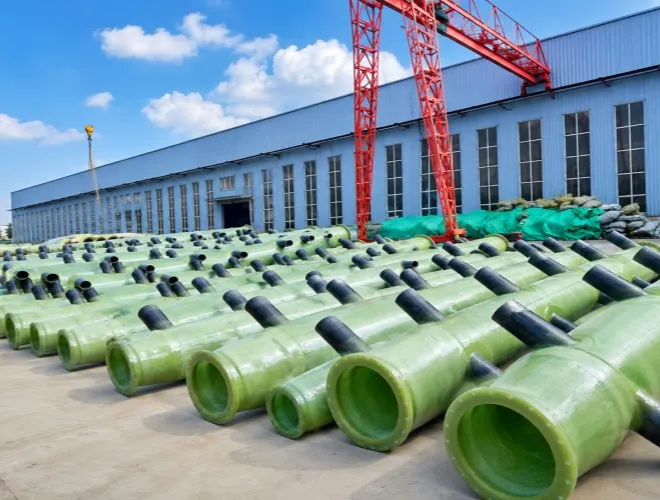
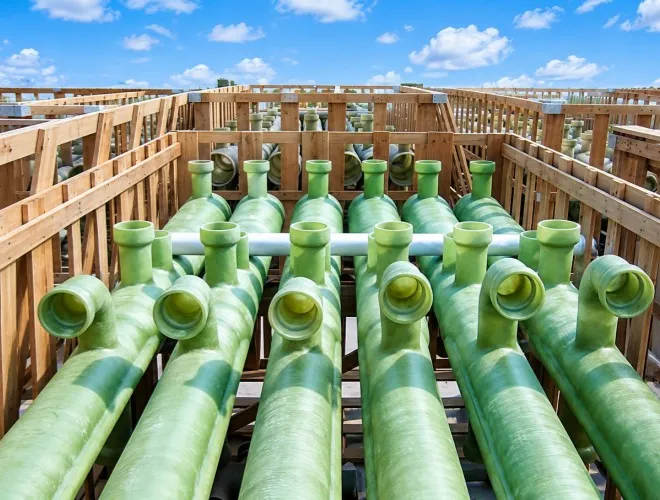
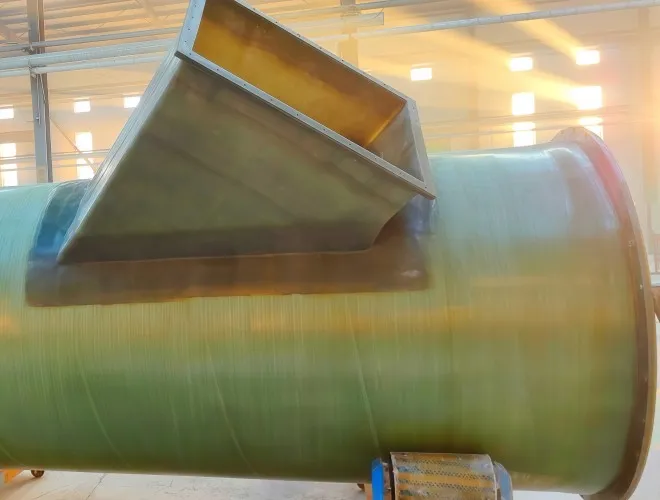
Elbows, reducers, flanged spool pieces and equipment connection sections
Inspection ports, condensate drain connections and low-point drainage arrangements
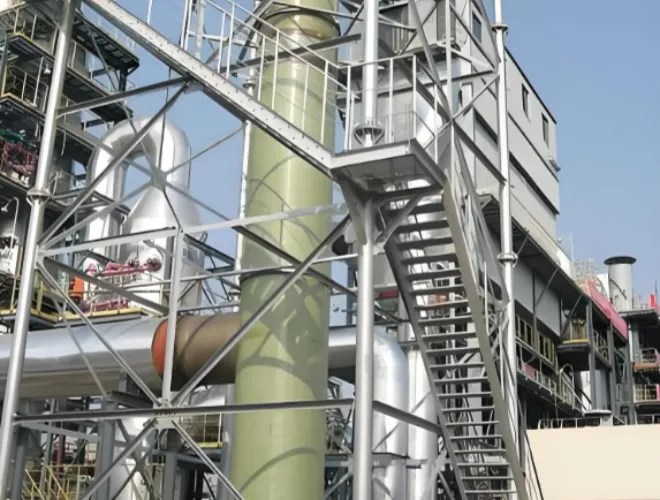
Fixed supports, sliding supports and steel supports at equipment interfaces
Corrosion-resistant coating on steel supports suitable for the site environment
At a design airflow of approximately 55,000 m³/h, the 1,600 mm-diameter main duct keeps the internal gas velocity within an appropriate range. This allows the system to meet exhaust conveyance requirements while also considering pressure loss, vibration and the risk of condensate entrainment.
Exhaust gas generated in the production area is first captured by local extraction hoods and conveyed through the air-collection ducts into the main duct.
Flow-control components are arranged in individual branches according to the location and characteristics of each emission source. This enables exhaust gas from different work areas to enter the treatment system steadily under negative pressure.
The collected gas then enters the wet scrubber, where it comes into full contact with the circulating scrubbing liquid. Fine particulates and absorbable contaminants are transferred from the gas phase into the liquid phase.
After scrubbing, the high-humidity gas passes through a mist eliminator to reduce liquid droplets entering the downstream ductwork. The performance of the wet scrubber depends on factors such as scrubbing-liquid condition, gas-liquid contact and system pressure drop.
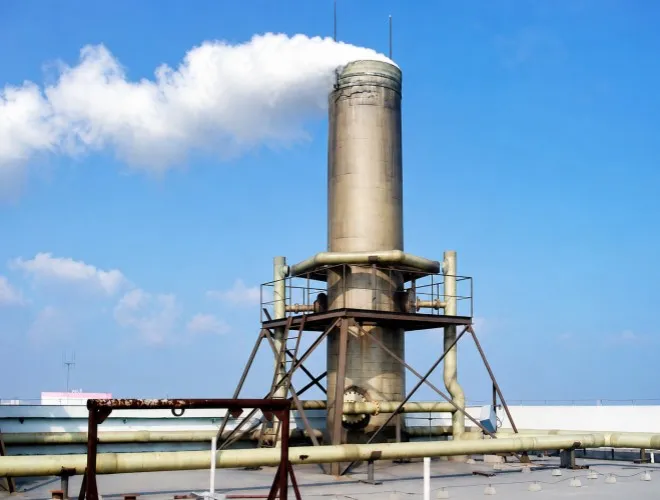
The treated gas leaves the top of the scrubber and enters the FRP exhaust duct. It is then conveyed by the induced-draft fan to the exhaust stack.
The induced-draft fan maintains negative pressure in the scrubber and upstream collection ductwork, helping reduce the escape of untreated gas through equipment connections.
Because the gas leaving the scrubber has a high moisture content, condensate may form during long-distance conveyance or when ambient temperature changes. The ductwork was therefore installed with an appropriate slope, and drain connections were provided at low points to direct condensate into the designated collection system.
Downstream ductwork in wet treatment systems may be exposed to both condensation and corrosion. Material selection and condensate management were therefore key elements of the project design.
The gas leaving the scrubber is close to saturation and may carry small amounts of acid mist, scrubbing-liquid droplets and process residues.
Conventional carbon-steel ductwork operating under these high-humidity conditions may require regular coating inspection, repair and maintenance.
The customer required the internal duct surfaces to provide reliable corrosion resistance while the complete duct system also needed to withstand operating vacuum, fan start-stop conditions and structural loads from the installation environment.
The main duct needed to connect accurately with the scrubber outlet, induced-draft fan inlet and exhaust-stack interface.
The centerline elevation, flange dimensions and orientation of each equipment connection had to remain consistent with the approved layout.
Some duct sections also needed to avoid platforms, pipelines and structural members within the plant. Simple straight sections were therefore insufficient. The system required customized elbows, reducers and non-standard connecting spool pieces.
Although large-diameter FRP ducts are lighter than comparable metal ducts, they are still affected by operating vacuum, wind load, equipment vibration and support spacing.
The customer required the ductwork to remain stable during operation, without excessive sagging caused by insufficient support.
The support arrangement also needed to prevent vibration from the induced-draft fan or movement of the steel structure from being transferred directly to the scrubber connection.
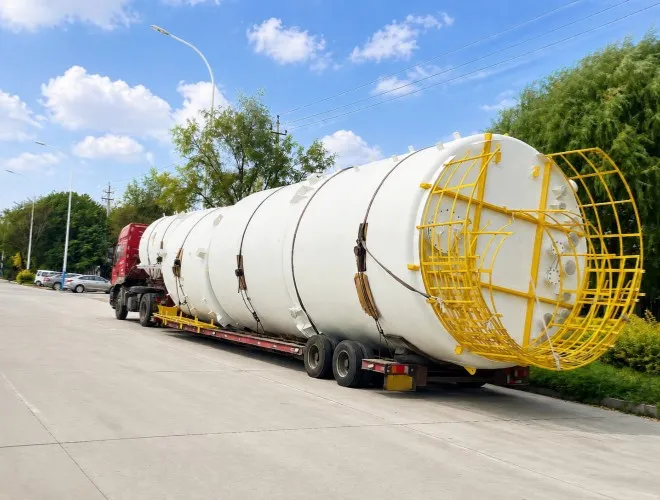
Due to international transportation limits, the entire duct system could not be manufactured as one continuous unit.
The ductwork therefore needed to be divided into transportable sections, while ensuring that all sections could be identified and assembled accurately after arriving at the project site.
Yingnai configured each duct section according to the exhaust-gas properties, design airflow, duct diameter, operating vacuum and support conditions.
An internal corrosion-resistant laminate was applied to isolate the high-humidity gas, condensate and corrosive components from the structural reinforcement.
The external reinforced structure carries duct self-weight, operating vacuum and installation loads.
Local reinforcement was added around elbows, reducers, flange roots and support-contact areas to reduce stress concentration at geometric transitions.
For the larger-diameter duct sections, circumferential stiffening structures were also provided to improve cross-sectional stability and reduce the risk of localized buckling under negative-pressure operation.
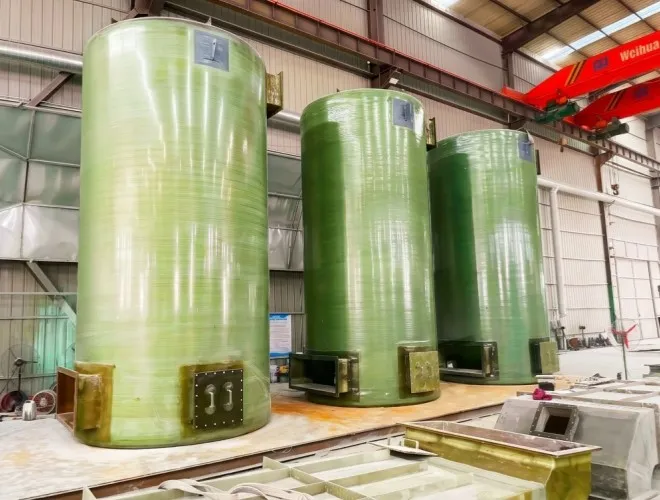
The main duct was divided into multiple sections according to transportation and installation requirements.
Individual section lengths were controlled to facilitate loading, lifting and field positioning.
Each section was provided with clear identification and directional markings. Flange bolt holes were manufactured using a consistent reference system.
The dimensions of adjoining duct interfaces were checked at the factory to ensure that the sections could be connected sequentially at the project site according to the assembly drawings.
The supporting steel structures were manufactured according to the duct diameter, weight, installation elevation and site steelwork conditions.
The support system included both fixed and sliding supports.
Fixed supports establish the overall duct position and restrict unnecessary movement. Sliding supports allow controlled axial movement caused by temperature changes, preventing all displacement from being concentrated at the scrubber or fan connections.
Support spacing for the main duct was determined according to duct diameter, reinforcement configuration and site loads.
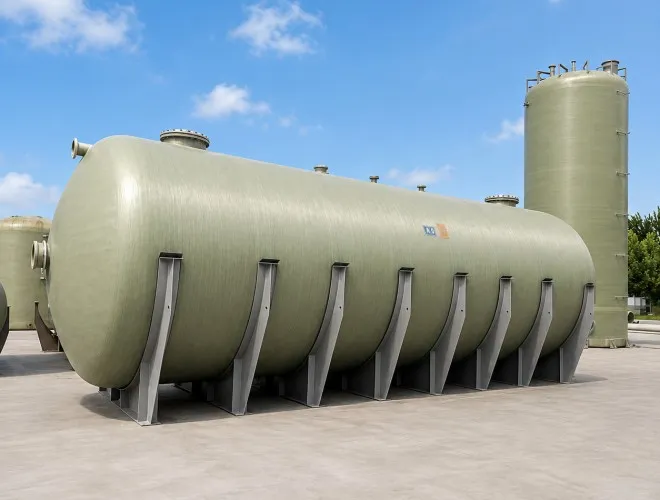
Curved saddles and flexible isolation layers were installed between the steel supports and the FRP ducts. This arrangement distributes loads more evenly and prevents direct contact with steel components from creating localized damage to the duct wall.
During manufacturing, Yingnai focused on the following control points:
1. Verification of resin and glass-fiber reinforcement materials
2. Impregnation quality and surface condition of the internal corrosion-resistant laminate
3. Duct wall thickness and continuity of the reinforcement structure
4. Diameter, length and roundness of each duct section
5. Flange flatness, bolt-hole position and connection dimensions
6. Geometry of elbows and reducers
7. Reinforcement at support locations and lifting points
8. Duct-section numbering and site installation markings
For the steel supports, inspection focused on component dimensions, weld condition, connection-hole positions and surface corrosion protection.
The FRP duct sections and steel supports were checked against the same installation coordinate system. This reduced the risk of support positions failing to align with duct interfaces during field installation.
Before transportation, flange faces, drain connections and vulnerable edges were protected.
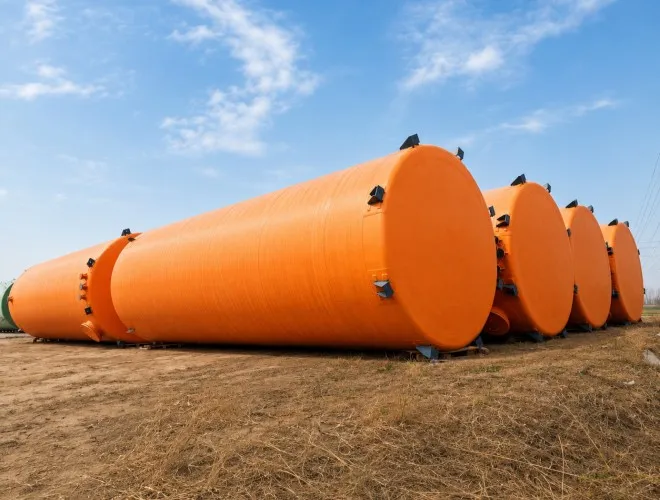
Each duct section was secured using dedicated transport supports to prevent rolling, impact and prolonged unsupported loading during shipment.
Elbows, reducers and smaller branch ducts were grouped, numbered and packaged according to the planned assembly sequence. Steel supports were classified by installation area to simplify site inventory and construction.
After the equipment arrived at the project site, technical support covered duct-section identification, installation sequence, support positioning, flange-connection inspection and verification of the fan and scrubber interfaces.
Where dimensional or layout issues were identified on site, remote technical recommendations could be provided based on photographs, videos and measured data.
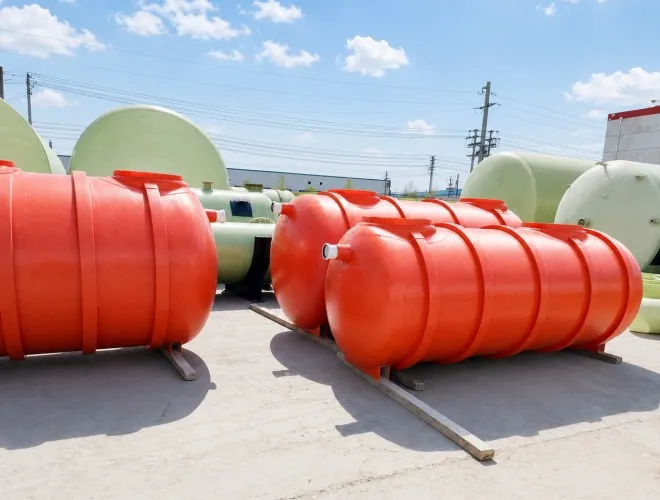
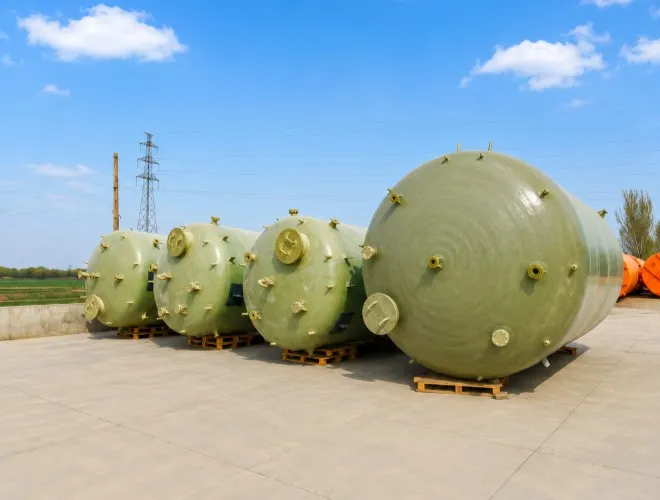
The FRP scrubber exhaust ducts, air-collection ducts and steel support system were manufactured, inspected and delivered according to the project interfaces and operating requirements.
Together, they formed a complete exhaust-conveyance route from pollutant collection and wet scrubbing to centralized discharge.
The project solution addressed the following key requirements:
Stable conveyance of exhaust gas from multiple emission sources to the wet scrubber
Reduced effects of high-humidity and corrosive gas on the duct system
Reduced condensate accumulation through dedicated drainage arrangements
Adaptation to the complex plant layout through customized elbows and reducers
Control of duct displacement and sagging through fixed and sliding supports
Prevention of duct weight being transferred directly to the scrubber and fan interfaces
Improved efficiency of international transportation and field assembly through segmented manufacturing and clear identification
In this project, the FRP ductwork was not merely a connecting pipe downstream of the scrubber. It formed an essential part of the system responsible for stable gas collection, conveyance and discharge.
Through corrosion-resistant FRP construction, effective condensate drainage and a coordinated steel support system, the project established a continuous, stable and maintainable connection between the major off-gas treatment components.
Keywords
off-gas treatment project, FRP exhaust duct, FRP scrubber duct, fiberglass duct, FRP air duct
Meta Description
A copper-processing off-gas treatment project in Kazakhstan used customized FRP scrubber exhaust ducts, air-collection ducts and steel supports for collecting, conveying and centrally discharging corrosive high-humidity exhaust gas. This case study covers equipment configuration, system operation, corrosion-resistant design, manufacturing inspection, international transportation and installation support.
 English