Correct installation is essential to the long-term performance of an FRP/GRP piping system. Although fiberglass pipes are lightweight and corrosion resistant, they are engineered industrial products rather than simple components that can be assembled without planning.
Installation should be carried out according to approved drawings, project specifications, the manufacturer’s instructions and a site-specific method statement. Depending on the project location and scope, Yingnai can dispatch installation personnel to the site or provide remote technical guidance to support the customer’s construction team.
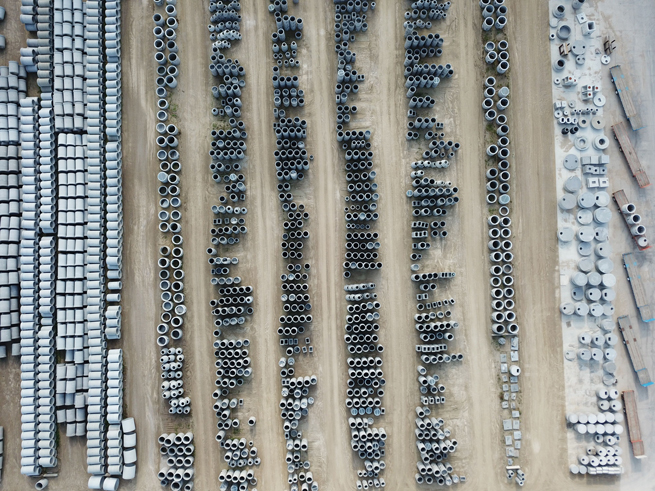
Before pipes arrive at the site, the contractor, project owner and pipe supplier should confirm the installation scope and technical responsibilities.
The approved documents should clearly identify:
Pipeline routing and elevations
Pipe diameter, pressure class and stiffness class
Joint types and connection locations
Supports, anchors and guide positions
Buried sections and above-ground sections
Equipment and valve connections
Testing and acceptance requirements
Site installation responsibilities
The installation team should use the latest approved drawings. Changes to pipe routing, support spacing, joint locations or equipment connections should be reviewed before implementation rather than decided during assembly.
Where project specifications reference international standards, their requirements should be incorporated into the installation plan. ASME NM.2 addresses the installation, examination and testing of glass-fiber-reinforced thermosetting-resin piping systems. ASTM D3839 provides guidance for underground fiberglass pipe installation, including trench preparation, pipe placement, joining, backfilling and deflection monitoring. AWWA M45 also provides technical guidance for fiberglass pipe design, procurement and installation.
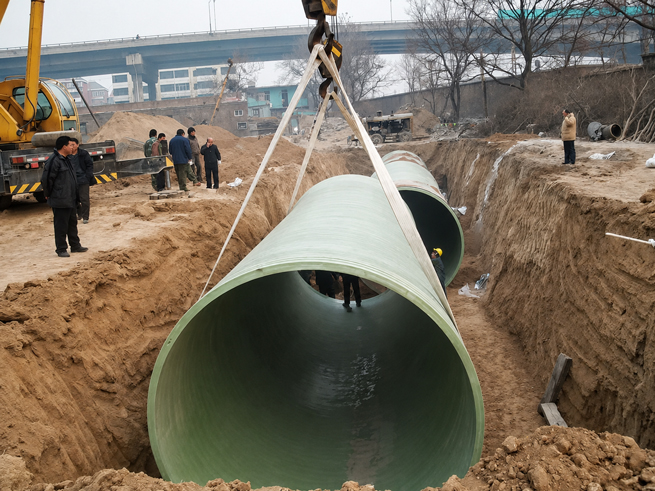
All pipes, fittings, flanges, couplings and field-joint materials should be checked after delivery and before installation.
The inspection should confirm that:
Product identification matches the packing list
Pipe diameter and pressure class are correct
Ends, sealing surfaces and flanges are undamaged
No visible cracks, impact marks or abnormal deformation are present
Gaskets, adhesives and field-joint materials are complete
Storage and installation documents have been received
Minor surface marks do not always affect pipe performance, but suspected impact damage, exposed reinforcement, cracks or damaged sealing surfaces should be evaluated before the component is installed.
Products requiring assessment should be separated and clearly identified. Damaged areas should not be covered by supports, joints or backfill before an inspection decision is made.
FRP pipes are lighter than many metal pipes, but their surfaces and joint ends still require protection.
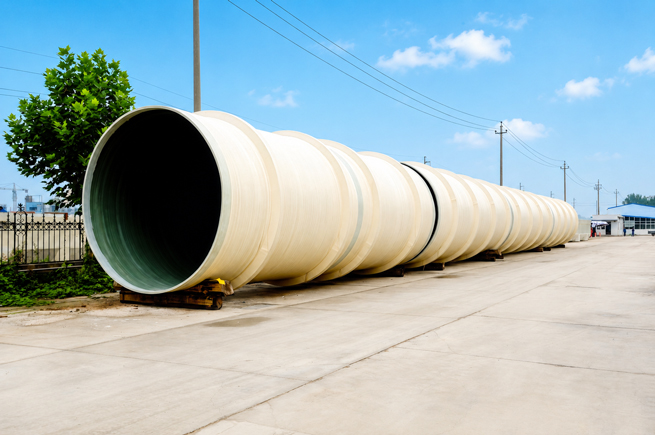
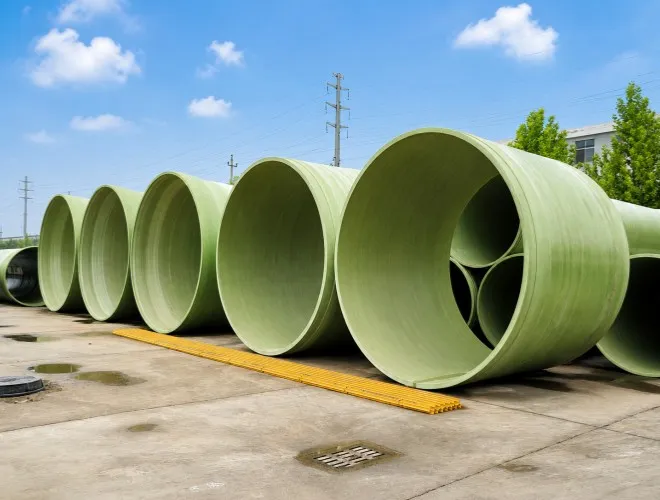
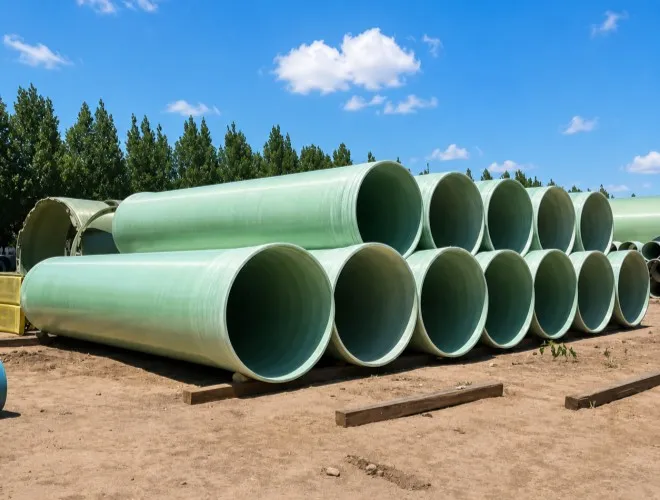
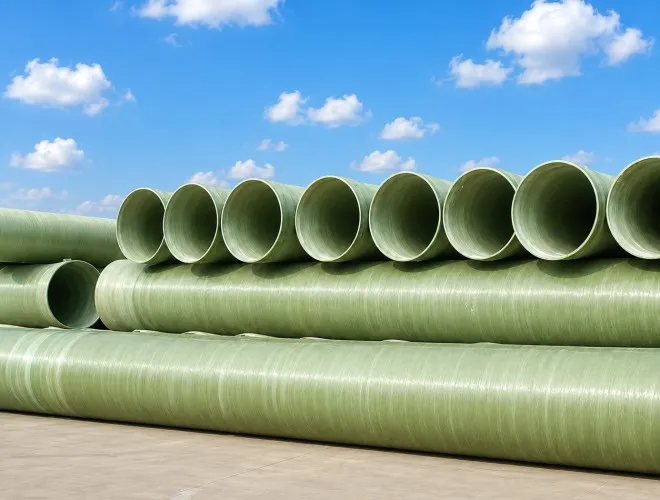
Pipes should be stored on level ground using padded supports or timber bearers. Supports should be arranged to prevent excessive bending, rolling or contact with sharp objects. Pipe ends, flanges and sealing surfaces should remain clean and protected.
During lifting, suitable fabric slings or approved lifting devices should be used. Pipes should not be dragged across the ground, dropped from vehicles or lifted directly with chains, steel cables or hooks that could damage the laminate.
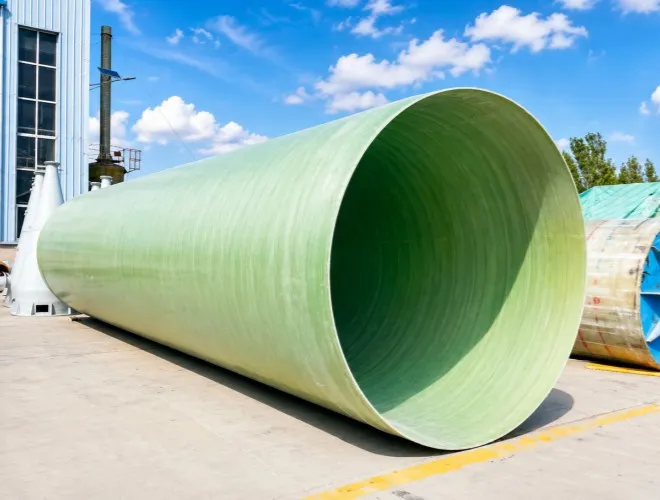
Large-diameter pipes may require multiple lifting points or spreader beams. The lifting method should follow the manufacturer’s recommendations and the approved site lifting plan.
The supporting conditions of an FRP pipeline are part of the piping system. Poor foundations or incorrectly positioned supports can create loads that were not included in the original design.
Above-Ground Pipelines
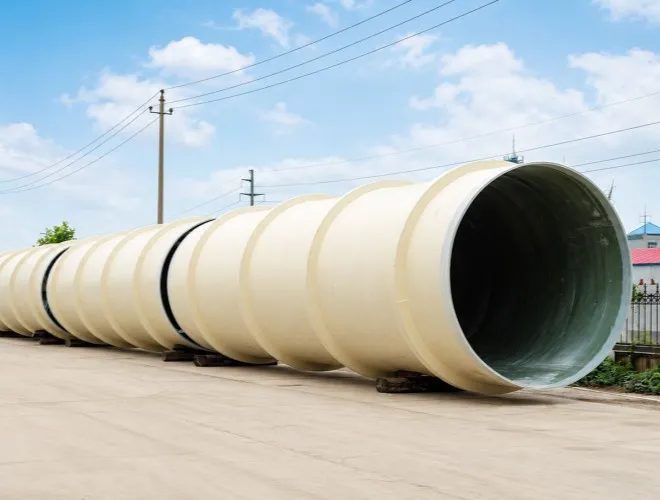
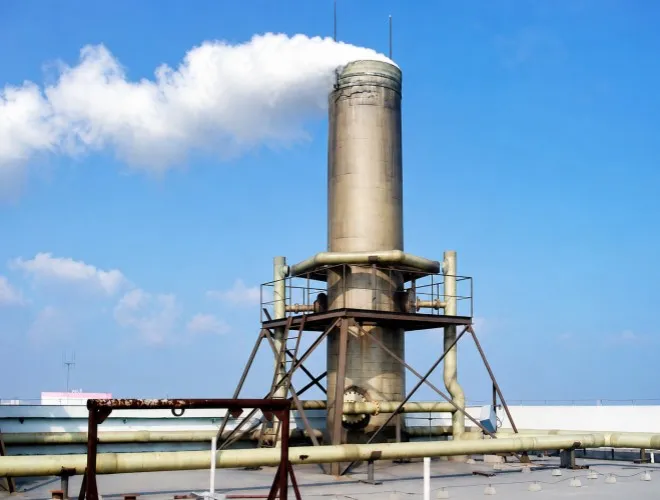
Supports should be installed at the positions and spacing shown on the approved drawings. Their contact surfaces should be smooth and shaped to avoid damaging the pipe wall.
Guides and anchors should control pipe movement without creating excessive local stress. Supports for valves, pumps and other heavy equipment should normally be independent rather than transferring their weight into the FRP pipe.
Thermal expansion and contraction should also be considered. The pipeline should not be locked between rigid equipment connections unless this condition has been included in the engineering design.
Buried Pipelines
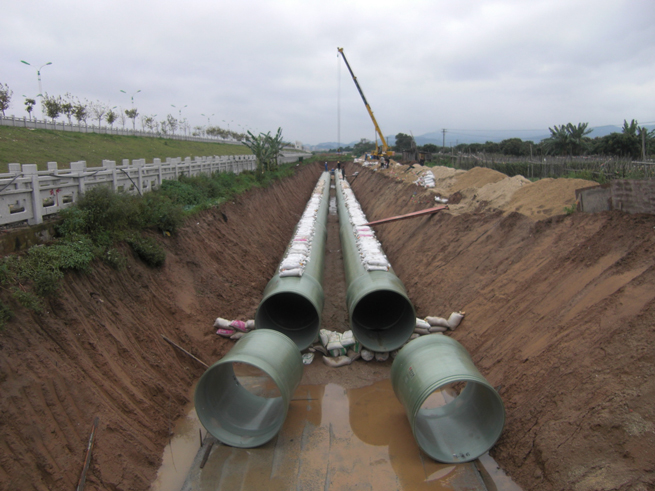
The trench bottom should provide continuous and even support. Sharp stones, construction debris, frozen soil and other materials that could create point loads should be removed.
Bedding and backfill materials should meet the approved installation specification. Backfill should be placed evenly around both sides of the pipe and compacted in controlled layers so that the pipe remains aligned and does not experience excessive deformation.
The required trench width, burial depth, compaction level and allowable deflection depend on pipe stiffness, diameter, soil conditions, groundwater and external loads. These values should be taken from the project design rather than estimated on site.
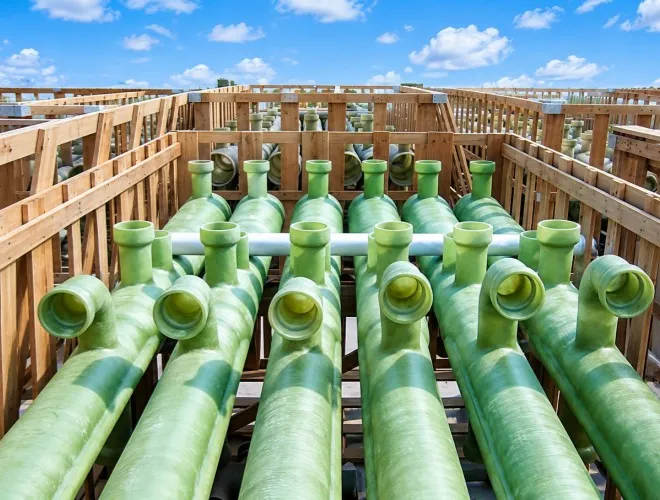
FRP/GRP piping systems may use several types of joints, including:
Flanged connections
Flexible gasket couplings
Adhesive-bonded joints
Laminated field joints
Mechanical connections designed for the piping system
The correct procedure depends on the supplied pipe system. Installation teams should not replace one joint type with another without technical approval.
Before joining, pipe ends and sealing surfaces should be clean, dry and correctly aligned. Gaskets should be free from dirt and damage. Adhesive-bonded or laminated joints require controlled surface preparation, material mixing, reinforcement application and curing.
Flexible elastomeric-seal joints used for certain fiberglass pipe systems are covered by ASTM D4161, but the actual gasket, lubricant, insertion depth and assembly method must follow the pipe manufacturer’s instructions.
Where laminated field joints are required, trained personnel should complete the work under suitable temperature, humidity and cleanliness conditions. The joint should not be loaded, moved or tested until the specified curing period has been completed.
FRP pipe should not be forced into position by tightening flange bolts, pulling with lifting equipment or using connected machinery as an alignment tool.
Pipe sections should be aligned before the joint is completed. Any significant offset, angular deviation or dimensional conflict should be corrected through the approved piping arrangement.
Flanged connections require particular care. Flange faces should be parallel, clean and properly supported. Bolts should be tightened gradually in a cross pattern using the specified torque. Excessive bolt torque can damage an FRP flange without improving the seal.
Equipment nozzles, pumps, valves and steel pipelines should be independently supported and correctly aligned before connection to the FRP system.
An FRP pipeline rarely operates alone. It may connect to pumps, tanks, steel pipes, thermoplastic pipes, valves, instruments and process equipment.
Different materials may have different stiffness and thermal-expansion characteristics. Transitions between them should therefore use the approved flange, flexible connector, dismantling joint or other connection arrangement.
Heavy valves and instruments should have independent supports. Pump vibration and equipment movement should not be transmitted directly into the FRP pipe.
Before installation, the project team should also confirm gasket materials, bolt materials and chemical compatibility. A suitable FRP pipe can still experience leakage if an incompatible gasket or poorly supported valve is used.
Inspection should be carried out progressively rather than postponed until the entire pipeline is complete.
Typical inspection points include:
Pipeline route and elevation
Support and anchor positions
Joint appearance and curing condition
Gasket insertion and coupling position
Flange alignment
Bolt tightening
Pipe surface condition
Valve and equipment supports
Buried-pipe bedding and backfill
Cleanliness inside the pipeline
For buried systems, inspection should be completed before the joints and pipe wall are covered. Photographs and installation records can provide useful evidence for project handover and future maintenance.
Testing should follow the approved project procedure and the pressure limits of the supplied piping system.
Before testing, the installation team should confirm that:
All joints have been completed and cured
Supports and anchors are installed
Temporary shipping supports have been removed
Valves are in the correct position
Vents and drains are available
Test instruments are calibrated
Personnel are kept away from pressurized joints
Where hydrostatic testing is required, the pipeline should generally be filled gradually while trapped air is released. Test pressure should be raised in a controlled manner and must not exceed the approved value.
Any leakage, abnormal movement, unusual sound or visible deformation should be investigated before testing continues. Defects should be repaired using an approved procedure and retested where required.
After acceptance, the pipeline may need to be drained, flushed, cleaned or dried according to the service medium and commissioning plan.
FRP/GRP piping projects differ in size, location, joint type and construction environment. For this reason, installation support can be arranged according to the customer’s project needs.
On-Site Installation Service
Yingnai can dispatch experienced personnel to the project site to undertake or supervise installation work. The service scope may include:
Receiving and installation planning
Pipe handling and positioning
Field-joint preparation
Jointing or lamination work
Installation inspection
Testing coordination
Construction-team instruction
Completion and handover support
The detailed scope, staffing arrangement and schedule are confirmed according to the pipeline size, project location and installation conditions.
Remote Installation Guidance
Where the customer has a qualified local construction team, remote technical support can be provided through video meetings, installation documents, marked-up drawings, photographs and real-time communication.
Remote support may include:
Review of the installation plan
Jointing-procedure explanation
Support and alignment confirmation
Assessment of site photographs
Guidance during field-joint work
Review of testing preparation
Assistance with installation questions
Many FRP pipe installation problems are caused by site handling and alignment rather than by the pipe material itself.
Common issues include:
Dragging pipes across the ground
Using chains directly on the pipe surface
Installing damaged pipe ends
Incorrect support spacing
Allowing valves to hang from the pipeline
Forcing flanges into alignment
Applying excessive bolt torque
Contaminating adhesive or laminated joints
Moving joints before curing is complete
Using unsuitable bedding or uncontrolled backfill
Testing above the approved pressure
Changing the pipeline route without technical review
These risks can be reduced through early planning, trained installation personnel and timely communication with the pipe manufacturer.
meta Keywords
FRP pipe installation, GRP pipe installation, fiberglass pipe installation, FRP piping system, FRP pipe installation guide
Meta Description
A practical FRP/GRP pipe installation guide covering handling, supports, buried and above-ground installation, joints, testing, and Yingnai on-site or remote support.
 English