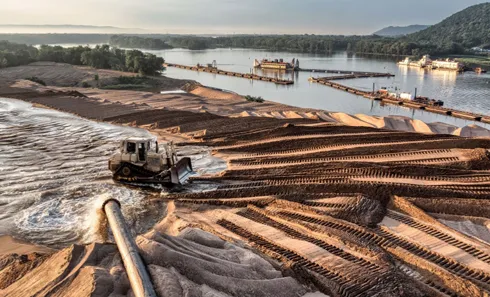
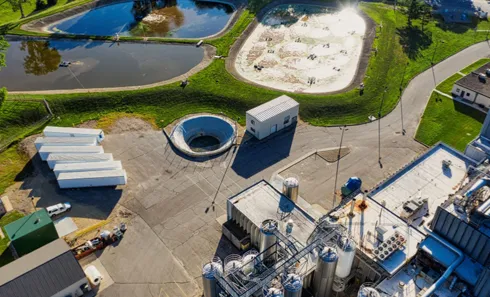
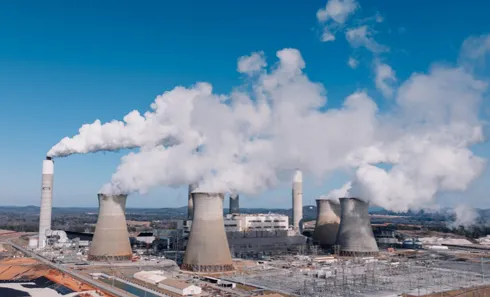
Water infrastructure covers far more than conventional treatment plants. It includes raw-water intake, drinking-water treatment, industrial water preparation, wastewater collection, chemical dosing, odor control, water reuse, seawater desalination and brine management. Yingnai provides application-matched FRP/GRP tanks, piping, fittings, covers, ducts, scrubbers, gratings, pultruded profiles and custom components for these systems. Corrosion-resistant materials, relatively low equipment weight and flexible fabrication help projects reduce rust-related maintenance, simplify transportation and installation, and coordinate equipment with process layouts, civil structures and operating requirements. Products can be customized for municipal plants, industrial facilities, coastal projects, plant upgrades and capacity expansions.
Water and wastewater facilities contain multiple service zones with very different operating conditions. Raw-water systems require intake and transfer equipment; treatment areas use process tanks, piping and chemical-dosing systems; wastewater plants need collection, neutralization, sludge-handling and odor-control equipment; desalination facilities add seawater intake, pretreatment, membrane-related auxiliary systems, cleaning chemicals and concentrated brine.
FRP products can be configured for liquid storage, conveyance, ventilation, access and structural support within the same project. Using one adaptable composite-material platform makes it easier to coordinate tanks, pipes, fittings, covers, ducts, gratings and profiles while maintaining consistent corrosion-resistance principles across connected systems.
The term “water treatment” covers a wide range of media. Raw water may contain salts, suspended solids and biological material. Industrial wastewater may contain acids, alkalis, chlorides, oils, sulfides or process residues. Treatment plants also use chemicals such as sodium hypochlorite, ferric salts, acids, alkalis, coagulants, antiscalants and cleaning solutions.
Desalination adds continuous exposure to seawater, salt spray, high humidity and concentrated brine. Resin selection must therefore consider chemical composition, concentration, temperature, operating cycle and cleaning conditions rather than relying on a general water-service specification. Yingnai can coordinate the corrosion barrier, reinforcement structure and external protection according to the actual liquid, gas and outdoor exposure conditions.
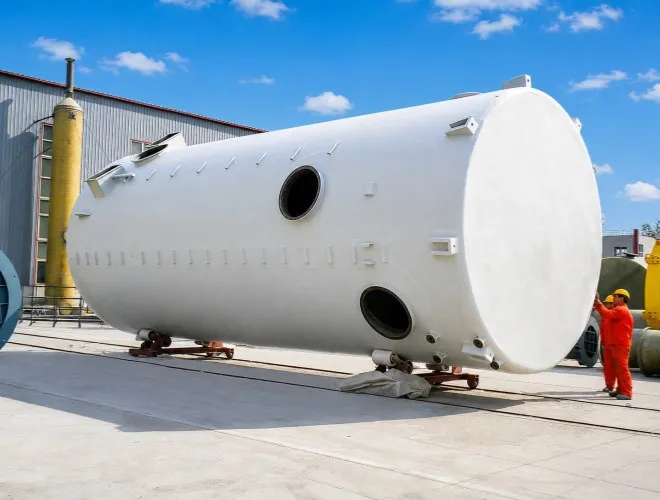
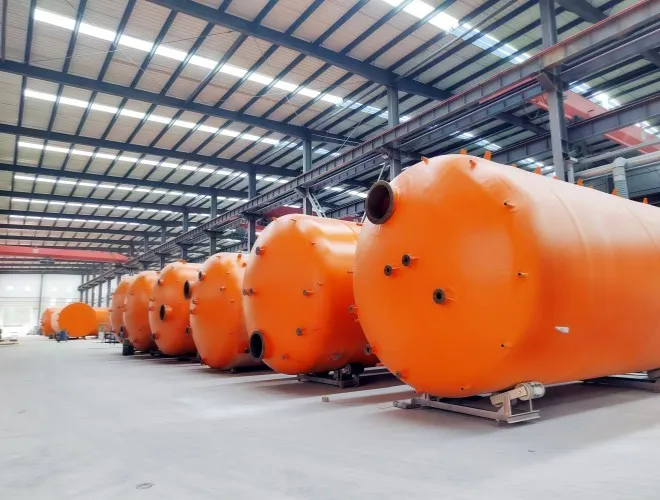
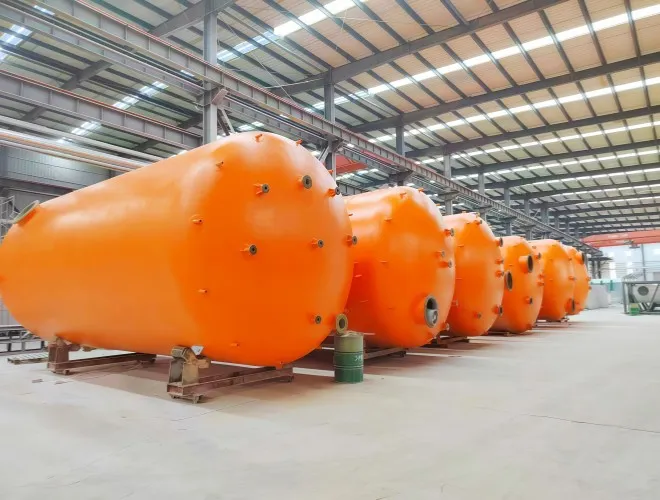
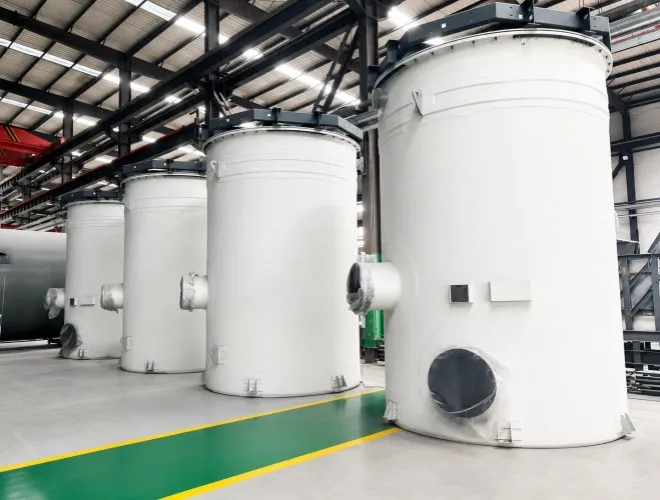
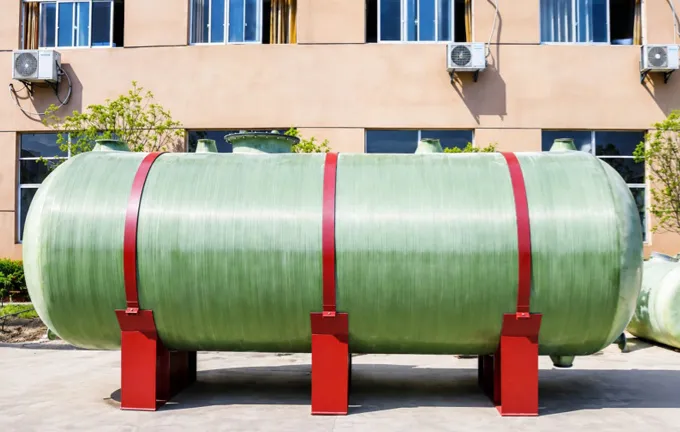
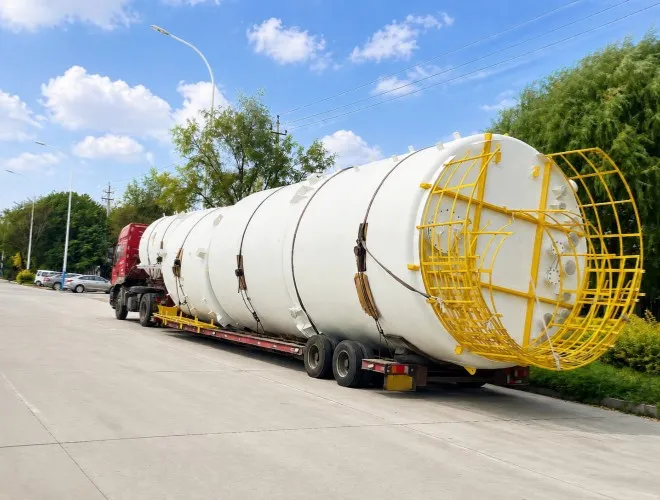
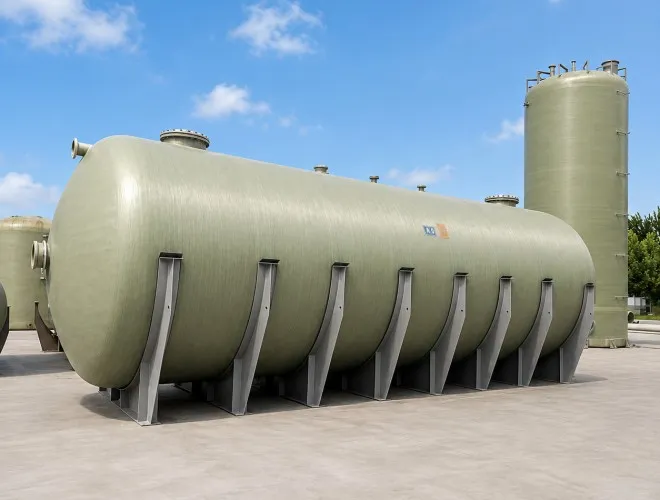
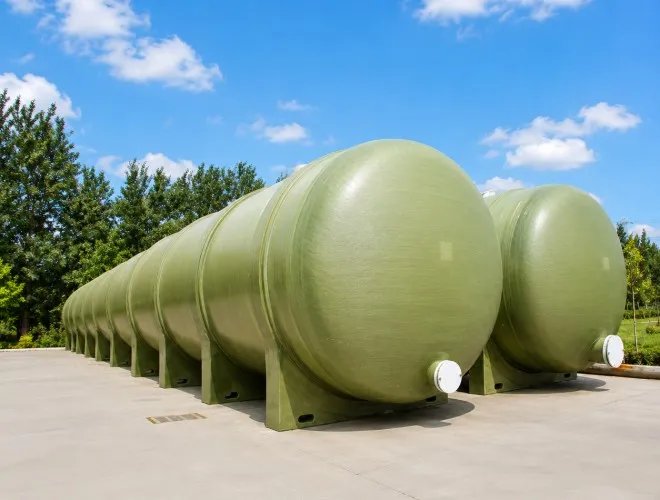
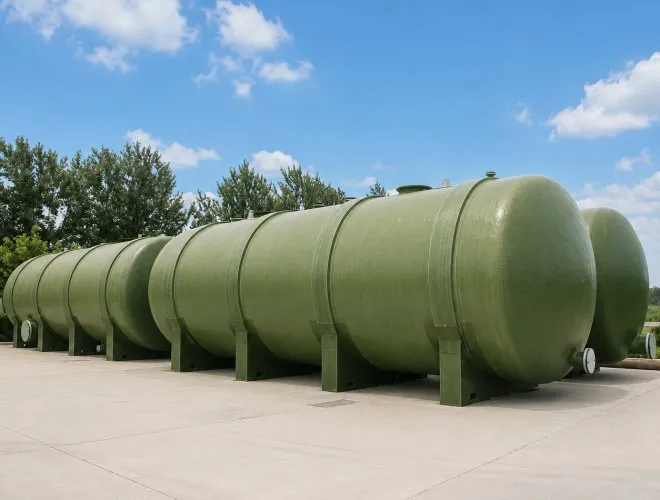
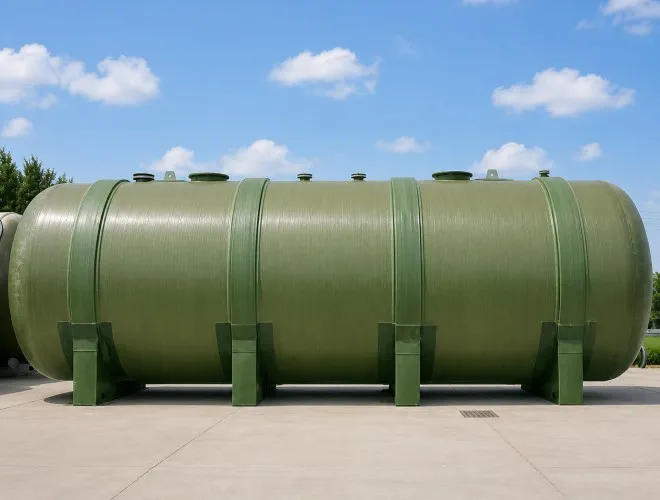
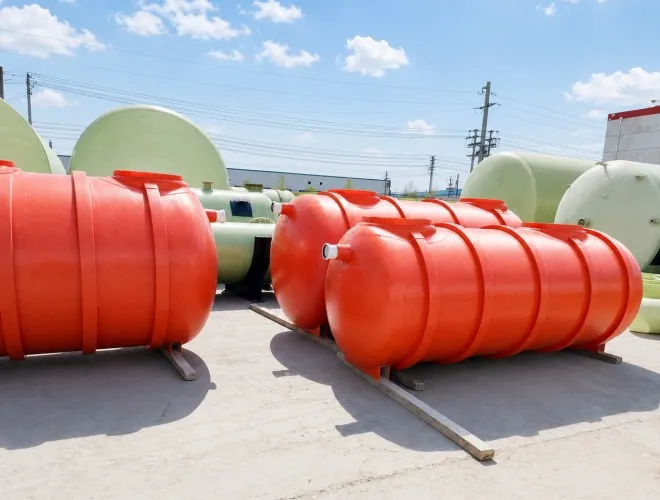
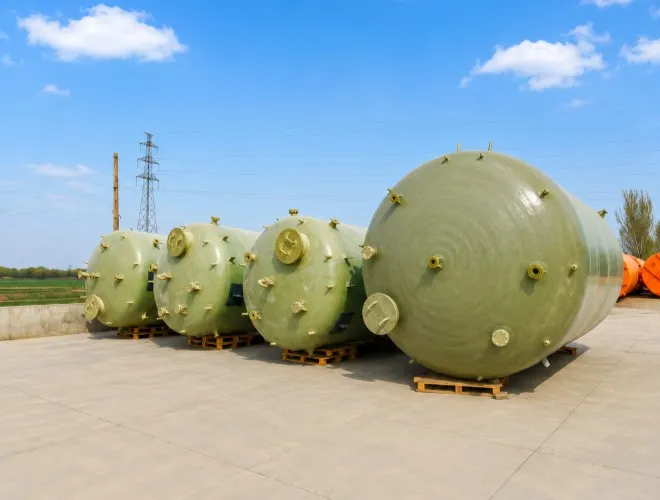
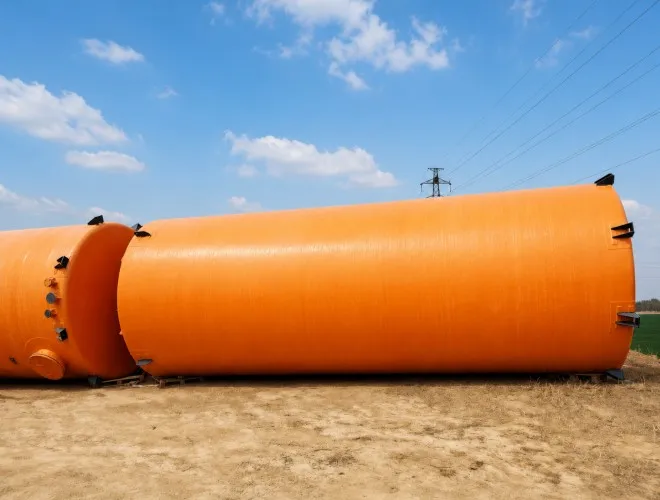
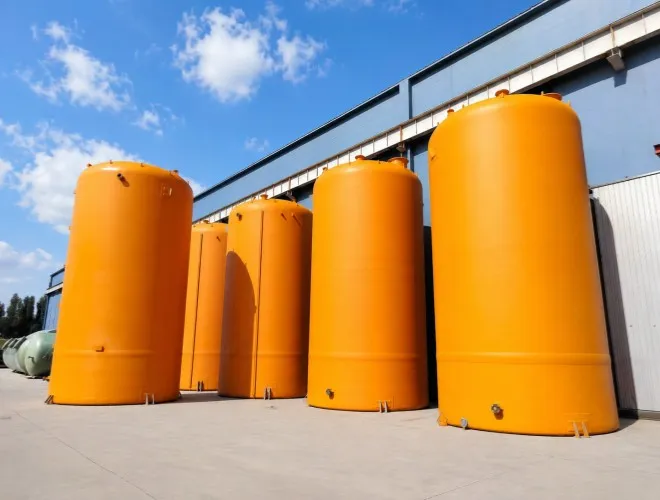
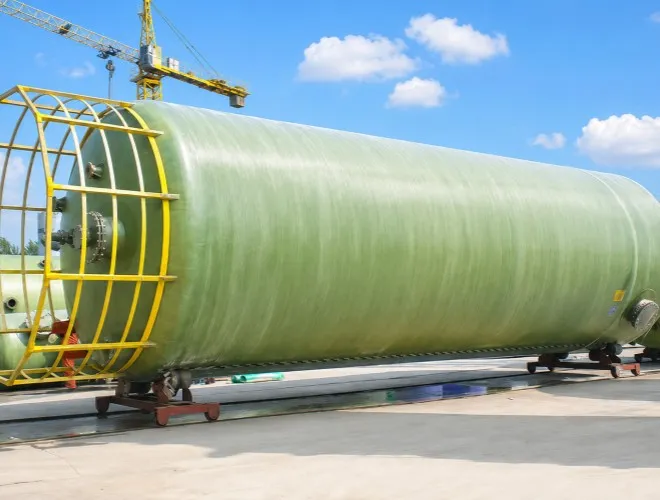
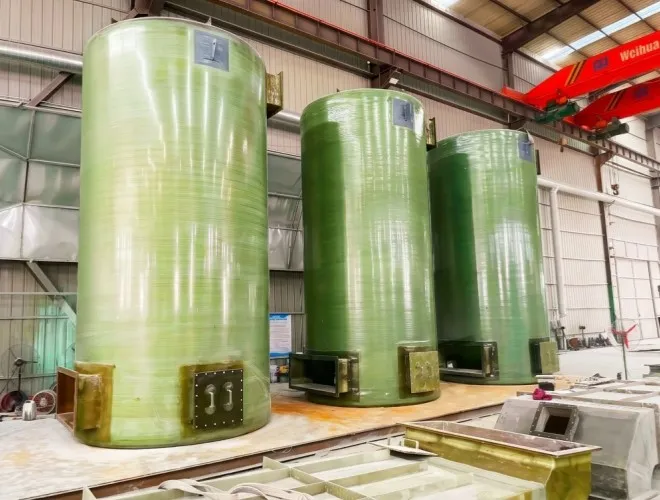
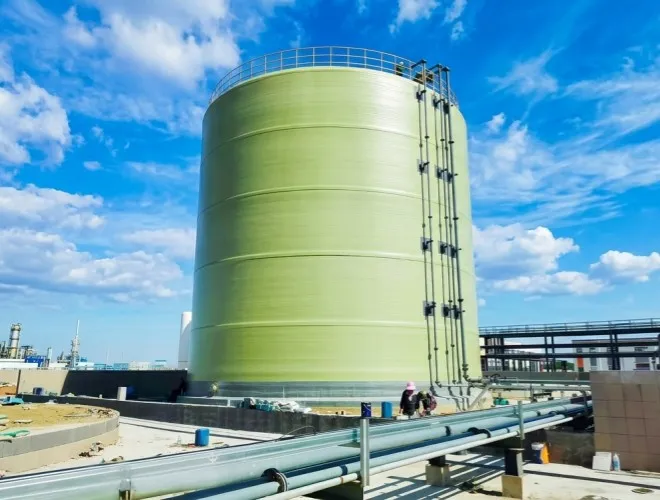
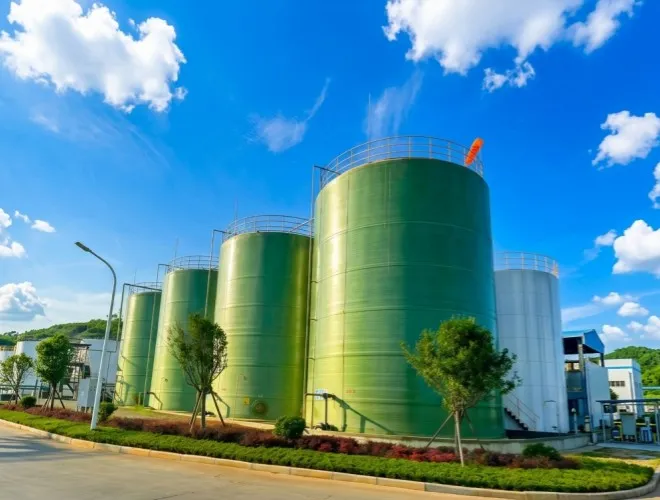
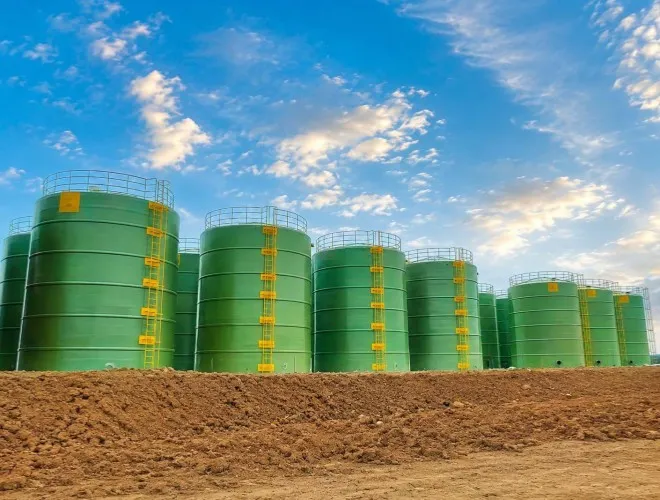
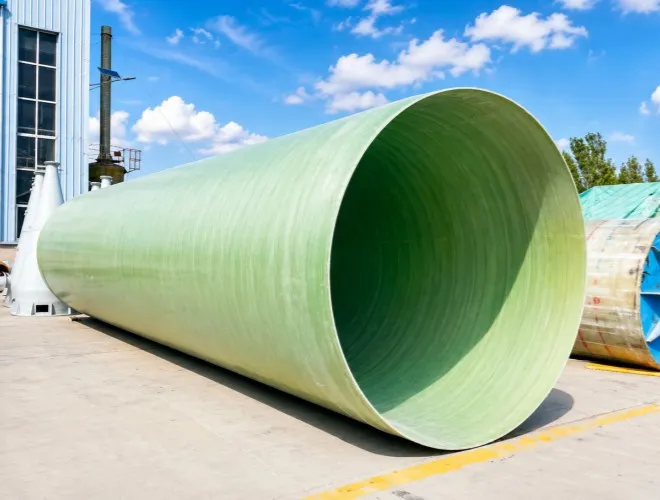
FRP tanks can be designed for chemical dosing, process water, treated water, wastewater collection, neutralization, backwash water, cleaning solutions, seawater-related chemicals and other compatible duties. Depending on capacity and site conditions, equipment may be configured as vertical, horizontal, above-ground, buried, transportable or field-fabricated structures.
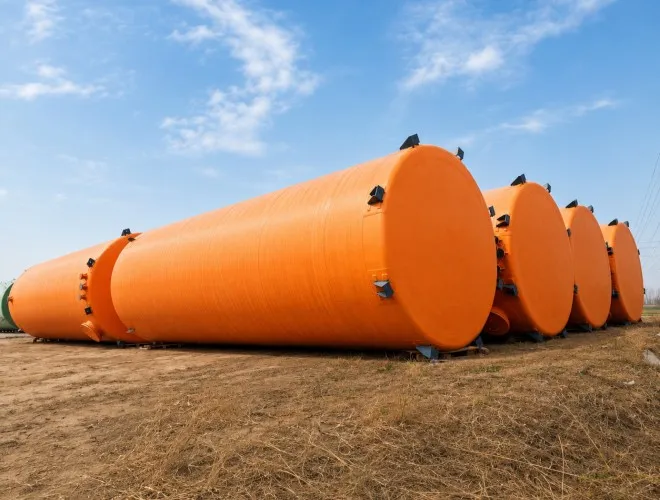
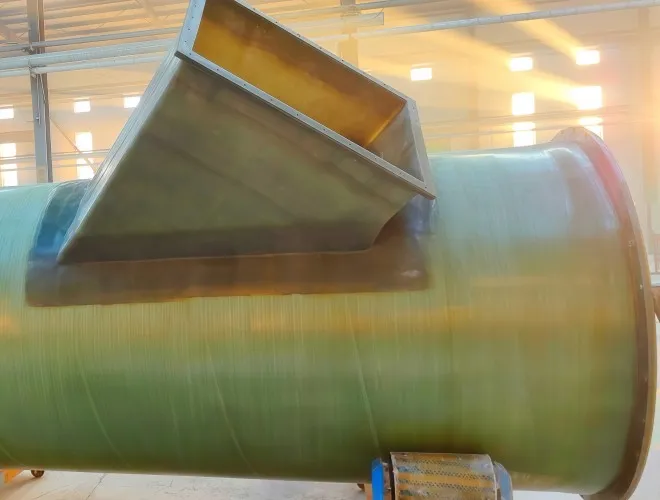
Filament winding places continuous glass fibers around cylindrical shells to provide controlled reinforcement for liquid head, pressure, vacuum, wind and seismic loads. The corrosion barrier protects the wetted surface, while nozzles, manways, vents, overflow connections, level instruments, lifting points, anchors and supports can be arranged around the process layout. Large tanks can also be divided into transportable sections or manufactured at site when road access or lifting capacity is limited.
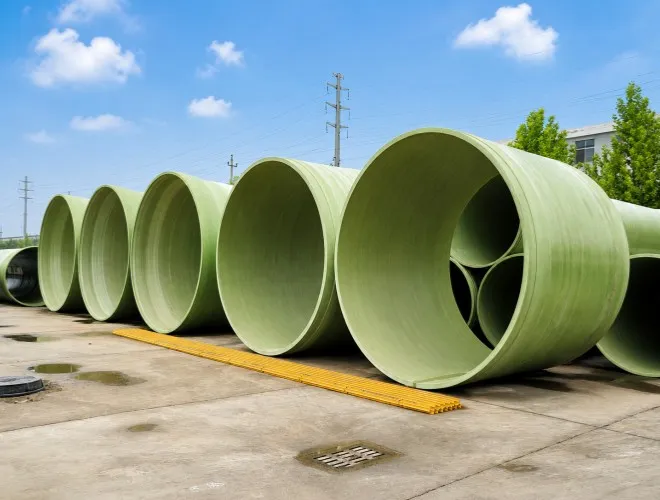
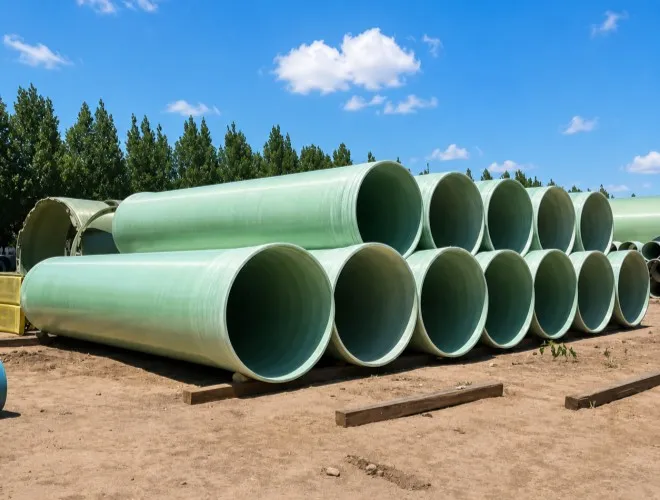
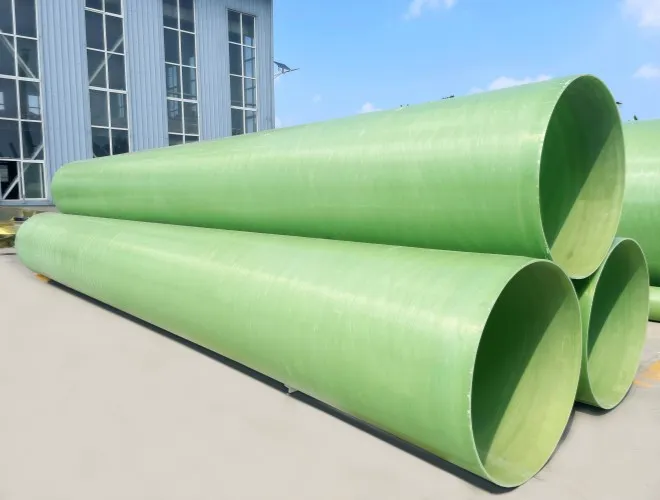
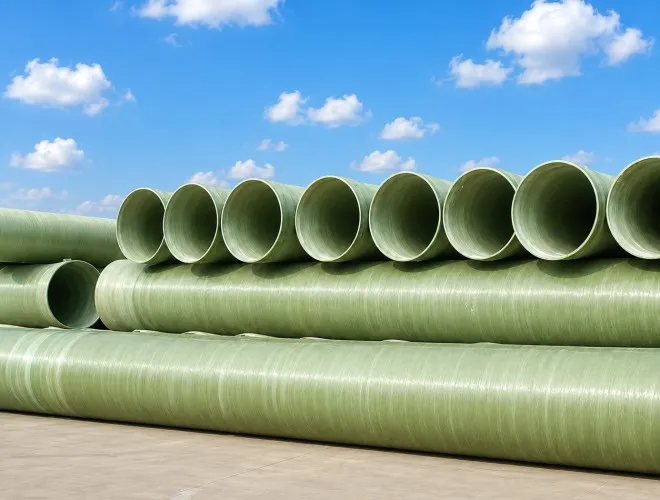
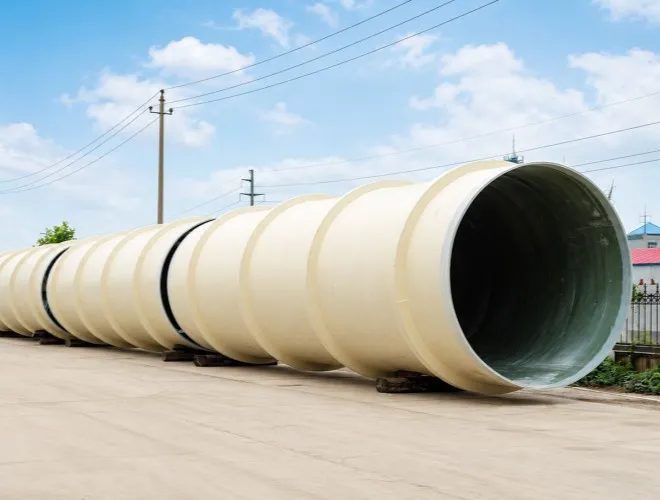
FRP piping can be used for raw-water intake, treated water, industrial process water, wastewater, backwash water, seawater, brine, odor-control air and selected chemical services. Its non-rusting construction is particularly valuable where steel piping would require repeated coating repair or where corrosion products could affect water quality and equipment cleanliness.
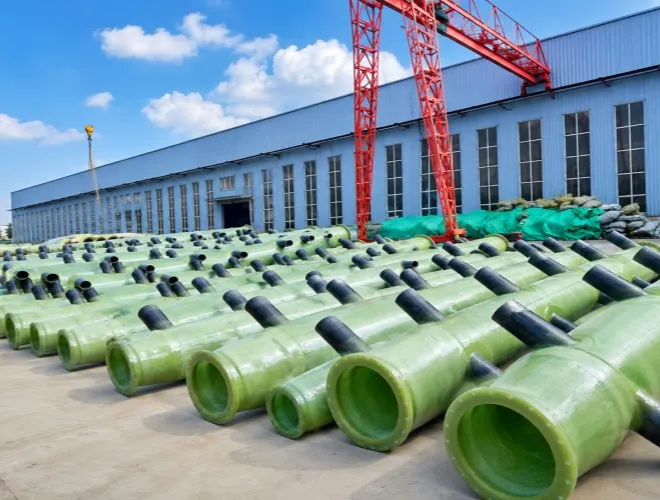
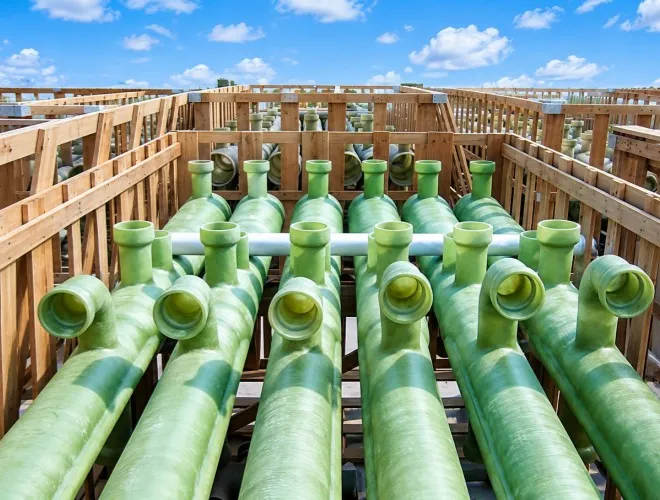
Pipe design should address internal pressure, vacuum, surge, water hammer, flow velocity, support spacing, temperature movement and connection loads. Buried systems also require suitable bedding, backfill, soil-load and groundwater evaluation. Seawater-intake or submerged lines may need additional consideration of external pressure, buoyancy, currents, anchoring and installation methods. Pipes, elbows, tees, reducers, flanges and field joints should be designed as one coordinated system.
Chemical dosing is an essential part of drinking-water treatment, wastewater treatment and desalination. Storage and transfer systems may handle acids, alkalis, sodium hypochlorite, coagulants, antiscalants, regeneration chemicals and membrane-cleaning solutions. Each chemical must be reviewed according to its actual concentration and operating temperature.
FRP tanks and piping can provide a corrosion-resistant alternative to coated metal when the resin system is correctly matched to the medium. Tank vents, overflow lines, drain connections and level interfaces should be coordinated with bunds and emergency-containment arrangements. Piping supports must also account for valves, instruments and small branches so that local loads are not transferred directly into composite pipe walls or tank nozzles.
Wastewater channels, sludge areas, equalization tanks and other enclosed spaces can release humid gases containing sulfides, ammonia, chemical vapors and odors. These conditions may cause severe corrosion above the liquid surface, even when the wastewater itself is only moderately aggressive.
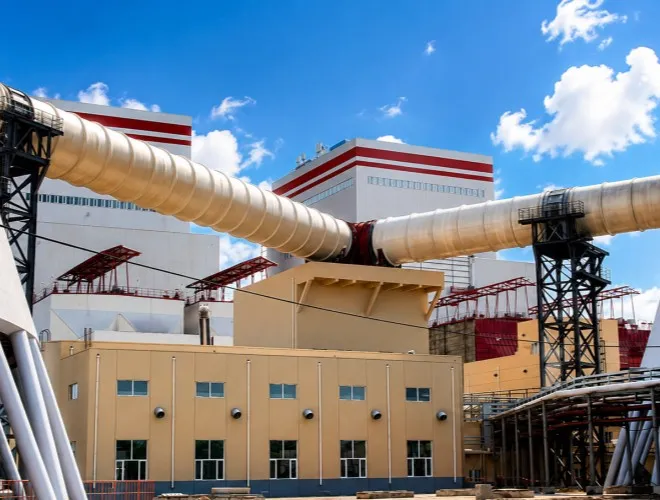
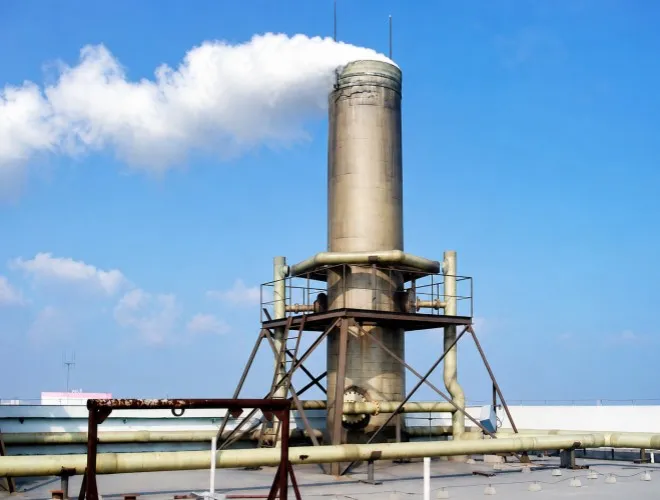
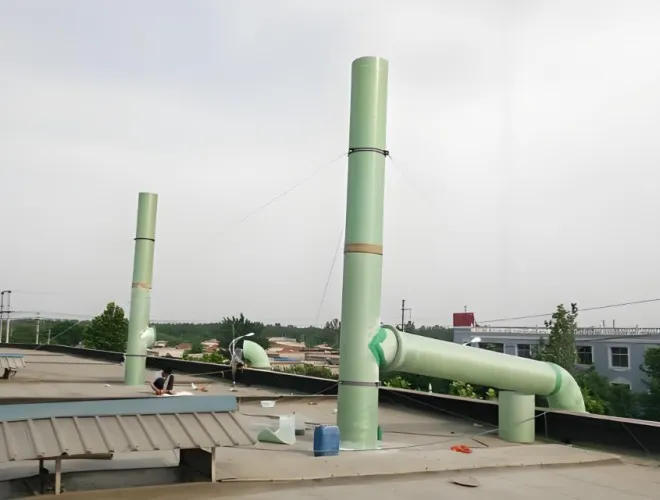
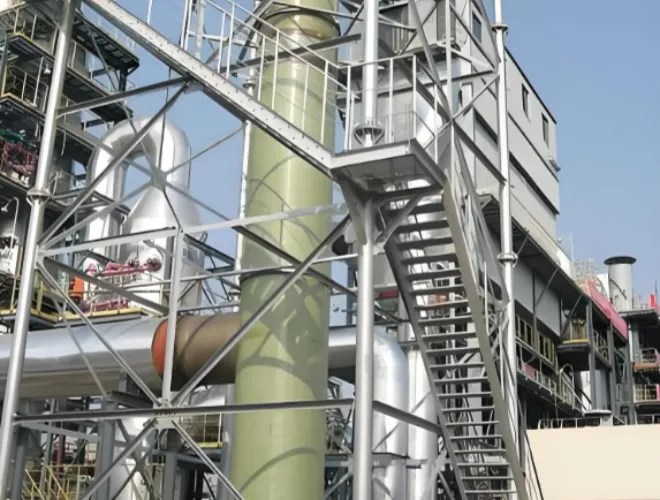
FRP covers can contain emissions at the source, while ducts transfer collected air to scrubbers, absorbers, biofilters or other treatment equipment. Smooth internal surfaces support airflow and reduce areas where condensate can accumulate. Towers, scrubbers, chimneys and ductwork can be customized for gas volume, pressure, temperature, wind load, drainage and internal equipment. Access openings and removable sections should be included where inspection and cleaning are required.
Desalination plants operate in an environment where seawater, salt spray, ultraviolet exposure and continuous humidity act together. In addition to seawater intake and process piping, FRP products may be used in pretreatment systems, chemical rooms, backwash systems, brine handling, wastewater treatment, ventilation and maintenance-access structures.
Unlike carbon steel, FRP does not rely on a metal substrate that can rust when an external coating is damaged. Outdoor products can include ultraviolet-resistant surface protection, while anchors and supports can be designed for coastal wind conditions. Because lightweight equipment may experience buoyancy when buried or submerged, anti-flotation measures, stable foundations and suitable anchoring must be included in the engineering design.
Water plants and coastal facilities require walkways, platforms, stairs, ladders, handrails, equipment supports and cable-management products. These components are frequently exposed to moisture, splash, treatment chemicals and outdoor weathering.
Molded FRP gratings and pultruded profiles provide lightweight, non-rusting alternatives to coated steel. They can be supplied in modular sections and do not require routine corrosion painting. Product selection should consider span, design load, allowable deflection, surface slip resistance, ultraviolet exposure and fire-performance requirements. Areas exposed to vehicle loads, heavy impact or frequent equipment movement require additional structural evaluation rather than standard walkway specifications.
Metal equipment offers high stiffness but may require coatings, linings or expensive alloys to control corrosion. Concrete is suitable for many civil structures, although cracks and chemical exposure can create a need for protective liners. Thermoplastics provide excellent chemical resistance in selected services but may be limited by stiffness, temperature, pressure or equipment size.
FRP combines a corrosion-resistant resin matrix with glass-fiber reinforcement. This gives it greater structural capability than unreinforced plastics while maintaining lower weight than many metal and concrete alternatives. It also allows corrosion barriers, wall structures, nozzles and shapes to be customized. Material selection should still be based on the complete operating condition, since no single material is ideal for every part of a treatment plant.
Yingnai manufactures filament-wound tanks and pipes, fittings, towers, scrubbers, ducts, chimneys, covers, molded gratings, pultruded profiles and customized FRP components. Filament winding is a core capability for cylindrical tanks and piping, while molding, hand lay-up, bonding and secondary fabrication support complex shapes and project-specific interfaces.
The company can review process media, temperatures, pressures, dimensions, loads, burial conditions, outdoor exposure and transport limitations before production. Coordinating multiple product categories through one supplier can also reduce inconsistencies between pipe connections, tank nozzles, structural supports and ventilation equipment. Inspection, packaging, product sectioning, lifting points and delivery documentation can be planned according to the agreed project scope.
FRP can reduce rust, repainting and coating repair, but dependable service still requires correct design, installation and operation. Supports, anchors, flexible connections and field joints must be completed according to the approved requirements. Equipment should not be exposed to chemical concentrations, temperatures, pressures or cleaning methods beyond the conditions used for material selection.
Routine inspection should focus on joints, nozzles, supports, external weathering, impact damage, vapor zones and areas where water or chemicals can accumulate. When operating conditions change, compatibility should be reviewed before the system continues in service. With suitable material selection and maintenance, FRP products can deliver long-term value across water treatment, wastewater management, desalination and coastal infrastructure.
 English