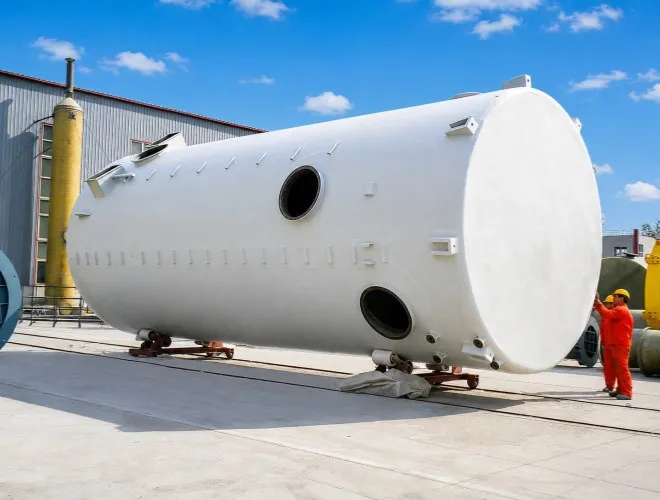
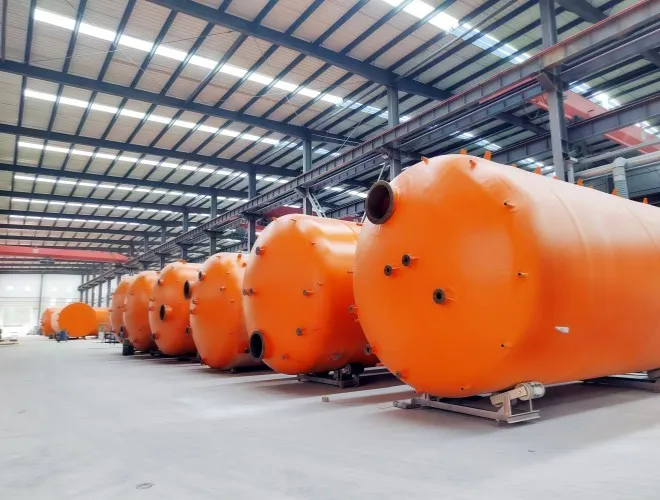
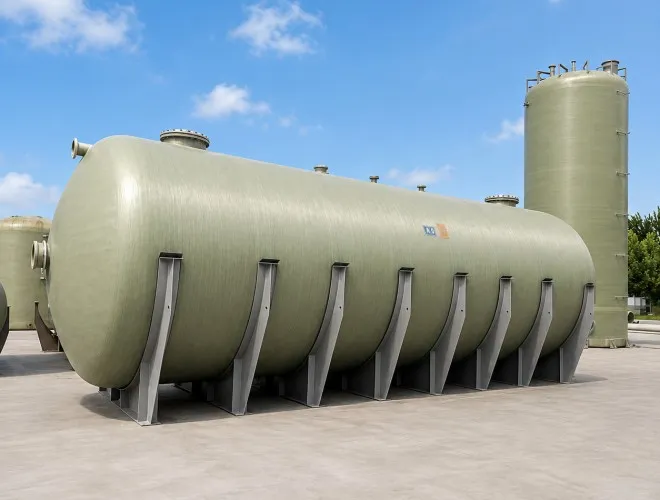
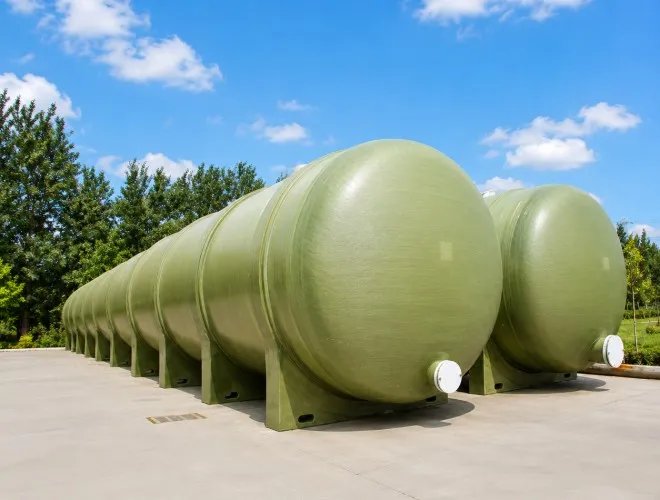
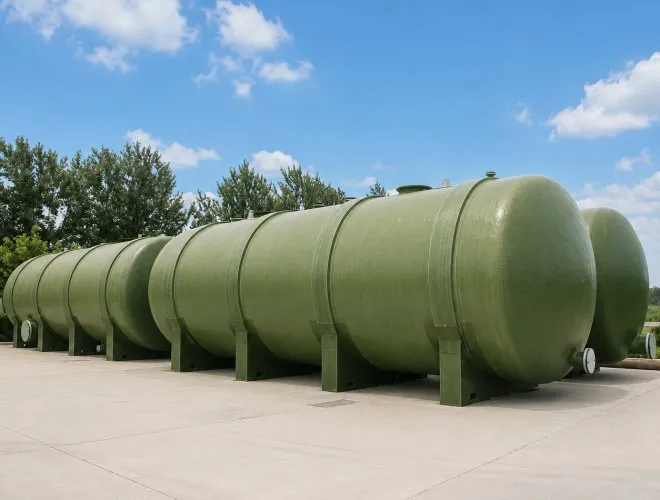
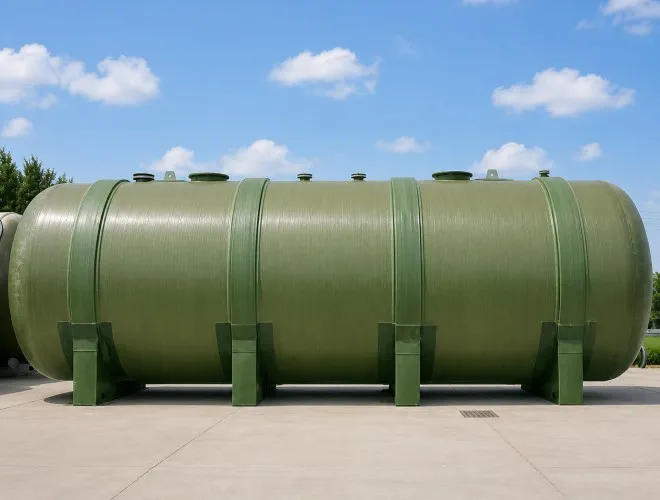
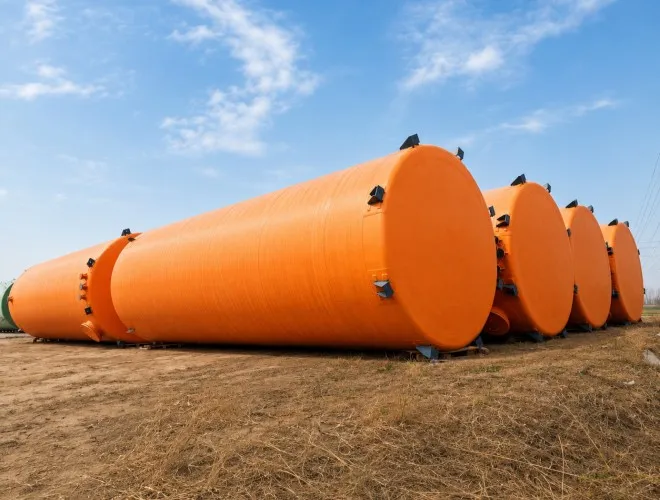
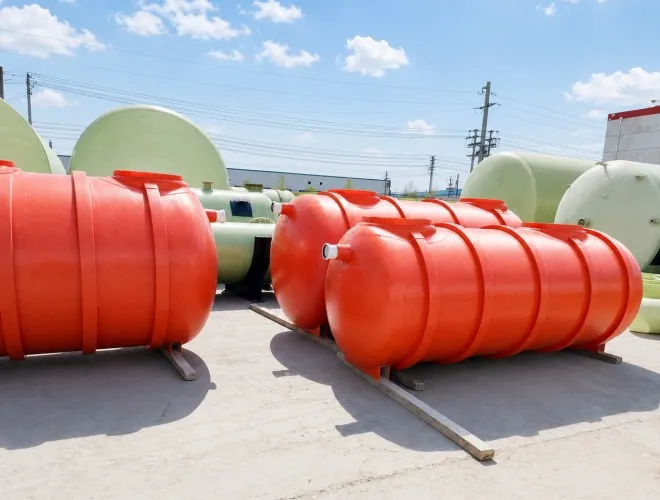
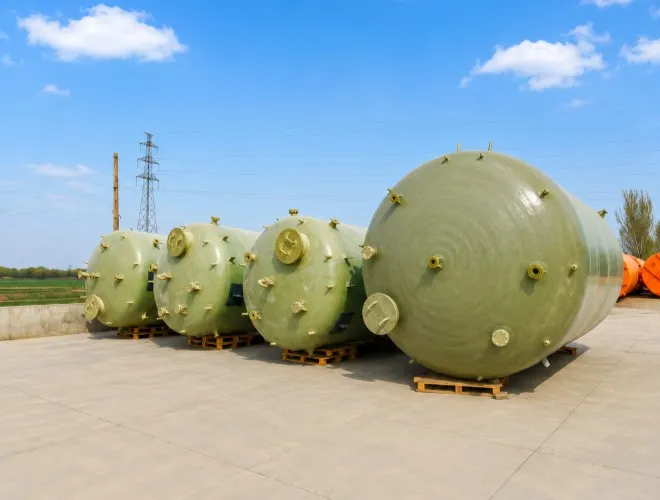
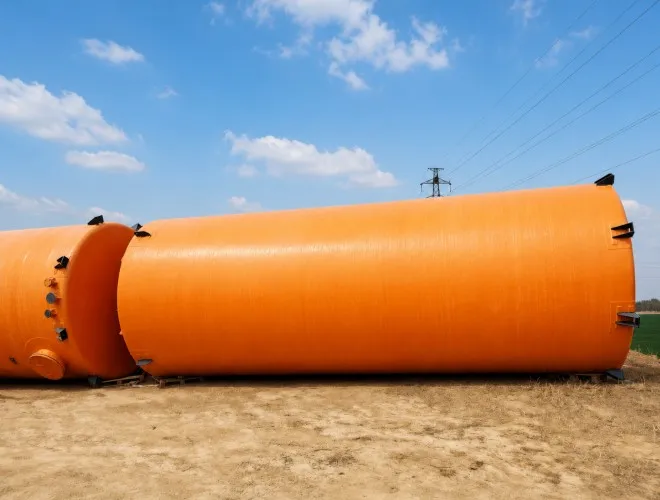
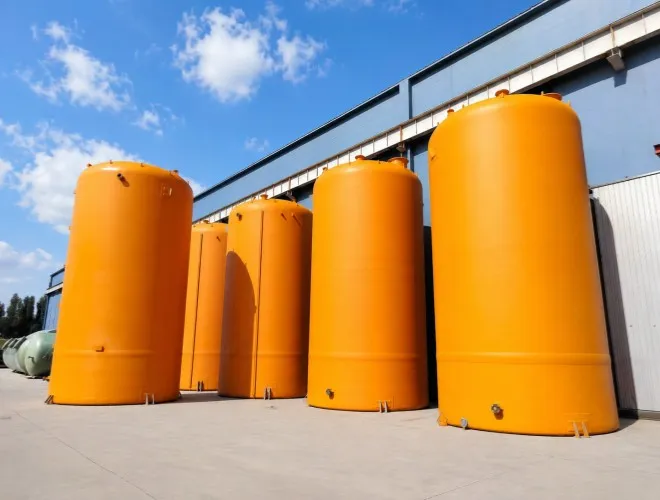
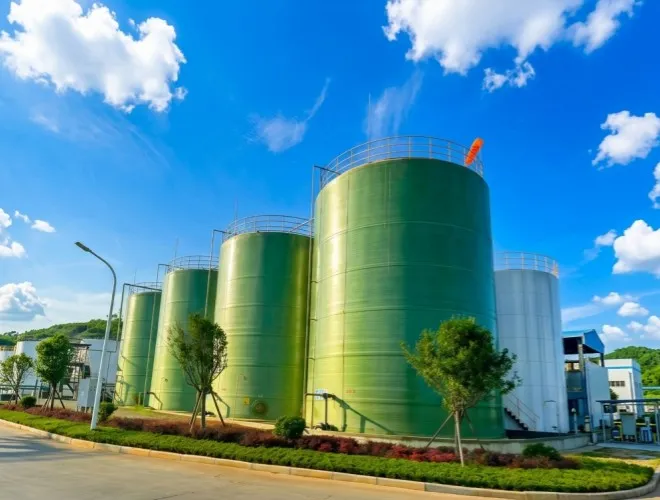
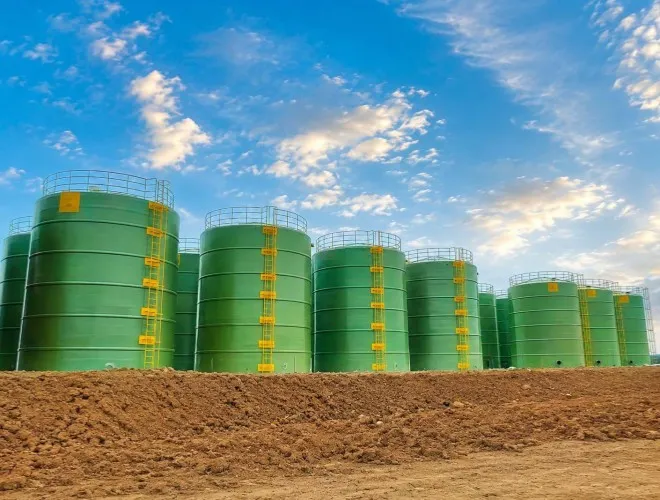
An FRP tank is a storage or process vessel made from fiber-reinforced polymer, usually glass fiber combined with a thermosetting resin. FRP is also commonly called fiberglass, while GRP means glass-reinforced plastic. In industrial projects, FRP tank, fiberglass tank and GRP tank frequently describe the same general product category.
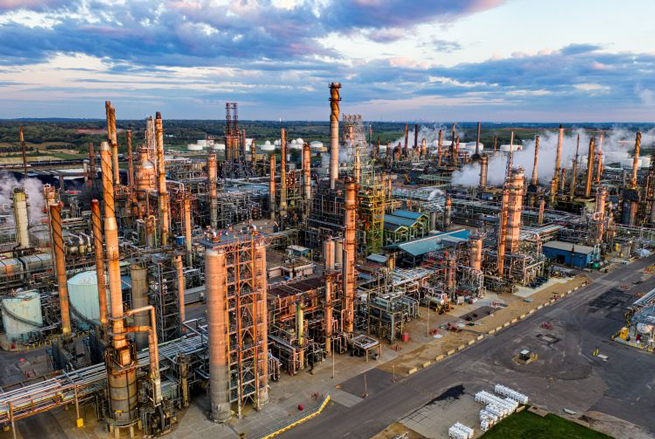
Unlike a steel tank, an FRP tank is not formed from a single homogeneous material. Its performance comes from a designed combination of resin, reinforcing fibers, laminate structure and manufacturing process. The resin protects the equipment against compatible chemicals and transfers loads between fibers. The glass fibers provide strength and stiffness. The interface between the two allows the composite structure to function as an integrated material.

FRP stands for fiber-reinforced polymer or fiber-reinforced plastic. It is a composite material consisting mainly of two functional components:
A polymer resin that forms the continuous matrix
Reinforcing fibers that carry much of the structural load
For most industrial corrosion-resistant tanks, the reinforcement is glass fiber, so the product may also be described as a GFRP tank or GRP tank. Carbon fiber and other reinforcements are available for specialized applications, but glass fiber remains the common choice for industrial storage tanks because it provides a practical balance of strength, processability and cost.
The term “plastic tank” can therefore be misleading. An FRP tank is not simply a thick shell of ordinary plastic. It is an engineered laminate in which fiber type, fiber orientation, resin chemistry, thickness and manufacturing quality are selected according to the service condition.
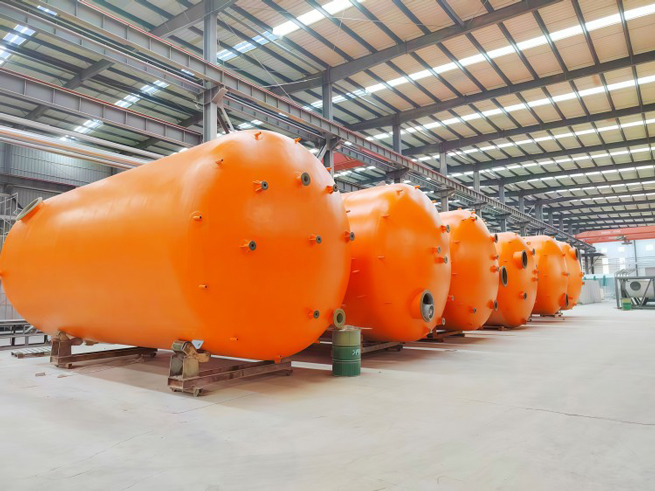
A chemical-resistant FRP tank normally contains several functional zones. These zones perform different jobs and should not be treated as interchangeable.
Corrosion Barrier
The inner corrosion barrier is the part that directly contacts the stored medium. It normally contains a high proportion of resin and may use surface veil, chopped-strand reinforcement or other compatible materials.
Its main functions are to:
Provide chemical resistance
Limit liquid penetration
Protect structural reinforcement from direct exposure
Create a smooth, cleanable internal surface
The corrosion barrier is selected according to the chemical, concentration, temperature, impurities and expected operating life. A thicker wall does not automatically compensate for an incompatible resin.
Structural Laminate
Outside the corrosion barrier is the structural laminate. This layer provides the strength and stiffness needed to resist liquid head, equipment weight, wind, seismic loads, pressure, vacuum and other specified forces.
Continuous glass-fiber roving can be arranged in hoop, helical or combined orientations. The fiber direction matters because composite materials are anisotropic, meaning their strength and stiffness differ according to direction. A well-designed structure places reinforcement where the tank is expected to carry load.
Exterior Surface Layer
The outer surface protects the tank against weather, moisture, ultraviolet exposure and minor handling damage. Outdoor tanks may use a resin-rich exterior layer, ultraviolet-resistant additives or a protective coating suitable for the selected resin system.
The external layer is important, but it should not be confused with the internal chemical barrier. One faces the stored medium; the other faces the installation environment.
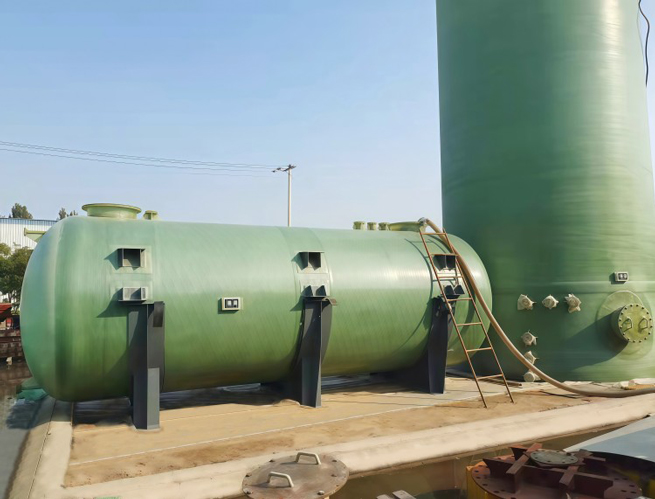
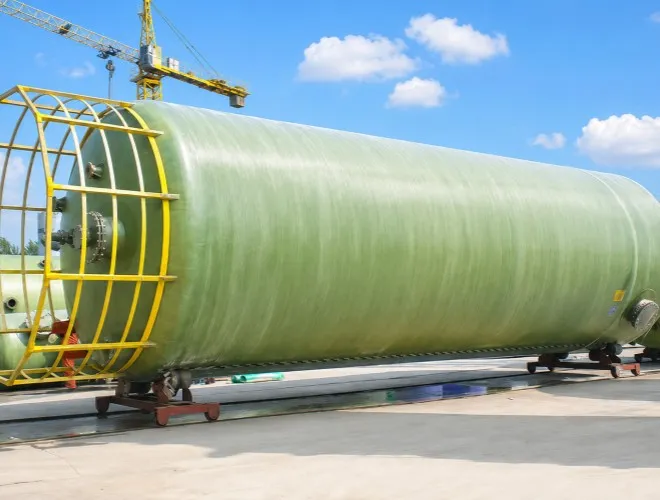
FRP tanks can be manufactured by filament winding, contact molding or a combination of processes.
Filament Winding
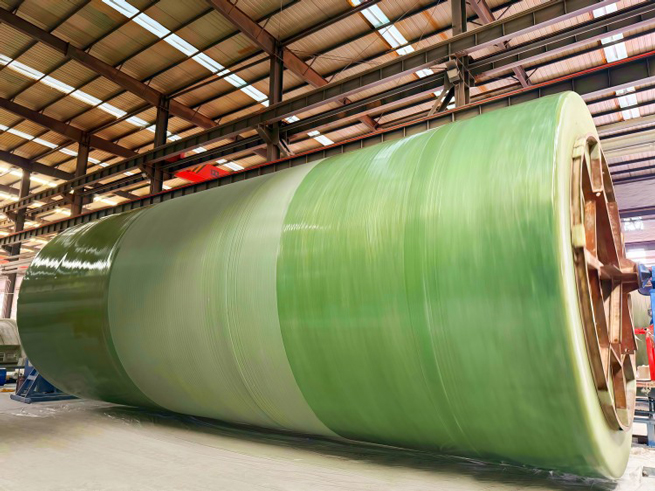
During filament winding, continuous fibers pass through a controlled resin-impregnation system and are placed over a rotating mold or liner. The winding machine controls fiber movement, placement angle and coverage.
Filament winding is particularly suitable for cylindrical tanks because it can place continuous reinforcement around the tank wall with good repeatability. Hoop winding provides strong circumferential reinforcement, while helical winding contributes to axial and combined loading. Many industrial tanks use a combination of fiber orientations rather than a single winding pattern.
The quality of a filament-wound tank depends on more than the machine itself. Important variables include:
Resin viscosity and impregnation
Fiber tension
Winding angle
Fiber distribution
Resin-to-glass ratio
Winding speed
Environmental conditions
Cure schedule
Excessive tension may damage fibers or create unfavorable residual stress. Insufficient tension can result in loose reinforcement and poor consolidation. Poor resin impregnation may leave dry fibers or voids, while an unsuitable cure schedule can reduce chemical or mechanical performance.
Contact Molding
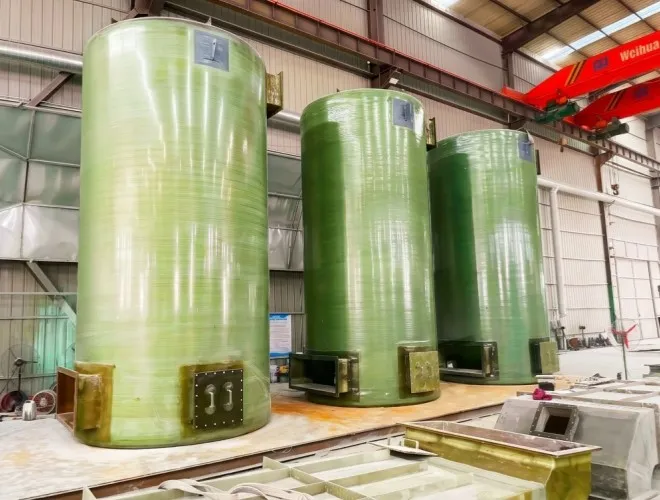
Contact molding uses layers of reinforcement that are manually or mechanically saturated with resin and consolidated against a mold. It is useful for corrosion barriers, tank bottoms, roofs, nozzles, complex transitions and shapes that cannot be efficiently produced by continuous winding.
Many FRP tanks are therefore hybrid products. The inner corrosion barrier and complex details may be contact molded, while the cylindrical structural shell is reinforced through filament winding.
ASTM maintains separate specifications for certain filament-wound and contact-molded corrosion-resistant tanks, reflecting the differences between these manufacturing routes.
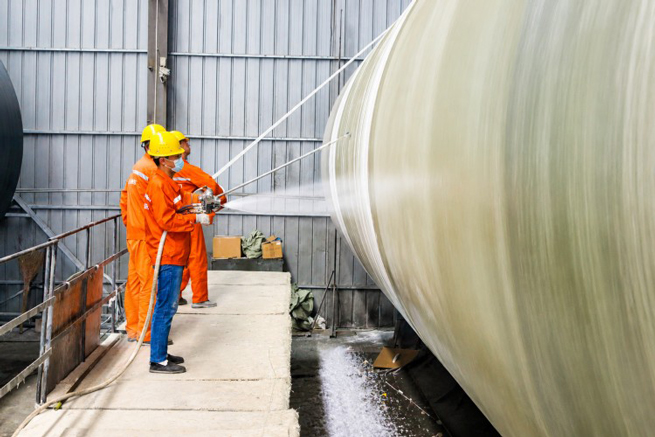
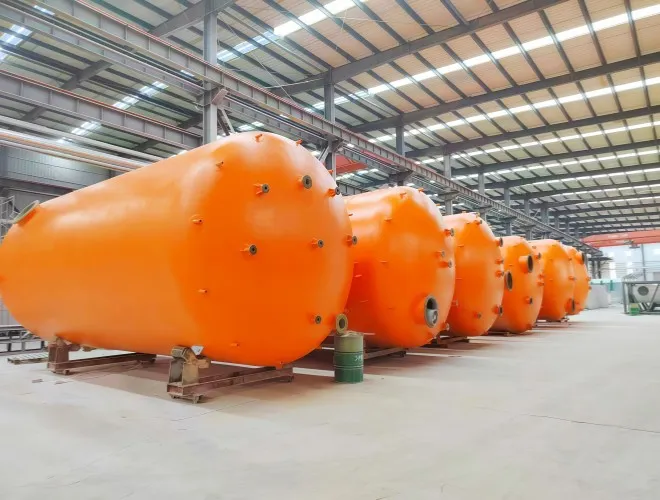
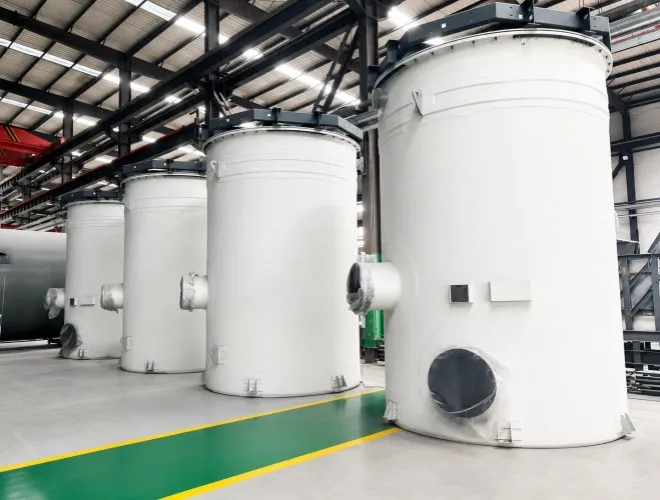
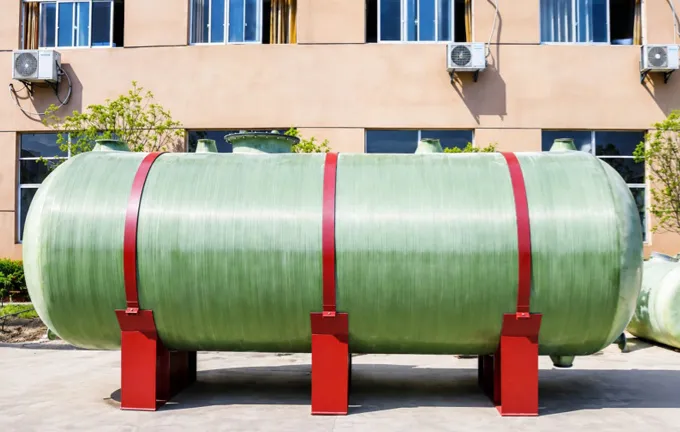
FRP tanks can be designed in many forms:
Vertical or horizontal
Flat-bottom, dished-bottom, conical-bottom or sloped-bottom
Open-top or closed-top
Above-ground or buried
Shop-fabricated or field-assembled
Cylindrical, rectangular or custom shaped
Atmospheric, vented or engineered for limited pressure or vacuum
The word “tank” does not mean that every vessel can withstand pressure or full vacuum. A standard atmospheric storage tank may be damaged if the vent becomes blocked during filling, draining or thermal change. Pressure and vacuum conditions must be clearly stated before design.
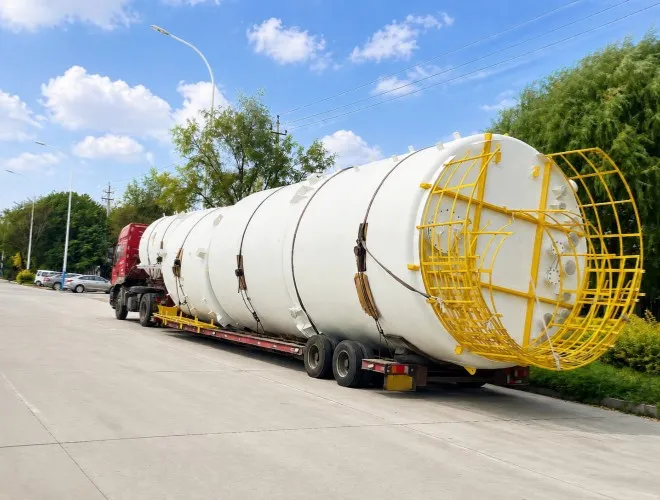
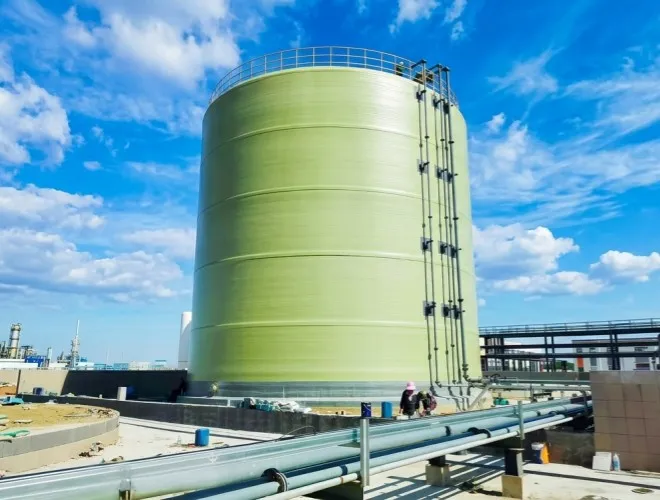
Large tanks may also require sectional transportation or field fabrication when road clearance, shipping dimensions or crane capacity are limited.
Corrosion Resistance
FRP does not rust in the same way as carbon steel. Its chemical resistance is mainly determined by the resin system, corrosion barrier and manufacturing quality.
This is valuable for acids, alkalis, salts, wastewater, brine and many process chemicals. However, FRP is not universally resistant to every substance. Chemical compatibility must always be checked against the exact concentration and temperature.
Lightweight Construction
FRP tanks are generally lighter than comparable steel or concrete equipment. Lower weight can simplify transport, lifting and foundation design, particularly for rooftop installations, plant renovations or locations with restricted crane access.
Light weight also creates engineering responsibilities. Empty outdoor tanks require suitable anchorage against wind, while buried tanks may need anti-flotation measures where groundwater is present.
Design Flexibility
FRP materials and structures can be adjusted according to the application. Resin type, corrosion-barrier construction, reinforcement orientation, wall thickness, nozzle arrangement, supports and accessories can all be customized.
This makes FRP suitable for projects where catalogue tanks cannot accommodate the process layout.
Reduced Corrosion Maintenance
A properly selected FRP tank does not require routine rust removal or repainting in the same way as coated carbon steel. This can reduce maintenance interruption and hidden corrosion beneath damaged coatings.
FRP still requires inspection. Reduced corrosion maintenance should never be interpreted as maintenance-free operation.
Smooth Internal Surface
A resin-rich internal surface can reduce product buildup and make cleaning easier in many liquid services. Smooth surfaces are also useful where contamination, drainage or biological accumulation must be controlled.
The actual surface finish depends on the manufacturing process, veil, resin, cure and quality requirements.
FRP tanks appear across a broad range of industries.
Chemical Processing
Applications include acid and alkali storage, reagent preparation, neutralization, chemical dosing and process intermediates. Each chemical service requires a separate compatibility assessment.
Water and Wastewater Treatment
FRP tanks can store coagulants, disinfectants, pH-adjustment chemicals, regeneration solutions, wastewater and treatment-process liquids. Covers, ducts and scrubbers may also be integrated into the same corrosion-resistant system.
Seawater and Desalination
Saltwater, salt spray and high humidity create persistent corrosion challenges for metal equipment. FRP tanks are used in pretreatment, chemical dosing, backwash, wastewater and brine-related systems.
Air-Pollution Control
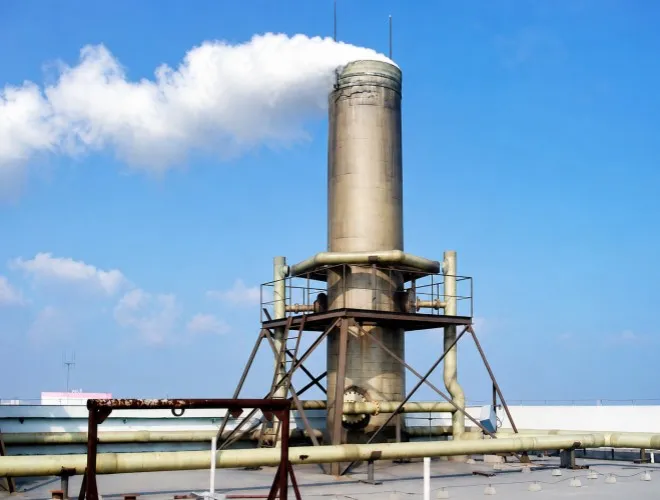
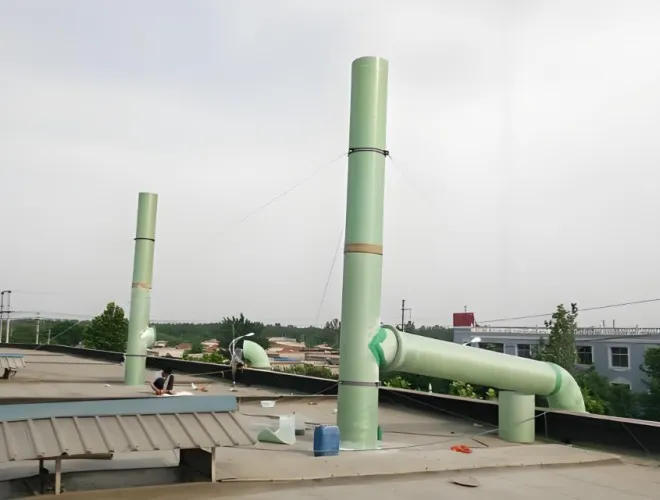
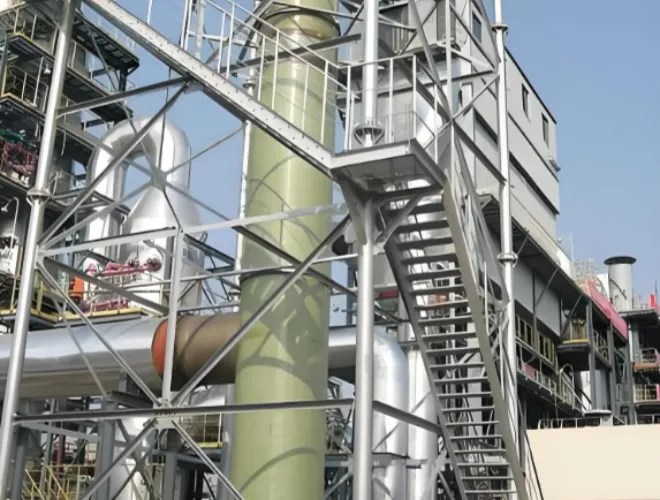
Scrubbing liquids, condensate and collected chemicals may be stored in FRP tanks connected to absorbers, scrubbers, ducts and chimneys.
Mining and Mineral Processing
Applications include reagent storage, process-water systems, wastewater, leaching-related services and auxiliary chemical systems.
Energy and Electrochemical Industries
FRP tanks may be used for brine, water treatment, compatible acids and alkalis, wastewater and environmental-control systems associated with chlor-alkali, battery-material and other energy-related projects.
Common thermosetting resin families include unsaturated polyester, vinyl ester and epoxy resin. Each family contains many grades, so the resin name alone is not enough to determine suitability.
Unsaturated Polyester Resin
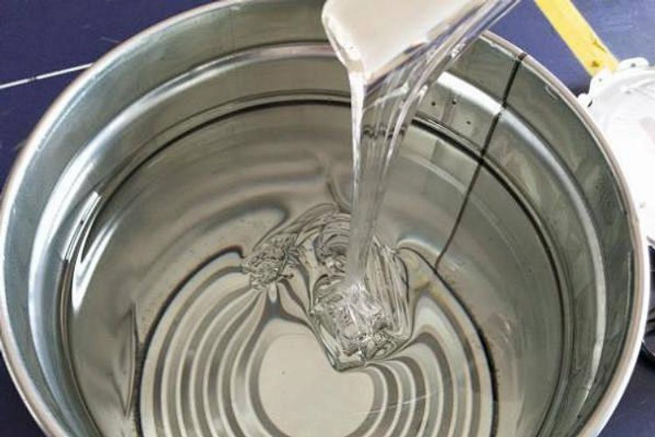
Polyester resins offer convenient processing and economical performance for water, wastewater and many moderate chemical services. Orthophthalic, isophthalic, terephthalic and other polyester chemistries have different performance ranges.
Vinyl Ester Resin
Vinyl ester resins are widely used for demanding corrosion-resistant applications because many grades provide good chemical resistance, toughness and fatigue performance. Specialized formulations are available for acids, alkalis, solvents, oxidizing environments, elevated temperatures and flame-retardant requirements.
“Vinyl ester” is still a broad category. Compatibility depends on the individual resin grade, laminate construction and operating condition.
Epoxy Resin
Epoxy systems provide strong adhesion, low cure shrinkage and good mechanical properties. They are used in selected tanks, pressure-related equipment, liners and high-performance composite structures. Processing, cure temperature and chemical resistance differ significantly between epoxy formulations.
Chemical-resistance guides commonly warn that laminate thickness, temperature, exposure duration and structural conditions influence actual performance. Laboratory immersion testing and field experience may be required when published data do not adequately cover the service.
A trustworthy explanation of FRP must include its limitations.
Temperature Limits
FRP performance depends on the resin’s heat resistance and degree of cure. As temperature increases, resin stiffness and chemical resistance may decline. Continuous operating temperature, temporary excursions and cleaning temperatures should all be considered.
Pressure and Vacuum
Many FRP storage tanks are designed for atmospheric service. Even a small vacuum can become critical in a large-diameter vessel. Vent sizing, filling rate, draining rate, blocked vents and connected blowers must therefore be reviewed.
ASME RTP-1 addresses certain stationary corrosion-resistant reinforced thermoset plastic vessels within defined internal and external pressure limits, but its scope should not be assumed to cover every tank automatically.
Fire and Heat Exposure
Organic resin systems can be affected by flame and radiant heat. Flame-retardant formulations may improve fire performance but do not make FRP identical to noncombustible steel or concrete. Fire classification and project requirements must be specified separately.
Mechanical Impact
FRP has high specific strength, but sharp impact, dropped tools, forklift contact or improper lifting can damage the laminate. Supports and nozzles are particularly sensitive to concentrated loads.
Ultraviolet Ageing
Outdoor exposure can cause surface chalking, discoloration or resin degradation over time. UV-resistant resin, additives, coatings and routine inspection help protect the surface.
Manufacturing Sensitivity
FRP quality depends heavily on materials and process control. Voids, dry fibers, poor cure, inaccurate dimensions, contaminated bonding surfaces or inadequate reinforcement can reduce performance. The tank should therefore be purchased as engineered equipment, not as an undifferentiated plastic container.
A responsible FRP tank supplier will request more than capacity and dimensions. Useful design data include:
1. Chemical name and composition
2. Normal, minimum and maximum concentration
3. Normal and maximum temperature
4. Liquid density and solids content
5. Atmospheric, pressure or vacuum condition
6. Filling and emptying rates
7. Tank orientation and installation location
8. Wind, seismic and snow loads
9. Indoor, outdoor, buried or coastal exposure
10. Nozzle sizes, locations and connected loads
11. Mixer, agitator, ladder or platform requirements
12. Applicable standard and inspection plan
13. Transport and lifting limitations
14. Expected cleaning procedure and service life
Missing information creates hidden assumptions. In corrosive service, an incorrect assumption about temperature, concentration or impurities can be more important than the nominal tank volume.
Common specifications for FRP tanks include ASTM D3299 for certain filament-wound corrosion-resistant tanks, ASTM D4097 for certain contact-molded tanks and ASME RTP-1 for covered reinforced thermoset plastic corrosion-resistant equipment. Project owners may also use EN, national, industry or company standards.
A quality plan may include:
Raw-material identification and certificates
Resin-batch and reinforcement records
Laminate construction verification
Cure control
Visual and dimensional inspection
Hardness or degree-of-cure checks
Nozzle and flange inspection
Leak or hydrostatic testing where applicable
Lifting, packaging and shipping inspection
Manufacturing and final documentation
The applicable tests should be agreed before production. A test suitable for an atmospheric tank may not demonstrate pressure-vessel performance, and a successful water test does not prove chemical compatibility.
FRP tanks should be inspected throughout their service life. Routine inspection commonly focuses on:
Inner-surface discoloration, blistering or cracking
Leakage or chemical staining
External impact damage
Nozzle and flange condition
Supports, anchors and hold-down systems
Ladder and platform connections
UV ageing or exposed fibers
Abnormal deformation
Changes in process temperature or chemistry
Inspection frequency should reflect the chemical hazard, operating severity, tank age and previous findings. Before entering a tank, appropriate confined-space and chemical-safety procedures are essential.
Repairs are possible in many cases, but the damaged area, cause and remaining laminate condition must first be assessed. Covering a defect without correcting the cause can hide a developing failure.
Is FRP the Same as Fiberglass?
In most industrial tank discussions, yes. Fiberglass usually refers to glass-fiber-reinforced polymer. GRP, GFRP and FRP are closely related terms, although FRP can technically include fibers other than glass.
Can an FRP Tank Store Any Acid?
No. Compatibility depends on acid type, concentration, temperature, impurities, exposure time and resin grade. Some acids and oxidizing chemicals require specialized resin systems or non-glass inner materials.
Can an FRP Tank Be Used Outdoors?
Yes, provided wind, anchorage, UV exposure, temperature and environmental loads are included in the design.
Can an FRP Tank Operate Under Vacuum?
Only when it has been specifically designed for the required external pressure. A standard atmospheric tank should not be assumed to resist vacuum.
How Long Does an FRP Tank Last?
There is no universal service-life number. Life depends on resin selection, laminate design, manufacturing quality, operating conditions, installation and maintenance.
Article Keywords
FRP tank, fiberglass tank, GRP tank, fiber reinforced plastic tank, fiberglass storage tank, chemical storage tank
Description
what an FRP tank is, how fiberglass and resin form its corrosion barrier and structure, where it is used, and what to check before selection.
 English