FRP pipe specifications typically include nominal diameter, actual inner and outer diameters, wall thickness, pressure rating, stiffness rating, resin system, connection method, and single pipe length. No single parameter can solely determine whether a pipe is suitable: products with the same diameter may have different wall thicknesses, pressure capacities, and flow inner diameters, and pipes with the same pressure rating may need reevaluation due to temperature, medium, connection method, and installation conditions.
Therefore, when reading FRP pipe specification sheets, one should first clarify the standards and size systems used in the project and then assess it in conjunction with complete operating conditions, rather than simply selecting products based on "diameter plus pressure."
FRP pipe dimensions should at least distinguish between nominal diameter, inner diameter, outer diameter, and wall thickness, where the nominal diameter is primarily used for specification identification and system matching and does not necessarily equal the actual measured size.
DN is a common nominal size identifier in piping systems. ISO 6708 provides a unified description of the definition and preferred values of DN, and also points out that pipes may also be identified by outer diameter, inner diameter, or other methods. Therefore, DN cannot be directly used as an accurate inner or outer diameter.
The inner diameter directly affects the effective flow area, flow rate, and pressure loss; the outer diameter relates to joints, flanges, supports, casings, and installation clearance; wall thickness is influenced by pressure, diameter, material structure, stiffness, and manufacturing methods. Some FRP pipes use a stable inner diameter as the main size basis, while some products are designed according to an outer diameter series. Procurement should verify manufacturer drawings and dimensional tolerances.
For example, ISO 23856:2021 applies to circular GRP pipes, fittings, and joints with DN 50 to DN 4000, but this range is merely the standard's applicable boundary and does not mean that every manufacturer can provide all sizes within it.
| Specification Item | Specific Meaning | Main Impact | Common Misunderstanding |
|---|---|---|---|
| Nominal Diameter DN | Identifier for pipe size series | Fitting matching, project specification classification | Using DN directly as the actual inner diameter |
| Inner Diameter ID | Actual flow dimension inside the pipe | Flow, flow rate, pressure loss, and pigging space | Only looking at DN without verifying the effective inner diameter |
| Outer Diameter OD | Actual diameter of the pipe's outer surface | Joints, supports, casings, and installation clearance | Assuming the same DN necessarily has the same outer diameter |
| Wall Thickness | Total thickness of all functional layers of the pipe wall | Pressure resistance, stiffness, corrosion-resistant layer configuration | Only comparing thickness, not comparing structure and materials |
| Single Pipe Length | Effective length of the pipe segment at the factory | Number of joints, transportation, and on-site installation | Ignoring transportation restrictions and joint reserved length |
The so-called FRP pipe size chart only has relatively complete selection value when it simultaneously indicates the dimensional reference, pressure rating, stiffness rating, resin structure, execution standard, and tolerance.
The pressure rating of FRP pipes is a product's pressure capacity identifier under specified materials, temperature, lifespan, and test conditions, not equivalent to the actual working pressure that can be used long-term under any conditions.
Working pressure usually refers to the continuous pressure of the system during normal operation; design pressure is the pressure condition used in pipeline and system design, which usually also considers pump shutdown, valve closure, water hammer, static pressure difference, vacuum, or other possible conditions; pressure rating is a nominal value for classifying products according to specific standards and reference conditions. Definitions for these terms may differ between projects, and the technical specifications and execution standards of the contract should prevail.
AWWA's revision instructions for C950 fiberglass pressure pipes list 50, 100, 150, 200, 250, 300, 350, 400, and 450 psig, corresponding to approximately 345 to 3103 kPa of pressure ratings. These values apply to water systems and corresponding conditions specified in the standard and cannot be directly applied to high-temperature chemical media, strong solvents, vacuum, or other standard systems.
The actual pressure capacity of FRP pipes can also be affected by the following factors:
Rising temperatures may reduce the allowable pressure of the resin matrix and the pipe system;
Layering, wall thickness, and joint design of large-diameter products may differ from small-diameter ones;
Different stress methods for flanges, sockets, adhesives, or on-site wound joints;
Frequent start-stop, pressure cycling, and water hammer may increase fatigue and transient loads;
Vacuum or external pressure conditions require verification of buckling capacity, not just looking at internal pressure ratings;
Axial force generated by valves, pumps, and equipment interfaces may require independent support or anchorage.
Therefore, the pressure rating in the specification sheet should be used as a starting point for selection, not a complete system design conclusion.
The stiffness rating reflects the pipe's ability to resist circumferential deformation, especially related to the structural performance when buried FRP pipes interact with soil, bedding, backfill, and external loads.
Buried FRP pipes usually belong to flexible pipe systems. The higher the pipe wall stiffness, the stronger the ability to resist initial circumferential deformation, but project safety is not only determined by pipe stiffness. Trench width, foundation conditions, backfill materials, compaction degree, cover depth, groundwater buoyancy, and vehicle loads will affect pipe deformation.
AWWA C950 revision instructions list 18, 36, 46, and 72 psi, approximately 124, 248, 317, and 496 kPa for pipe stiffness ratings. These classifications belong to the corresponding standard system and cannot be directly equated with other specifications using SN identification.
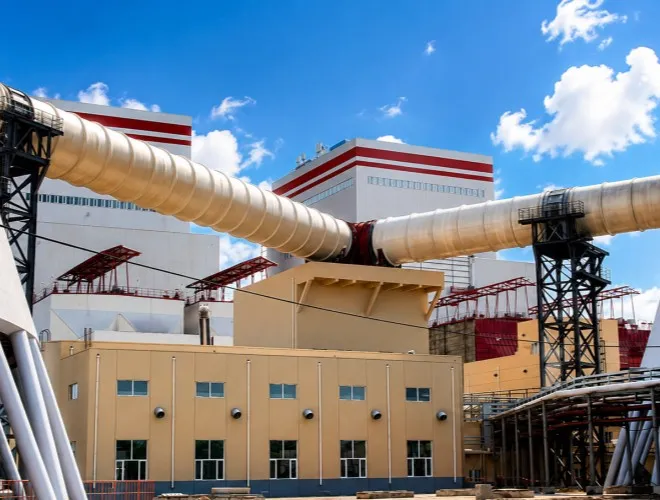
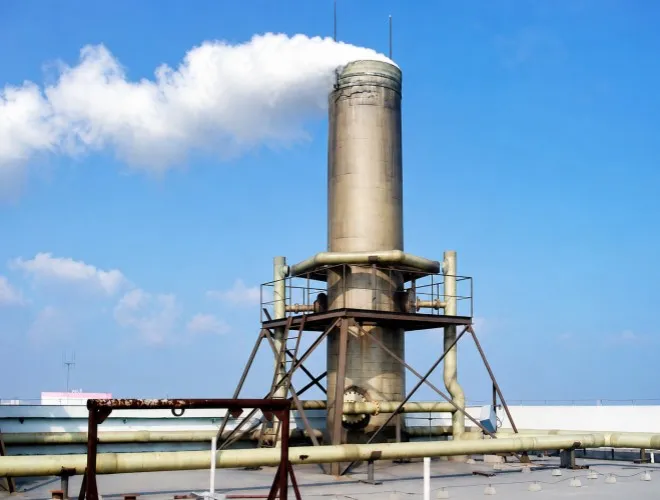
The selection focus for overhead pipelines is different. In addition to the pipe wall itself, support spacing, local contact stress, thermal expansion and contraction, axial thrust, vibration, valve weight, and equipment nozzle load should also be checked. ISO 14692-3 includes pipeline layout, hydraulic design, structural design, and detailed design in the GRP pipeline system design scope, indicating that pressure ratings cannot replace support and system stress analysis.
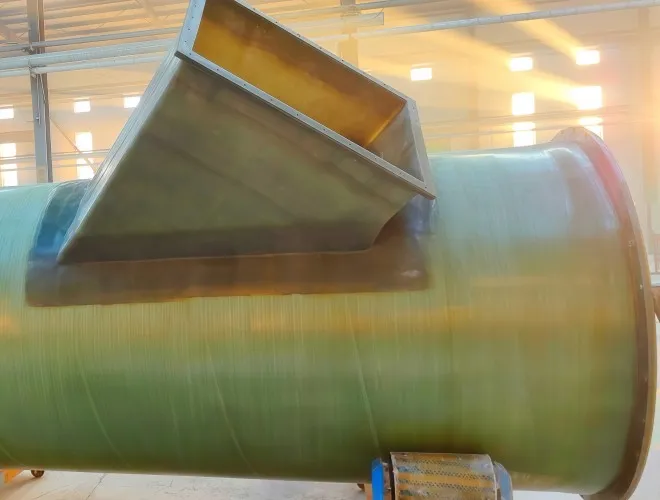
Equipment connection lines should also pay attention to the interface displacement of pumps, tanks, towers, and heat exchange equipment. Relying directly on FRP pipes to absorb equipment misalignment or larger external loads may form local stress near flanges, elbows, or joints.
Material selection for FRP pipes should consider medium composition, concentration, temperature, pressure, solid particles, installation environment, and expected usage conditions, rather than just relying on generalized descriptions like "acid-resistant" or "alkali-resistant."
The resin matrix and inner corrosion-resistant layer directly affect chemical compatibility. The same chemical under different concentrations, temperatures, or impurities may correspond to different resin systems; cleaning agents, disinfectants, and short-term abnormal media should also be included in the assessment. Media containing particles also need to consider erosion, deposition, and local wear.
ISO 14692-1 includes application categories, connection types, resin matrix, pressure rating methods, and material limitations in GRP pipe specifications, while ISO 14692-4 further covers delivery inspection, handling, storage, installation, pressure testing, maintenance, and repair. This indicates that FRP pipe specification selection should run through the entire manufacturing and installation process, not just review a wall thickness chart.
Yingnai's existing FRP process pipe data provides reference wall thickness according to DN and 0.6, 1.0, 1.6 MPa pressure columns and covers different size ranges. Actual projects still need to confirm specific structures based on medium, temperature, pressure cycling, connection method, installation load, and execution standards, and cannot directly place orders based on wall thickness in the table without considering operating conditions.
Complete FRP pipe quotation documents should enable manufacturers to judge material compatibility, size system, pressure conditions, structural requirements, and supply boundaries.
It is recommended to provide the following content in the specification or quotation sheet:
Transport Medium: Complete chemical name, components, and concentration; avoid just writing "wastewater" or "acid solution."
Temperature Conditions: Normal operating temperature, design temperature, minimum temperature, and short-term peak temperature.
Pressure Conditions: Normal working pressure, design pressure, test pressure, vacuum, and water hammer requirements.
Size Information: DN, required inner or outer diameter, wall thickness limitations, single pipe length, and dimensional tolerances.
Flow Parameters: Normal and maximum flow, allowable flow rate, pressure loss, and pump operation method.
Laying Method: Buried, overhead, pipe gallery, trench, casing crossing, or underwater installation.
External Loads: Cover depth, vehicle load, groundwater, support spacing, valve, and equipment loads.
Connection Requirements: Flange standards, socket or adhesive forms, on-site winding connections, and detachable needs.
Fitting Range: Quantity and angle of elbows, tees, reducers, flanges, blind plates, and on-site short sections.
Execution Standards: Project-specified ISO, AWWA, ASTM, or other industry and regional standards.
Inspection Documents: Dimensional reports, material certification, pressure testing, appearance inspection, and other project requirements.
Supply Boundary: Whether pipes, fittings, gaskets, fasteners, supports, or on-site connection materials are included.
If there are blank parameters in the specification sheet, it does not mean that the product cannot be manufactured; it may just be that the size and pressure combination does not belong to the standard series and requires separate design; but it cannot be regarded as a supplyable specification without structural calculation and formal technical confirmation.
Q: Does the DN of FRP pipe equal the actual inner diameter?
A: Not necessarily. DN is a nominal size identifier, and the actual inner diameter is affected by the size system, wall thickness, corrosion-resistant layer, and manufacturing tolerance. One should check the product drawings.
Q: Can FRP pipes with the same DN be directly interchangeable?
A: Not just by DN. One should also verify inner and outer diameters, pressure rating, stiffness rating, interface size, resin system, flange standard, and execution standard.
Q: Is the wall thickness always greater with a higher pressure rating?
A: Under the same diameter, material, and structural conditions, it usually increases, but wall thickness is also affected by layering design, fiber content, stiffness, corrosion-resistant layer, and manufacturing standards, and cannot be compared alone.
Q: Should the highest stiffness rating be chosen for buried FRP pipes?
A: Not necessarily. Reasonable stiffness should be determined by cover, backfill, compaction, groundwater, and vehicle load. Blindly increasing stiffness may increase cost but cannot compensate for poor trench construction.
Q: Why must medium concentration and temperature be provided when requesting a quote?
A: Medium concentration and temperature affect the choice of resin and corrosion-resistant layer and may also affect allowable pressure and expected usage conditions. Only providing the chemical name is usually insufficient for material evaluation.
FRP pipe specifications cannot be simplified to "diameter, wall thickness, and pressure" as three numbers. Reliable selection requires checking dimensional reference, effective inner diameter, pressure rating, stiffness, resin system, connection method, laying conditions, and applicable standards. Especially for buried, overhead, and equipment connection pipelines, their main loads and design focuses are not the same.
If you are preparing technical specifications or quotation documents for an FRP pipeline project, you can provide Yingnai with the media and concentration, temperature and pressure range, required diameter and length, laying method, connection standards, and pipeline drawings to facilitate consultation on optional specifications, fitting matching, and project supply scope.
 English