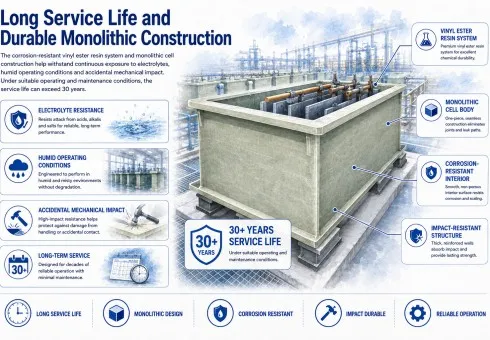
The corrosion-resistant vinyl ester resin system and monolithic cell construction help withstand continuous exposure to electrolytes, humid operating conditions and accidental mechanical impact. Under suitable operating and maintenance conditions, the service life can exceed 30 years.
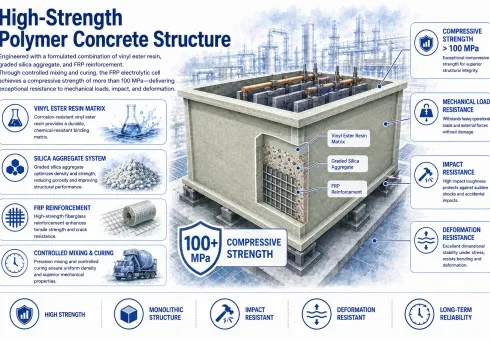
The cell body is manufactured from a formulated combination of vinyl ester resin, graded silica aggregate and FRP reinforcement. After controlled mixing and curing, the structure can achieve a compressive strength of more than 100 MPa, providing resistance to mechanical loads, impact and deformation.
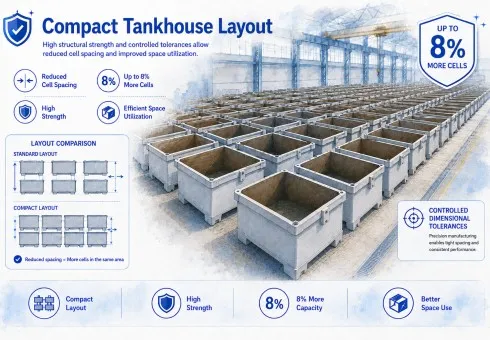
High structural strength and controlled dimensional tolerances allow the cell-to-cell spacing to be reduced where the plant layout permits. A compact arrangement can accommodate up to 8% more electrolytic cells within the same floor area, helping increase tankhouse capacity and space utilization.
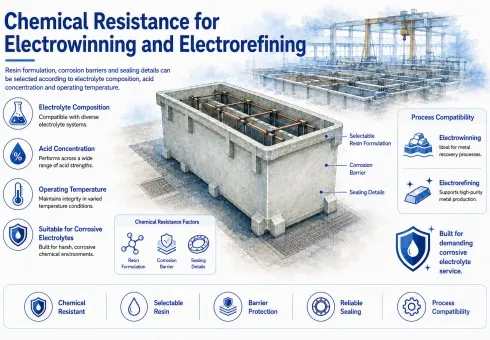
Resin formulation, corrosion barriers and sealing details can be selected according to electrolyte composition, acid concentration and operating temperature. The cells are suitable for demanding electrowinning and electrorefining processes involving corrosive electrolyte solutions.
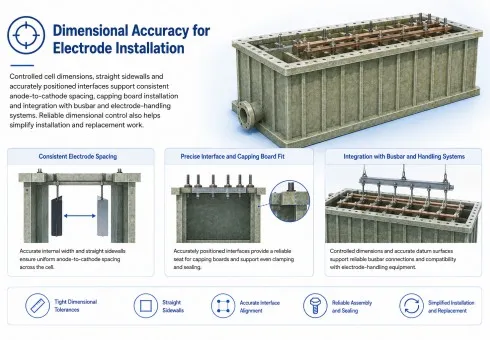
Controlled cell dimensions, straight sidewalls and accurately positioned interfaces support consistent anode-to-cathode spacing, capping board installation and integration with busbar and electrode-handling systems. Reliable dimensional control also helps simplify installation and replacement work.
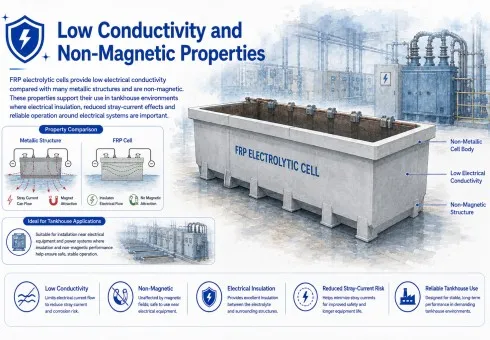
The non-metallic cell body does not rust and provides low electrical conductivity compared with metallic structures. Its corrosion-resistant and monolithic construction helps reduce coating repairs, lining replacement and corrosion-related maintenance in the tankhouse.
A polymer-concrete structure combining vinyl ester resin, graded silica aggregate and FRP reinforcement can exceed 100 MPa compressive strength, while controlled dimensions support consistent electrode spacing, alignment and installation.
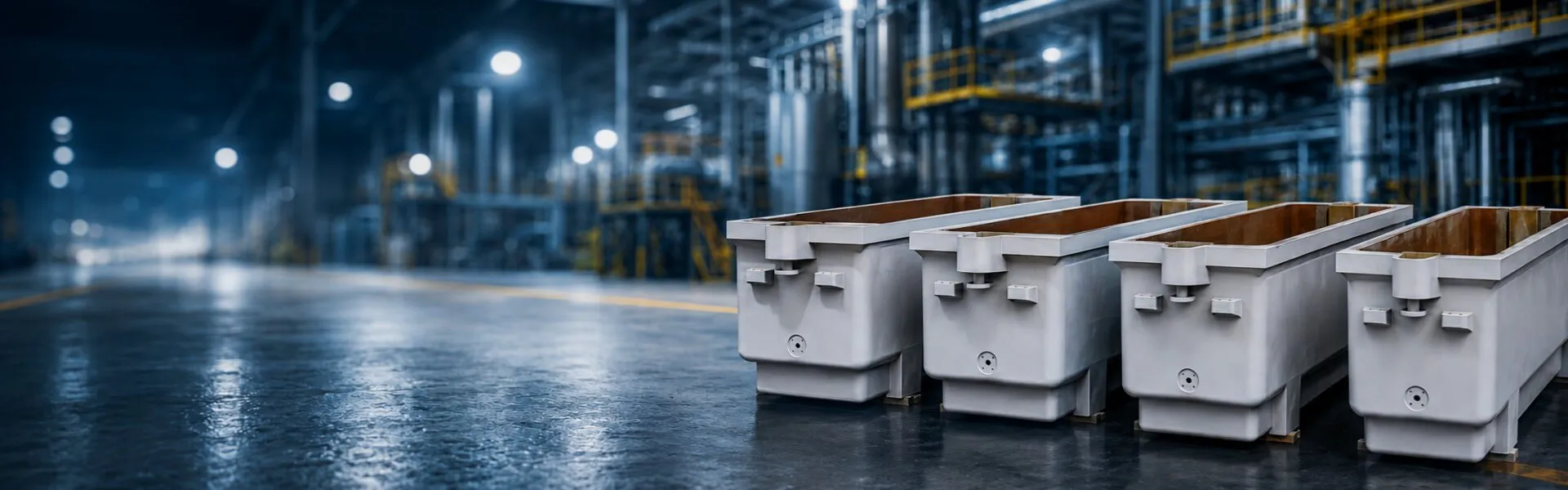
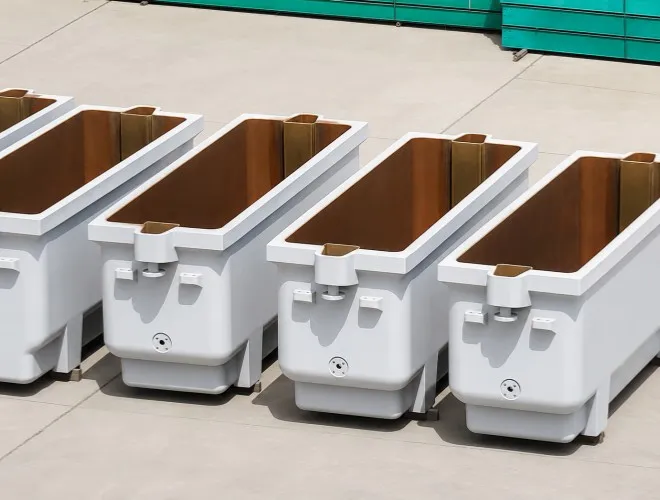
Yingnai FRP Electrolytic Cells combine a corrosion-resistant vinyl ester resin system with monolithic construction, providing durable service in aggressive electrolytes and humid tankhouses, with service life exceeding 30 years under suitable conditions.
The non-metallic cell body provides electrical insulation and low conductivity, while high structural strength and controlled tolerances enable tighter cell spacing, potentially accommodating up to 8% more cells within the same floor area.
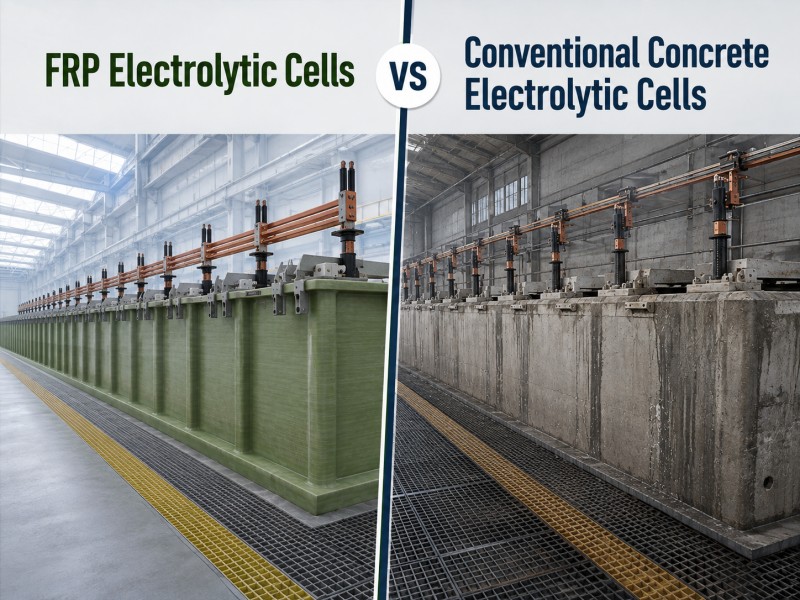
Corrosion and Leakage Control
Yingnai FRP Electrolytic Cells use a corrosion-resistant vinyl ester composite structure that directly withstands aggressive electrolytes, reducing dependence on separate coatings or linings that may deteriorate over time.
Dimensional Accuracy
Controlled manufacturing gives Yingnai cells consistent sidewalls and critical dimensions, supporting accurate electrode spacing and alignment. Conventional concrete cells may require additional lining and dimensional correction during construction.
Electrical Insulation
The non-metallic composite body provides low electrical conductivity and electrical isolation around the electrolytic system, reducing unintended conductive paths and supporting reliable electrode and busbar installation.
Compact Tankhouse Layout
High structural strength and controlled dimensions allow tighter cell spacing where the plant layout permits. Yingnai cell systems can therefore improve tankhouse space utilization compared with bulkier conventional arrangements.
 English