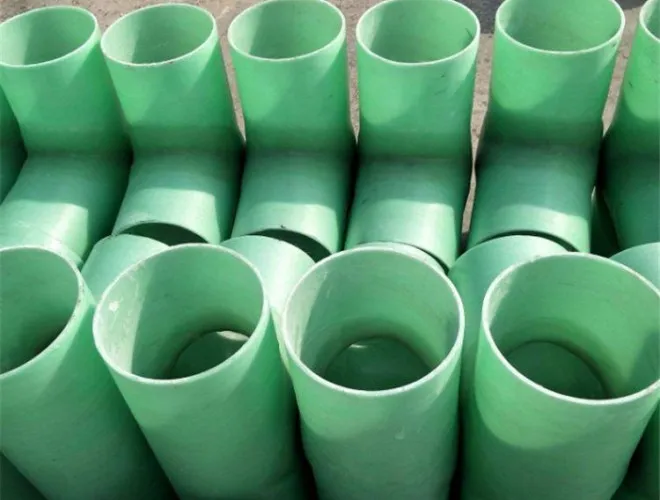
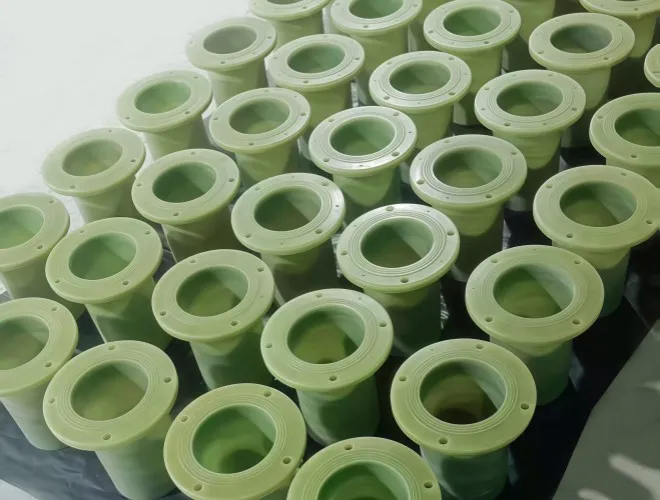
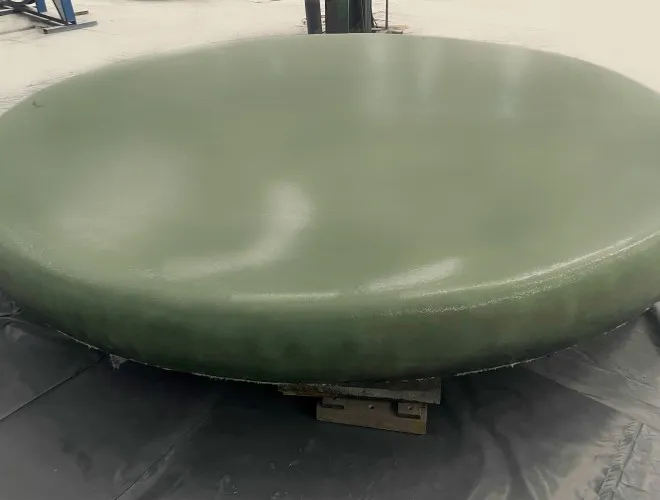
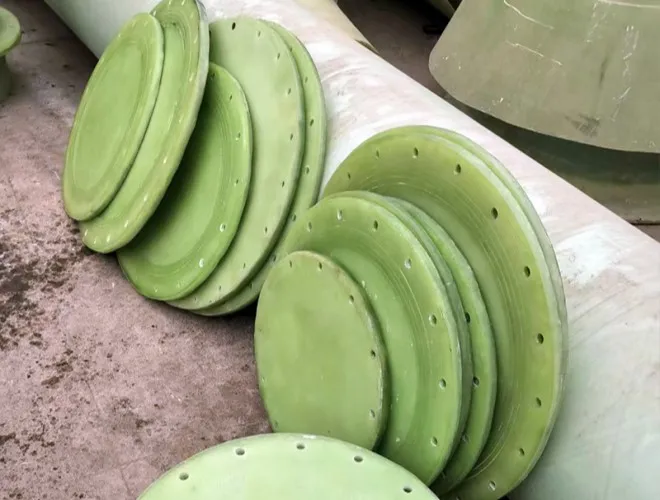
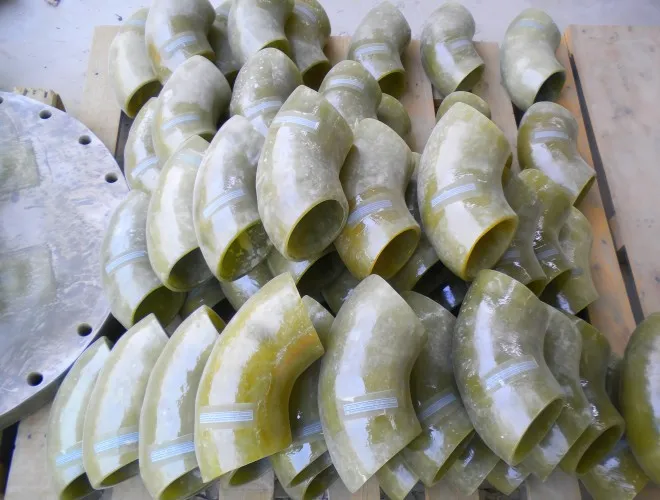
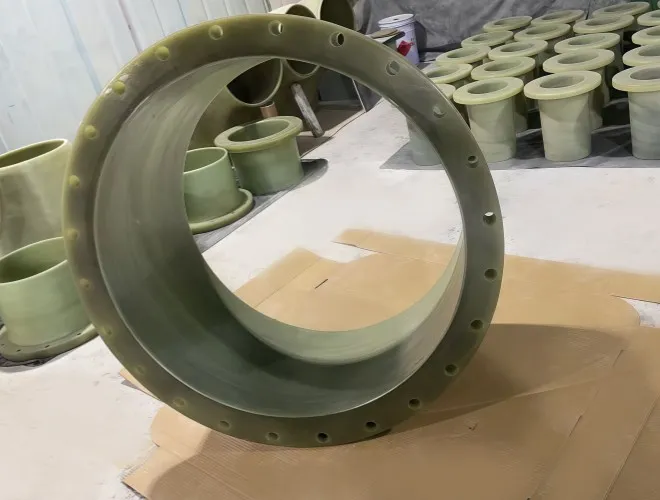
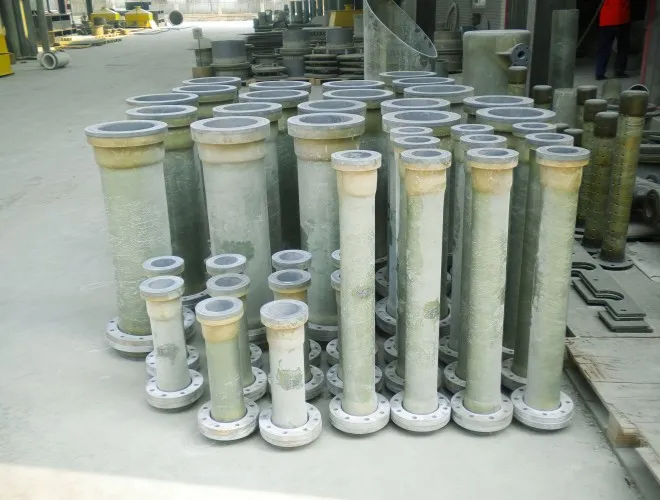
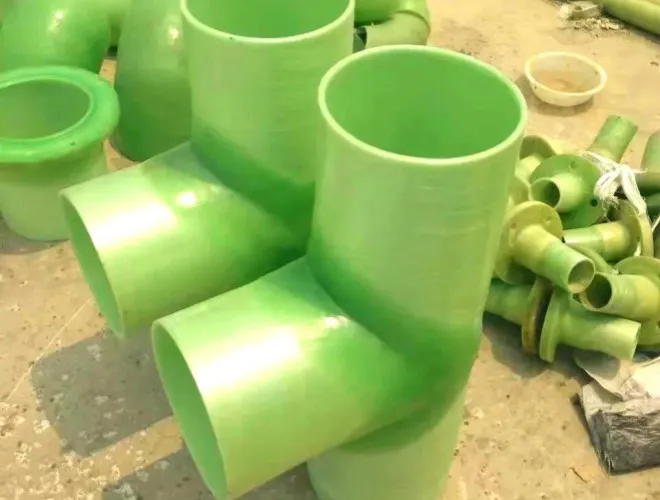


Yingnai FRP Pipe Fittings include flanges, elbows, tees, crosses, reducers, couplings, sleeves, blind flanges and end caps, providing coordinated components for branching, direction changes, transitions, isolation and equipment connections.
Branch intersections, bends, flange hubs and diameter transitions can receive application-specific reinforcement, helping fittings withstand pressure, connection loads and installation stresses while maintaining a continuous corrosion-resistant internal surface.
Yingnai fittings can be configured with laminated, bonded, flanged or sealed connections and customized dimensions, allowing seamless integration with FRP pipelines, pumps, valves, tanks and other process equipment.
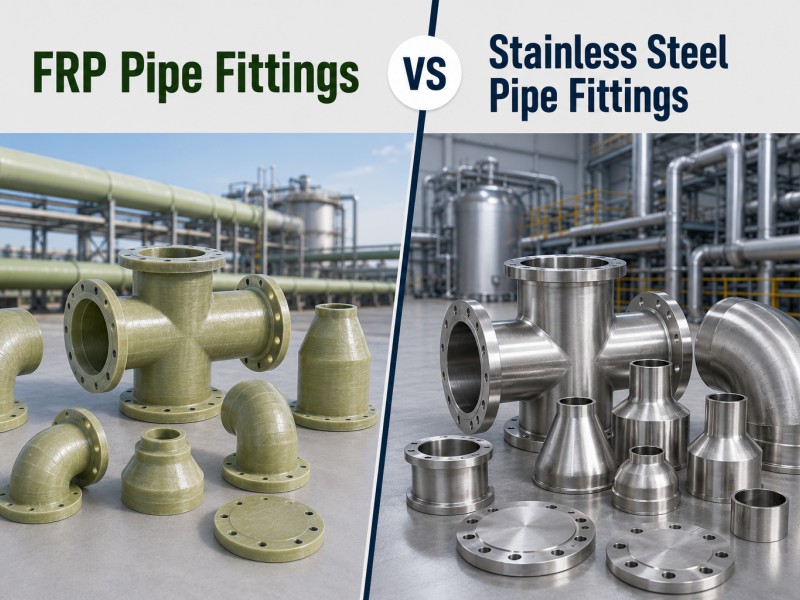
Corrosive Chemical Service
Yingnai FRP Pipe Fittings can use corrosion barriers and resin systems matched to acids, alkalis, salts and wastewater. Stainless steel resistance varies considerably with alloy grade, chlorides and temperature.
Lightweight Large-Diameter Fittings
FRP elbows, tees, reducers and flanges remain relatively lightweight as diameter increases, simplifying handling and installation. Large stainless steel fittings are stronger locally but become significantly heavier.
Custom Geometry and Reinforcement
Yingnai can customize branch sizes, reducer transitions, bend radii, flange configurations and local reinforcement without relying entirely on standardized metallic fittings, supporting complex industrial piping layouts.
Temperature and Pressure Range
Stainless steel is generally preferred for very high temperature or high-pressure piping. FRP fittings become especially attractive in moderate-temperature corrosive systems where chemical resistance and maintenance reduction dominate selection.
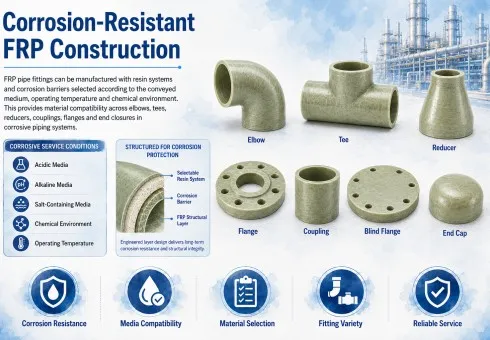
FRP pipe fittings can be manufactured with resin systems and corrosion barriers selected according to the conveyed medium, operating temperature and chemical environment. This provides material compatibility across elbows, tees, reducers, couplings, flanges and end closures in corrosive piping systems.
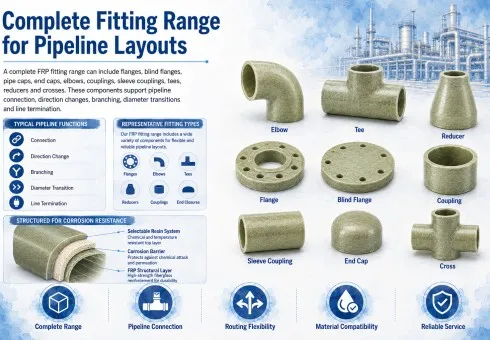
A complete FRP fitting range can include flanges, blind flanges, pipe caps, end caps, elbows, couplings, sleeve couplings, tees, reducers and crosses. These components support pipeline connection, direction changes, branching, diameter transitions and line termination.
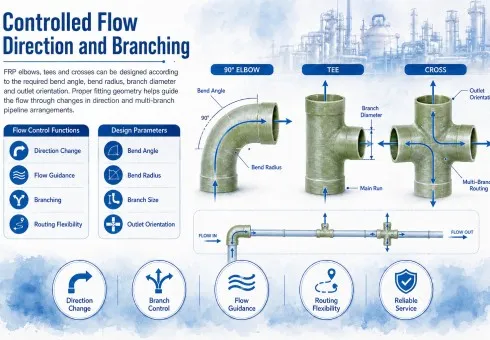
FRP elbows, tees and crosses can be designed according to the required bend angle, bend radius, branch diameter and outlet orientation. Proper fitting geometry helps guide the flow through changes in direction and multi-branch pipeline arrangements.
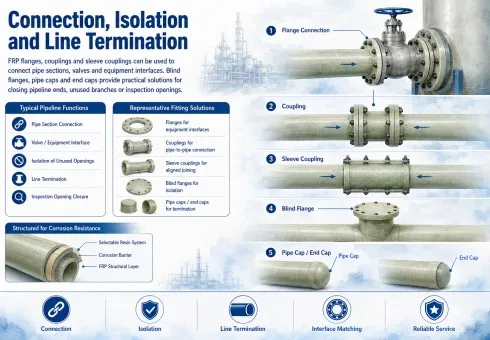
FRP flanges, couplings and sleeve couplings can be used to connect pipe sections, valves and equipment interfaces. Blind flanges, pipe caps and end caps provide practical solutions for closing pipeline ends, unused branches or inspection openings.
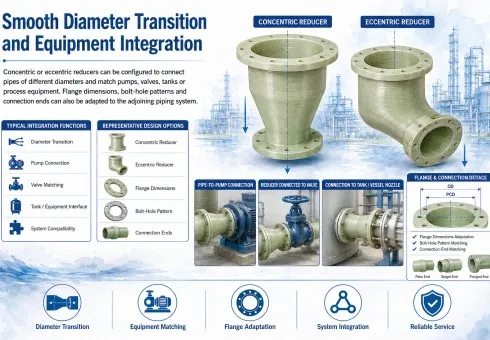
Concentric or eccentric reducers can be configured to connect pipes of different diameters and match pumps, valves, tanks or process equipment. Flange dimensions, bolt-hole patterns and connection ends can also be adapted to the adjoining piping system.
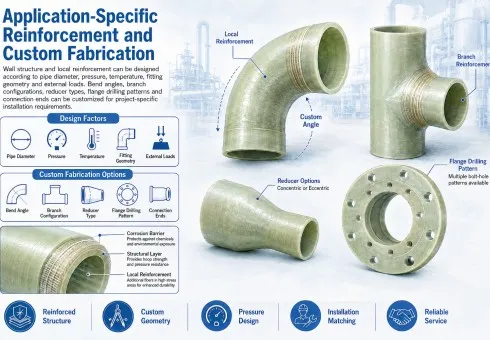
Wall structure and local reinforcement can be designed according to pipe diameter, pressure, temperature, fitting geometry and external loads. Bend angles, branch configurations, reducer types, flange drilling patterns and connection ends can be customized for project-specific installation requirements.

 English