The manufacturing of FRP storage tanks involves forming, curing, and assembling resin matrices and glass fiber reinforcement materials into storage tanks based on the storage medium and stress conditions. Before manufacturing, it is necessary to clarify the medium, concentration, temperature, capacity, installation environment, and pressure or vacuum conditions, and then determine the resin system, corrosion-resistant layer, structural layer, local reinforcement, and forming method.
For storage tanks with the same shape and capacity, if the storage medium, liquid density, temperature, stirring load, or outdoor environment differ, the laminate structure and accessory design may also differ. Therefore, custom FRP storage tank projects should first complete design input rather than just comparing dimensions, wall thickness, and price.
The manufacturing requirements for FRP storage tanks are determined by the storage medium, operating conditions, geometric dimensions, external loads, and applicable standards.
Medium data should include the complete chemical name, concentration of each component, liquid density, solid particles, impurities, and chemicals that may be contacted during cleaning. Simply stating "acid," "wastewater," or "chemical medium" is usually insufficient for resin selection, as the same chemical may correspond to different material solutions at different concentrations and temperatures.
Temperature data should at least distinguish between normal operating temperature, design temperature, short-term peak, and cleaning temperature. In addition to capacity, it is necessary to specify vertical or horizontal structure, indoor or outdoor installation, whether a mixer is set, the frequency of liquid level changes, and the loads that wind, snow, earthquakes, platforms, and pipeline interfaces may impose.
Pressure and vacuum must be specified separately. Atmospheric storage tanks cannot be directly used for positive or negative pressure conditions just because of greater wall thickness. ASME RTP-1 applies to fixed corrosion-resistant RTP vessels with internal or external pressure not exceeding 15 psig beyond liquid column pressure (American Society of Mechanical Engineers), but this value is just the applicable boundary of the standard and does not mean all FRP storage tanks have the same pressure capability.
| Design Input | Information to be provided by the purchaser | Main impact on manufacturing scheme |
|---|---|---|
| Storage Medium | Name, components, concentration, density, particles, and cleaning medium | Resin, liner, and corrosion-resistant layer |
| Temperature Conditions | Normal, highest, lowest, and short-term temperature | Resin applicability and structural design |
| Pressure Conditions | Atmospheric, positive, vacuum, and pressure fluctuations | Shell, head, and reinforcement structure |
| Capacity and Dimensions | Effective volume, diameter, height, and installation clearance | Mold, manufacturing, transportation, and installation |
| Installation Environment | Indoor or outdoor, wind and snow, earthquake, foundation, and anchorage | External load and fixation method |
| Interfaces and Attachments | Nozzles, flanges, manholes, platforms, and mixers | Opening reinforcement and local load |
The laminate structure of FRP storage tanks usually consists of an inner surface layer, a corrosion-resistant layer, a structural layer, and an outer surface protection layer, each layer serving different functions.
The inner surface layer directly contacts the medium, usually adopting a resin-rich structure with suitable surface reinforcement materials to reduce fiber exposure. The corrosion-resistant layer is used to extend the path of medium penetration to the structural layer; the structural layer bears liquid column, axial, circumferential, and external loads through reinforcement materials like chopped strand mat, fabrics, or continuous fibers; the outer surface layer is used for sealing the structure and considering weather protection according to outdoor environments.
Resin selection should not be based solely on broad categories like "unsaturated polyester" or "vinyl ester." When purchasing, it is also necessary to verify the chemical resistance data, applicable temperature, curing system, and project standards of specific resin grades. The type of glass fiber, layering direction, resin content, and interlayer bonding will also affect tank performance.
The current ASTM C582-23 includes thickness, glass content, hardness, tensile and bending properties, and chemical resistance requirements for contact-molded RTP laminate materials (ASTM Store), so quality audits should not only check total wall thickness but also confirm whether each functional layer is made according to the approved laminate scheme.
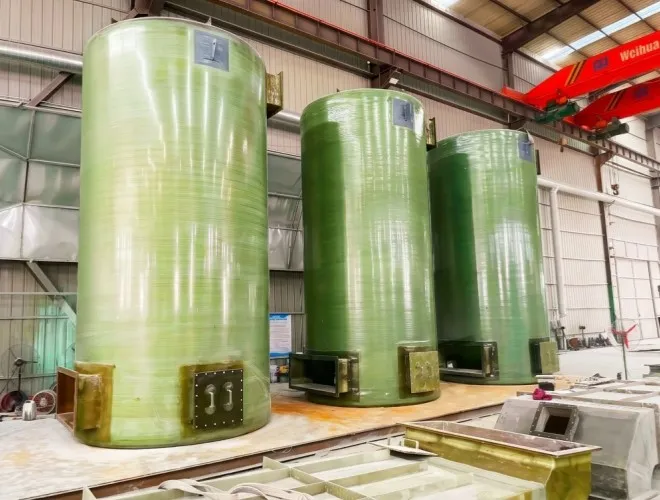
FRP storage tank manufacturing typically combines hand lay-up, filament winding, curing, assembly, and local reinforcement, with different methods suitable for different shapes and parts.
Hand lay-up is a contact molding method where operators layer, impregnate, and compact resin and glass fiber reinforcement materials. It is suitable for manufacturing heads, bottoms, nozzles, flanges, corners, and other complex parts and is also convenient for completing local reinforcement. Its quality depends on material proportioning, impregnation degree, air release, layer overlap, and operational consistency.
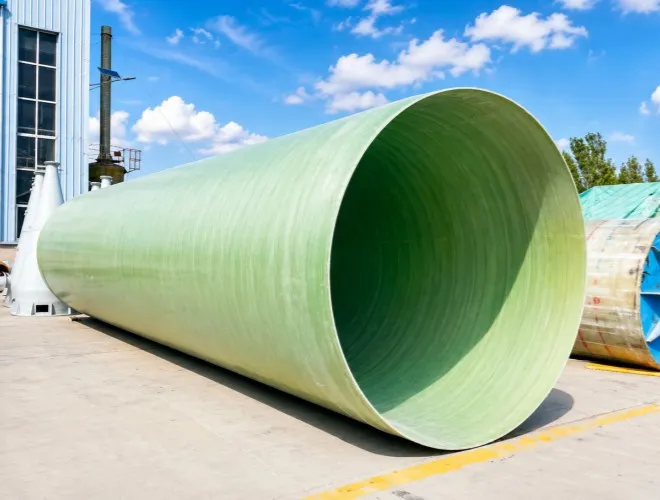
Filament winding involves winding resin-impregnated continuous fibers at set angles and tensions onto a mandrel or formed liner, commonly used for cylindrical shells. This process facilitates fiber configuration according to circumferential and axial stresses, but complex openings, heads, and attachments usually still require contact molding or composite processes.
ASTM D3299-26 covers both contact molding and filament winding for aboveground vertical corrosion-resistant tanks, including requirements for materials, design, manufacturing, dimensions, tolerances, process quality, and appearance (ASTM Store). The standard also indicates that tanks operating above 82°C and subject to wind, earthquake, ice, stirring, or fluid dynamic loads require special design consideration; 82°C is not a universal upper temperature limit for all FRP tanks.
Typical manufacturing sequence includes:
Confirm data sheets, drawings, and laminate plans;
Prepare molds and make the inner surface layer;
Create the corrosion-resistant layer;
Form the structural layer through hand lay-up, spraying, or winding;
Complete curing under specified conditions;
Install nozzles, flanges, manholes, and other attachments;
Complete surface treatment, dimension inspection, and final product testing.
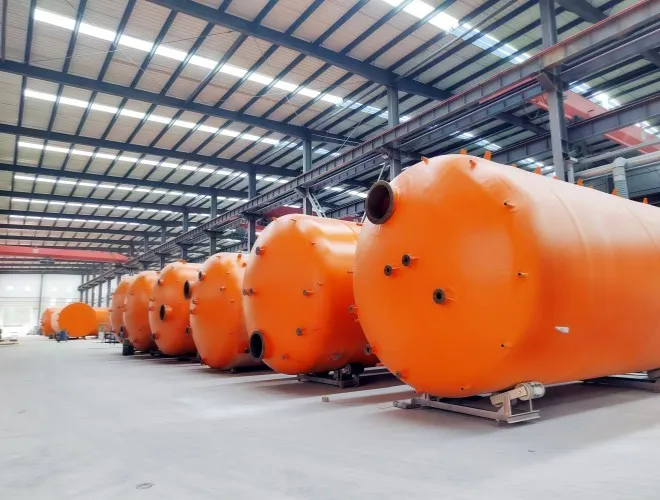
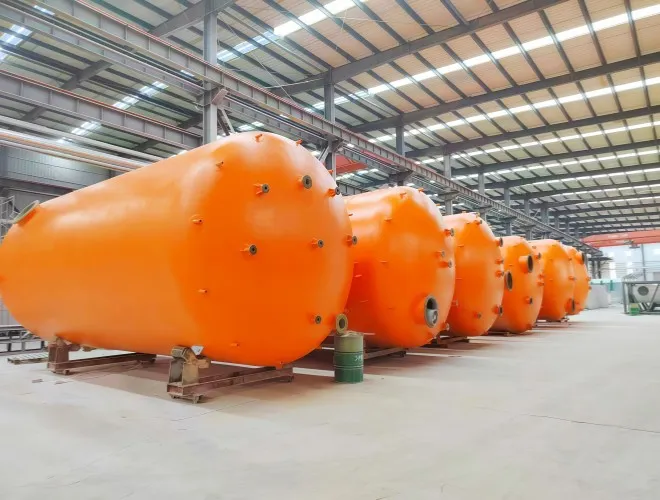
Nozzles, flanges, heads, and attachments alter the original stress path of the shell, so local manufacturing quality often requires more attention than regular cylinders.
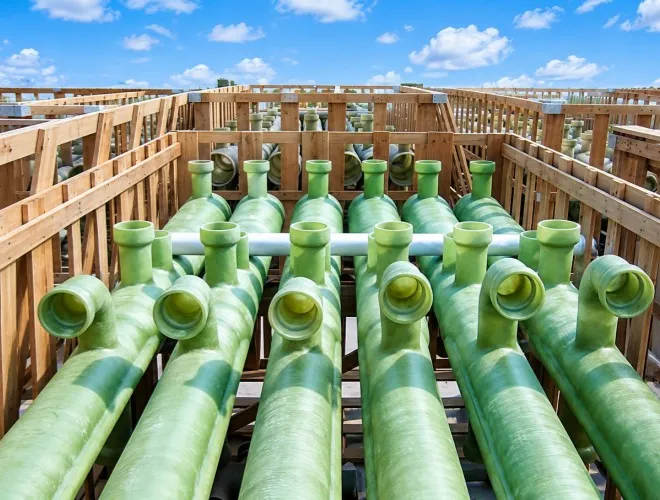
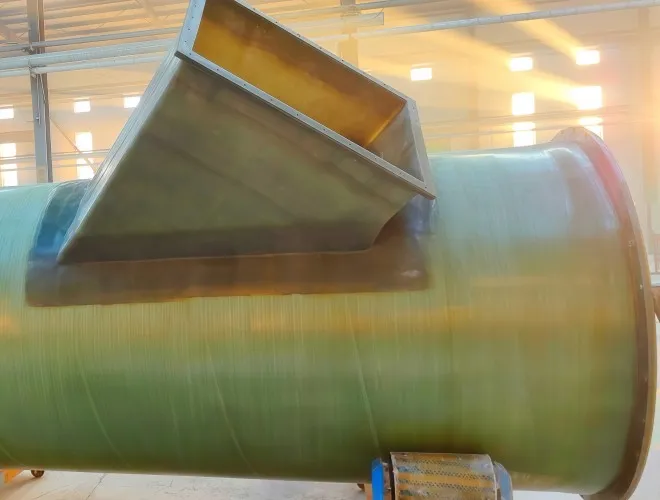
The position, direction, and elevation of nozzle openings should match the drawings, and the area around the opening needs structural layer restoration or reinforcement as designed. Flanges should be checked for seal face flatness, bolt hole position, and pipeline alignment to avoid correcting deviations through forced pipeline pulling during installation.
Manholes, liquid level interfaces, mixer seats, lifting lugs, and anchors may generate concentrated loads and should be specified during design. Especially for mixers and external pipelines, their weight, vibration, and force cannot be borne by ordinary nozzle laminate structures alone.
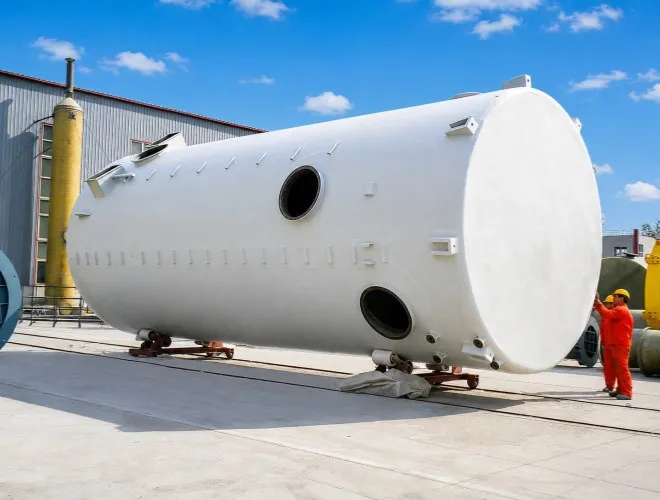
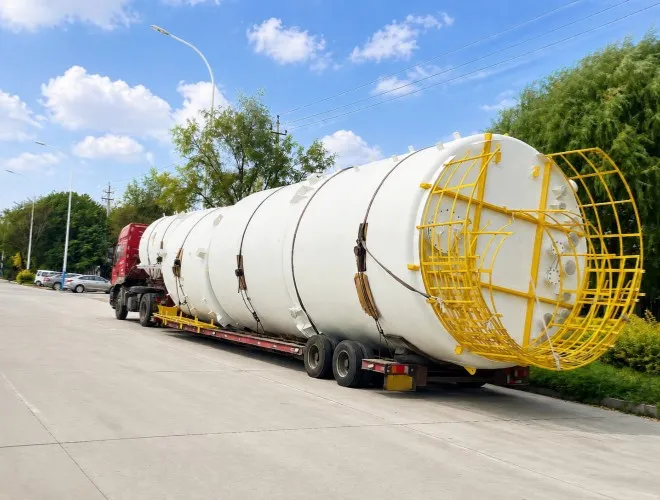
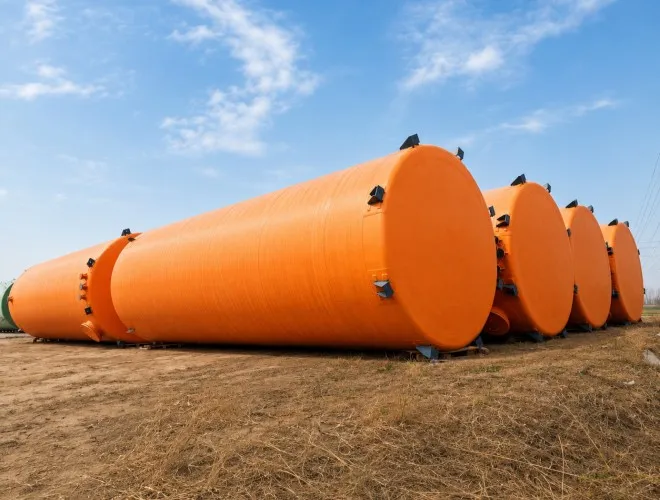
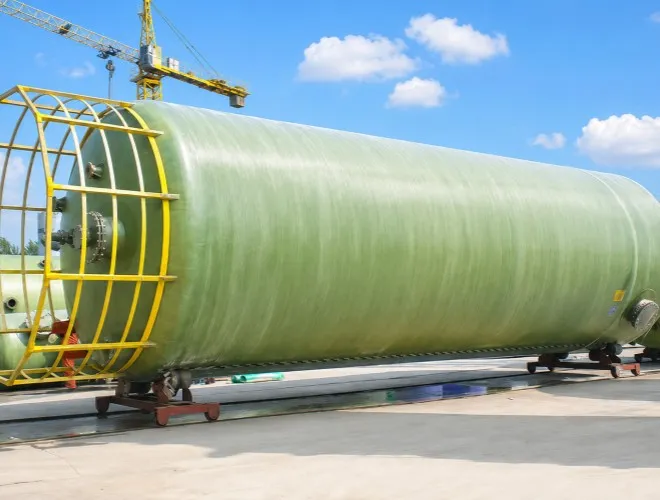
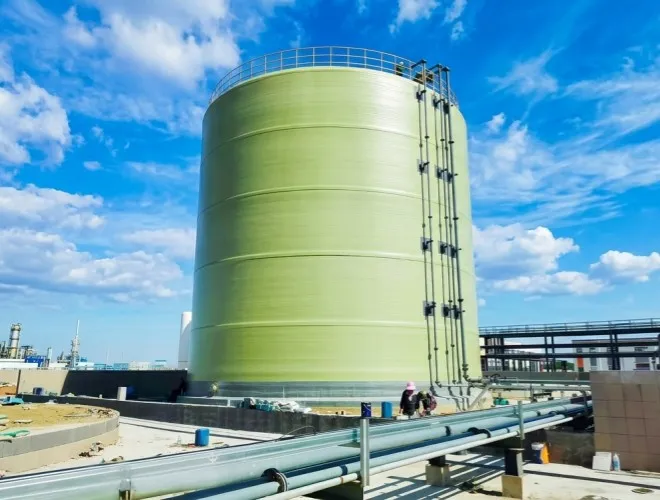
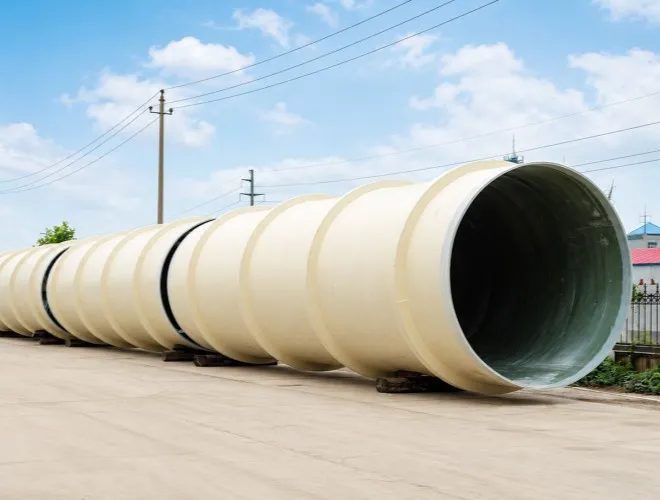
When tank diameter or overall size exceeds road transport, factory door openings, or hoisting conditions, on-site winding or sectional assembly may be considered. On-site manufacturing can reduce overall transport restrictions but requires re-control of material storage, environmental temperature and humidity, site cleanliness, curing conditions, connection quality, and safety management.
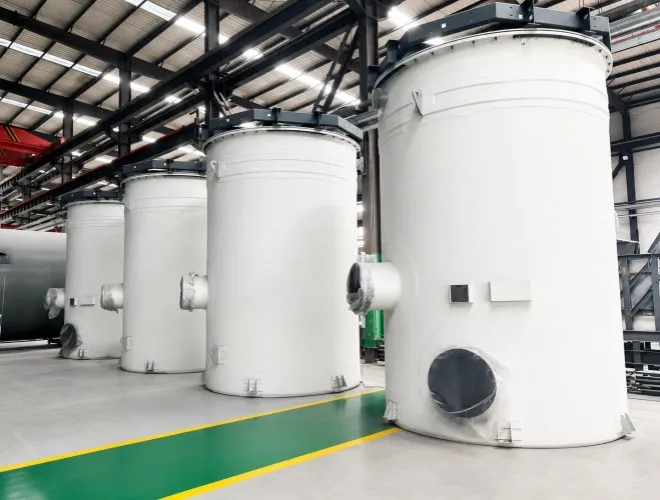
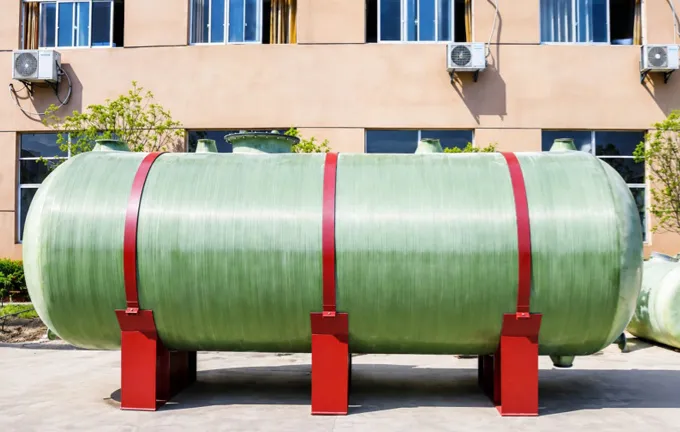
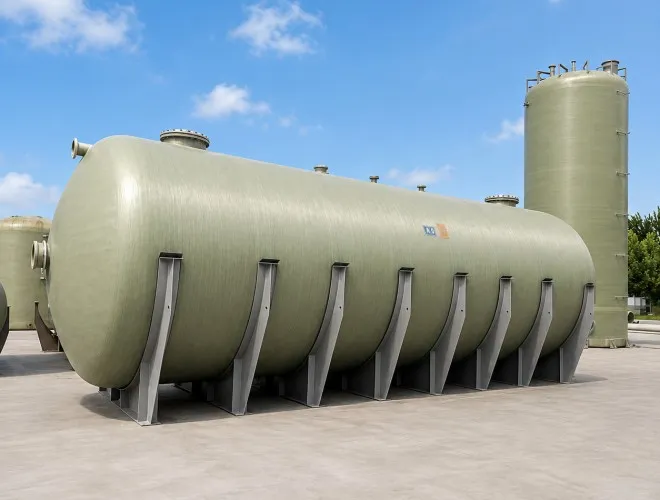
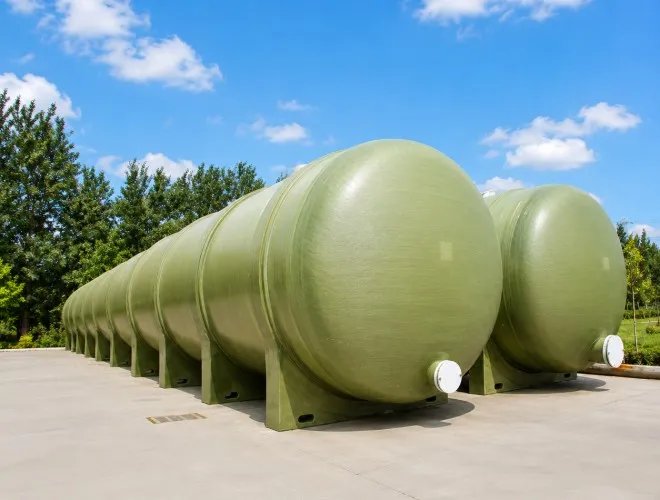
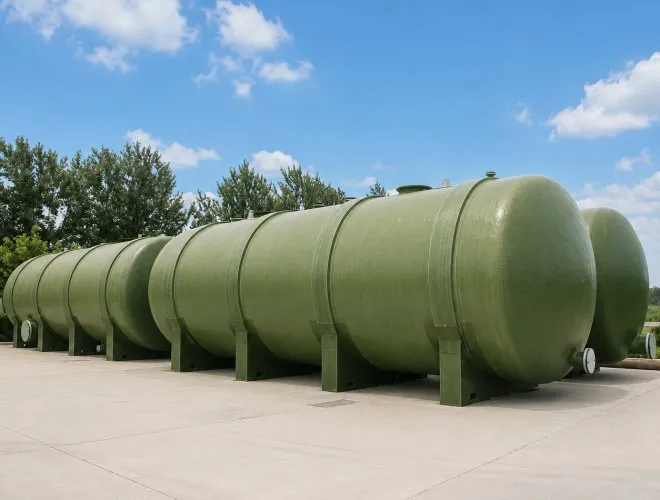
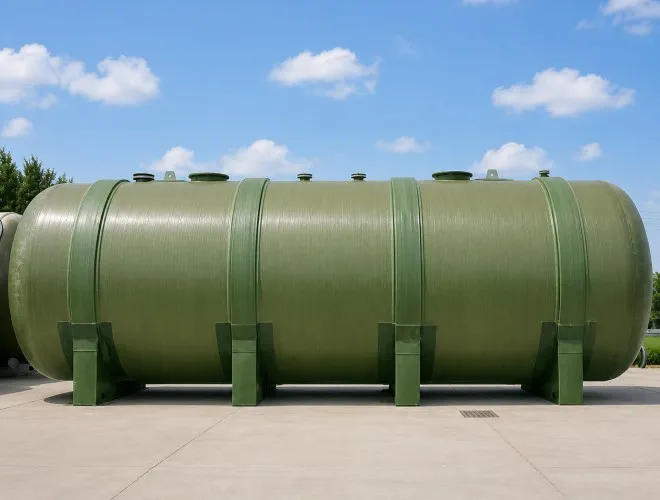
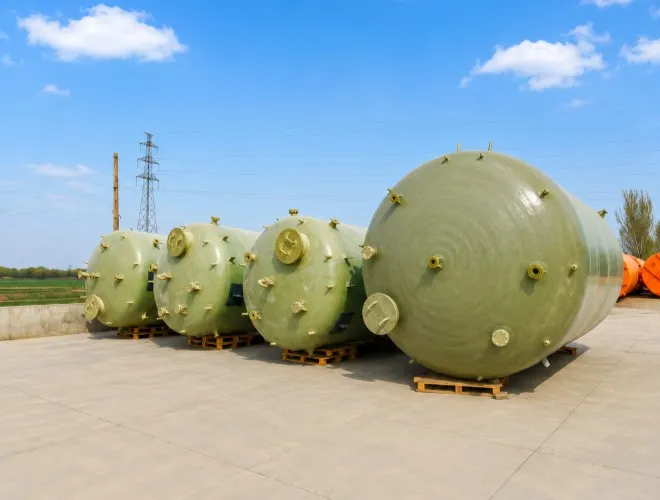
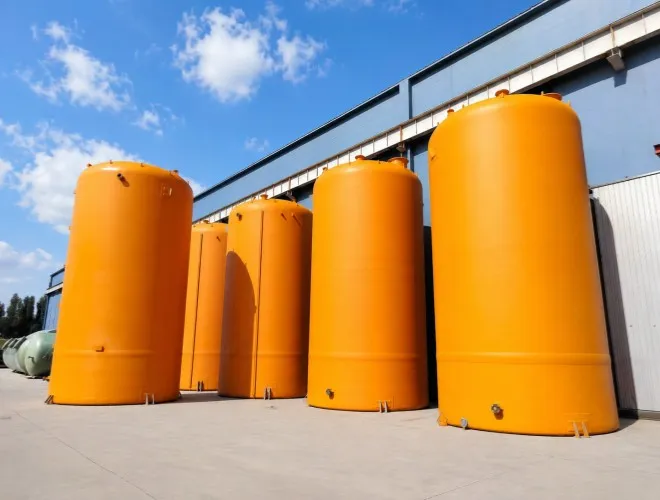
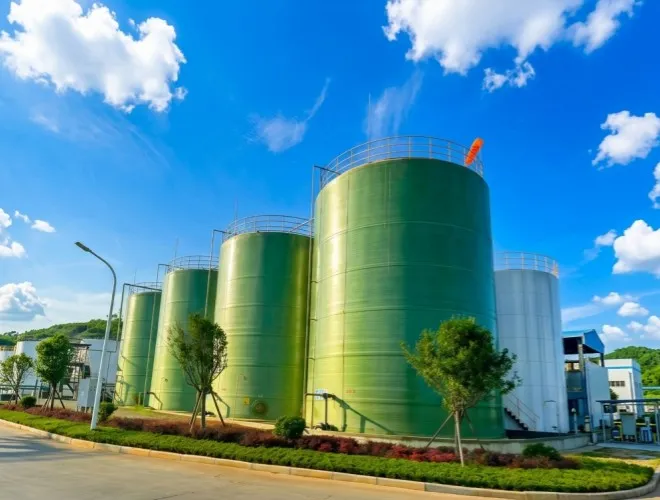
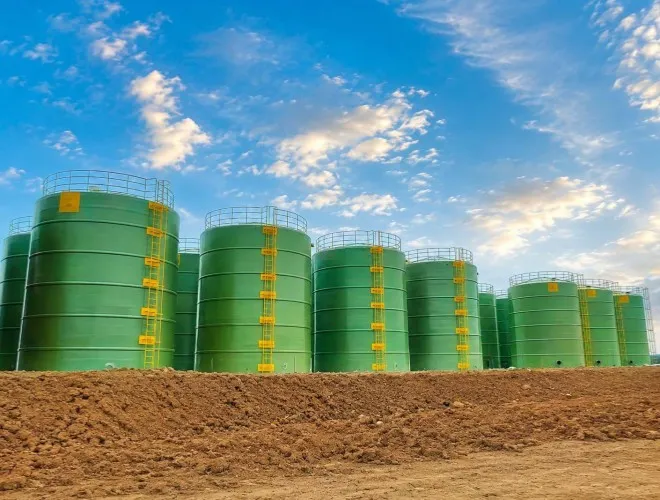
Yingnai's existing product information includes vertical, horizontal, and large on-site winding FRP storage tanks. For projects requiring on-site manufacturing, the applicability should still be judged based on site dimensions, foundation conditions, construction space, climate, power supply, hoisting, and inspection arrangements, rather than determining the manufacturing method based solely on required capacity.
FRP storage tank quality inspection should cover raw materials, manufacturing process, dimensions, laminate quality, curing state, attachments, and final documents, rather than just checking the finished product appearance.
In the raw material stage, it is necessary to verify the grades, batches, shelf life, and storage conditions of resin, glass fiber, curing agents, and auxiliary materials. During manufacturing, it is necessary to record batching, environmental conditions, layering or winding parameters, curing time, and anomaly handling.
Appearance inspection should focus on identifying defects like bubbles, dry fibers, delamination, cracks, inclusions, resin deficiency, or abnormal enrichment. Appearance qualification cannot replace dimension and performance inspection; the purchaser should also verify diameter, height, verticality, wall thickness distribution, nozzle orientation, flange dimensions, and attachment positions.
Curing quality can be assessed through hardness or other prescribed methods according to applicable specifications and approval procedures. Whether corrosion-resistant inner surface testing, laminate samples, leak testing, or hydrostatic testing needs to be implemented should be determined based on the medium, tank structure, and contract standards, rather than applying the same inspection items to all products.
The purchaser can focus on auditing the following documents:
Approved data sheets, drawings, and laminate structure descriptions;
Batches and quality documents of resin and reinforcement materials;
Manufacturing process, environmental, and curing records;
Dimension, wall thickness, appearance, and nozzle position inspection reports;
Hardness, laminate performance, or leak test reports required by the project;
Non-conformance items, repair locations, and retest records;
Final as-built drawings, handling, and installation requirements.
When evaluating FRP storage tank manufacturers, it is necessary to confirm whether they can transform project inputs into auditable material selections, structural schemes, manufacturing records, and inspection documents, rather than just providing a generic specification sheet.
Q: Should FRP storage tank manufacturing first determine the size or select the material?
A: Both need to be combined, but the medium, concentration, temperature, pressure, and installation conditions should be clarified first, then determine the resin, laminate structure, and final size.
Q: Which process is better, hand lay-up or filament winding?
A: There is no absolute superiority. Filament winding is suitable for regular cylinders, while hand lay-up is better for heads, nozzles, flanges, and complex local structures. Actual tanks often use a combination of processes.
Q: Can atmospheric FRP storage tanks withstand vacuum?
A: It cannot be assumed. Vacuum is an external pressure condition that may cause shell instability, requiring clear vacuum level, duration, temperature, and reinforcement plans.
Q: Under what circumstances is on-site manufacturing of large FRP storage tanks needed?
A: When overall size exceeds transport, door openings, hoisting, or on-site passage restrictions, on-site winding or sectional assembly can be evaluated, and construction environment and on-site inspection conditions should be confirmed.
Q: How can the purchaser determine if the FRP storage tank is fully cured?
A: It should be assessed based on applicable standards and approved inspection procedures reviewing hardness or other curing indicators, combined with material batches, batching, environment, and curing records for comprehensive judgment.
The core of FRP storage tank manufacturing is not a specific forming process but integrating medium compatibility, laminate structure, load, local openings, curing, and inspection requirements throughout the project. Hand lay-up and filament winding each have applicable parts, while large on-site manufacturing requires extending factory quality control to the construction site. The earlier the purchaser provides complete design input, the easier it is to clarify the manufacturing scheme, quotation boundaries, and quality documents.
If you are planning an FRP storage tank project for chemical media, industrial wastewater, or other corrosive liquids, you can provide Yingnai with medium and concentration, temperature range, effective capacity, installation location, pressure or vacuum conditions, nozzle table, and site space to facilitate consultation on tank structure, manufacturing method, accessory scope, and project inspection requirements.
 English