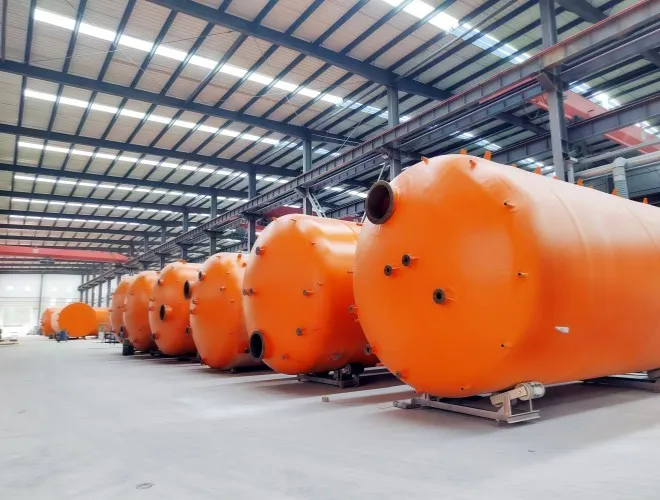
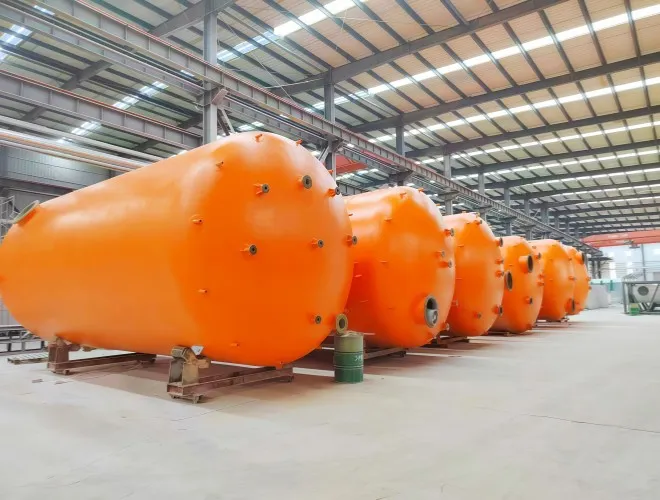
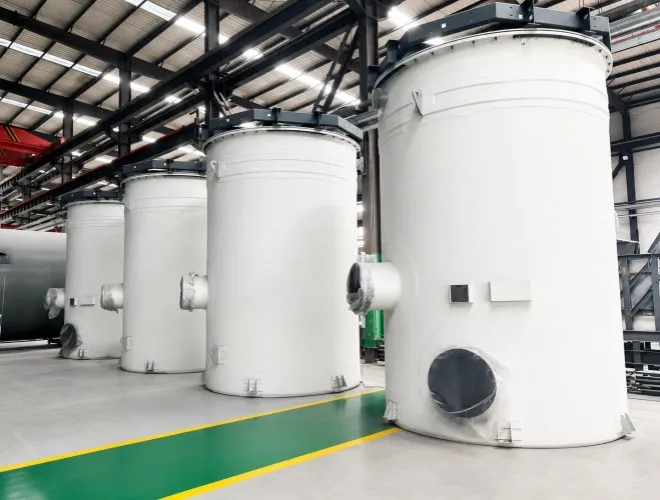
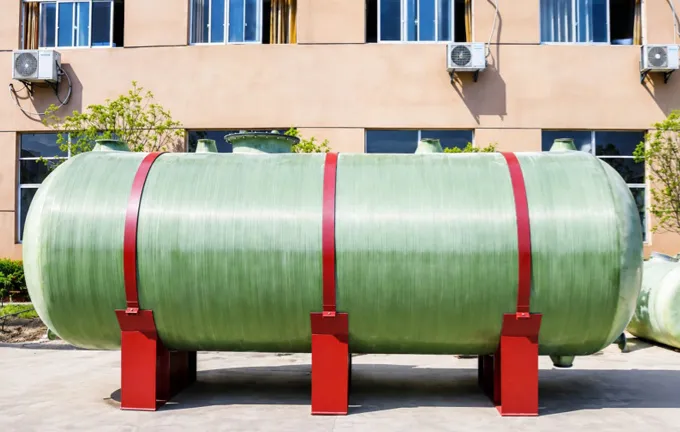
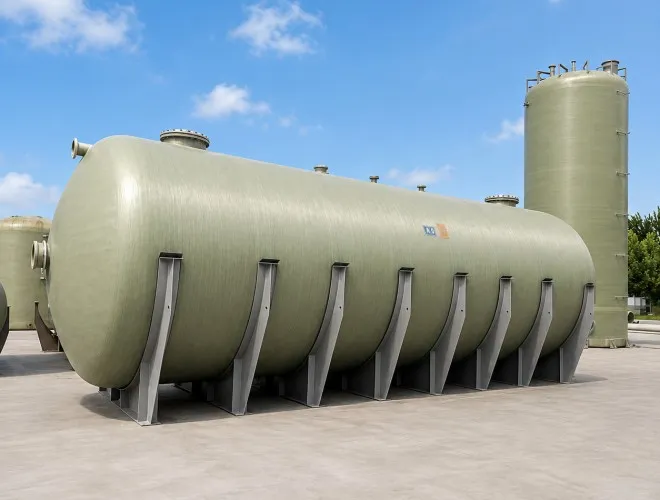
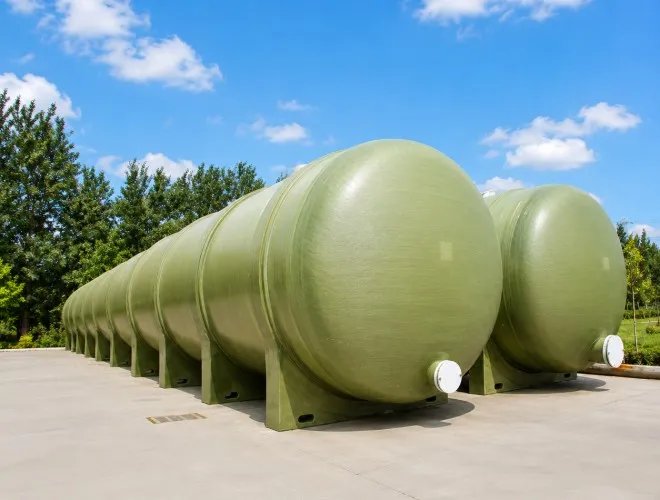
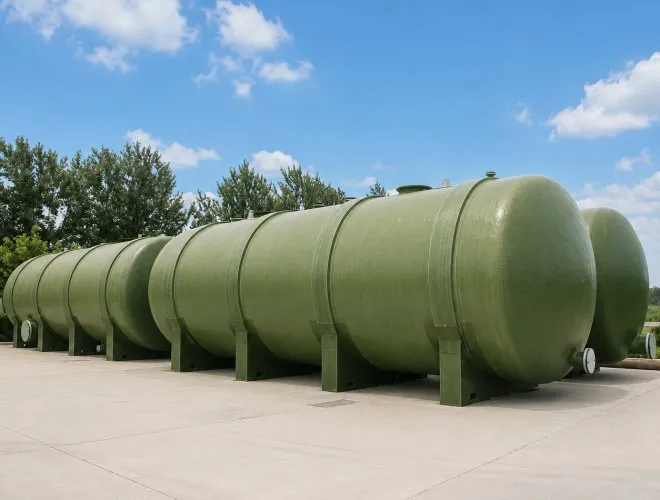
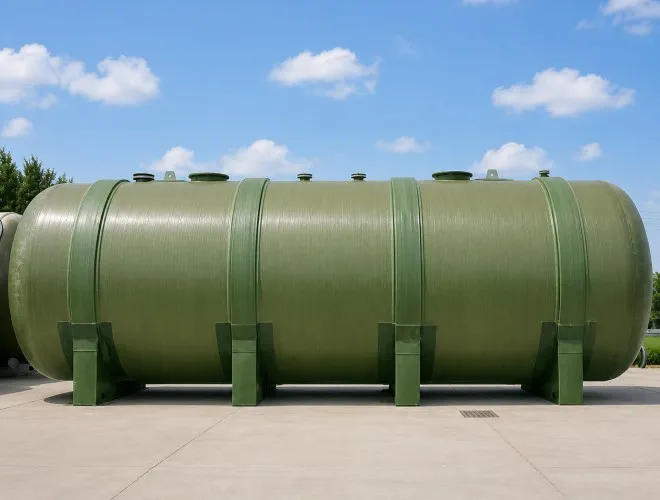
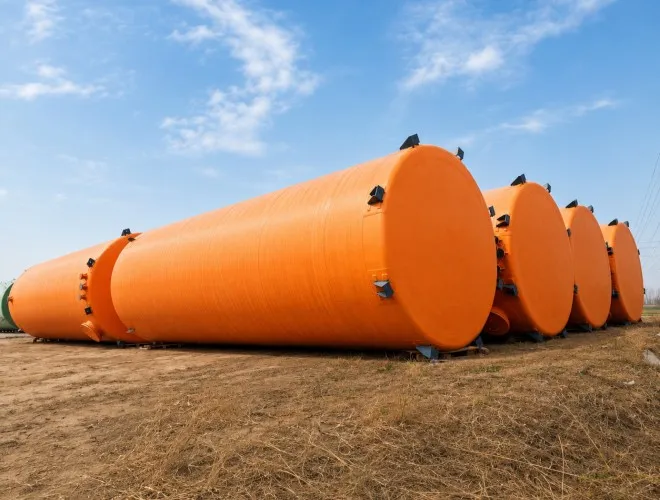
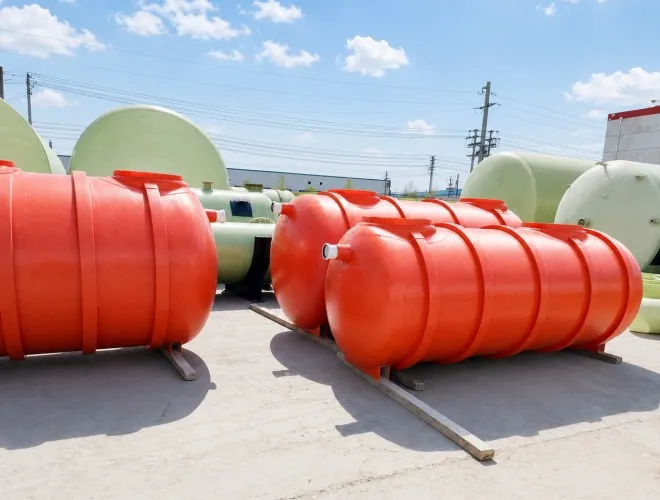
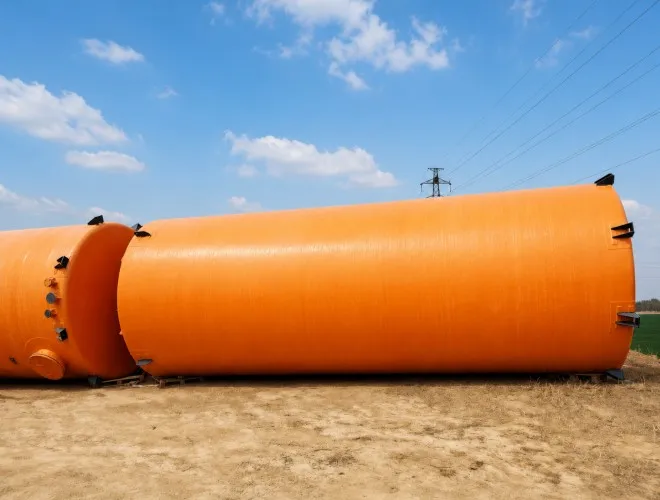
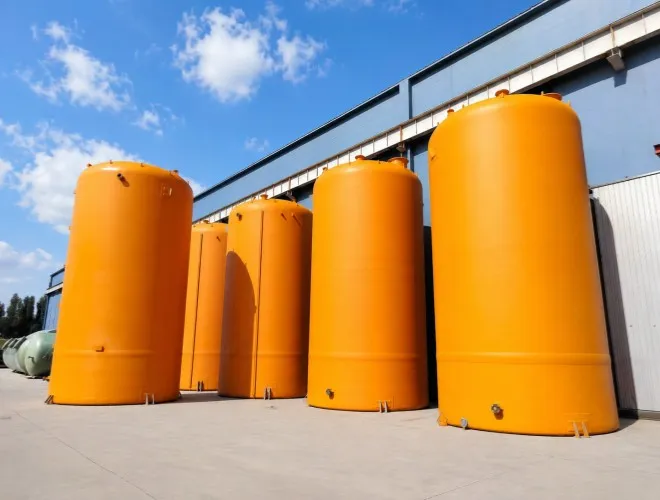
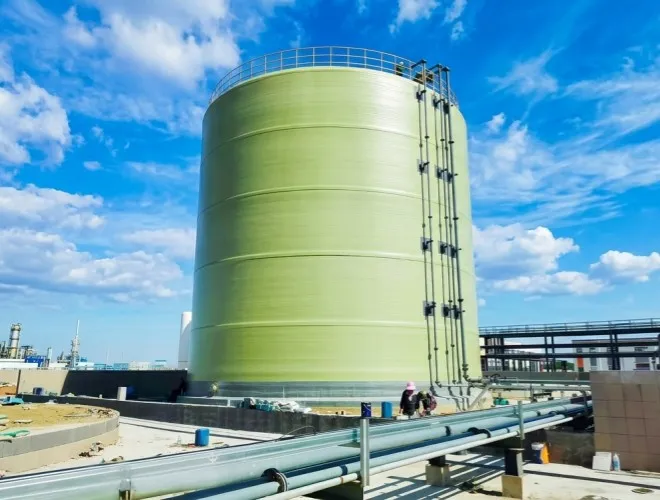
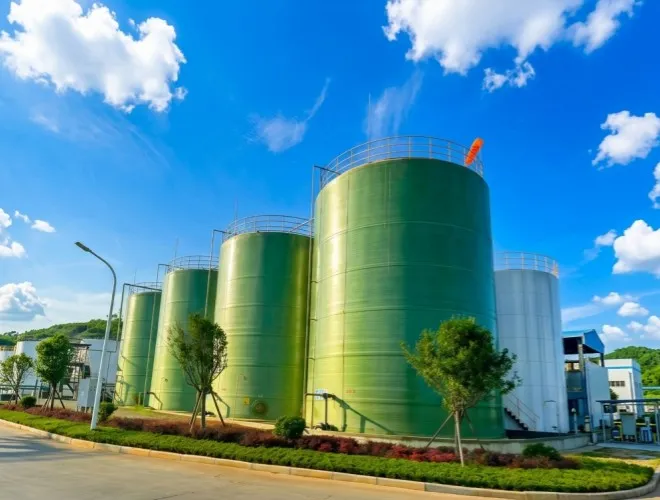
Large FRP tanks are widely used to store water, wastewater, acids, alkalis, brine, chemical solutions and other industrial liquids. They are commonly found in chemical plants, water-treatment facilities, mining operations, desalination projects, municipal infrastructure and environmental-protection systems.
A large FRP tank is not simply a plastic container made thicker. It is an engineered composite structure in which resin provides chemical resistance and glass fibers provide strength and stiffness. Its final performance depends on material selection, laminate design, manufacturing control, installation conditions and the actual medium being stored.
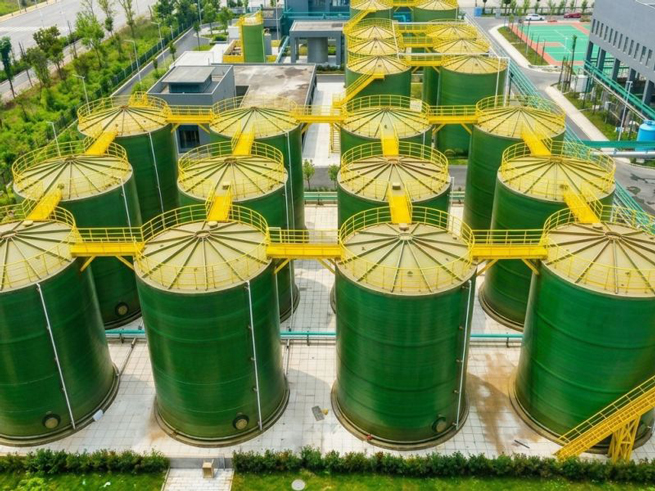
The wall of a chemical-resistant FRP tank normally contains several functional sections. Each section has a different purpose.
Inner Corrosion Barrier
The inner corrosion barrier comes into direct contact with the stored liquid. It normally has a high resin content and may include surface veil, chopped-strand reinforcement or other chemically compatible materials.
Its main purpose is to resist chemical attack, limit liquid penetration and protect the structural glass fibers behind it.
The corrosion barrier must be selected according to:
Chemical composition
Concentration
Operating temperature
Impurities and suspended solids
Gas-phase exposure
Cleaning conditions
A thicker tank wall cannot compensate for an unsuitable resin. Chemical compatibility must be established before the tank structure is confirmed.
Structural Laminate
Outside the corrosion barrier is the structural laminate. This section carries the loads created by liquid pressure, tank height, wind, seismic conditions, roof loads, nozzles and accessories.
Continuous glass fibers can be arranged in different directions according to the required strength. Circumferential reinforcement helps the cylindrical wall resist liquid pressure, while helical or axial reinforcement supports longitudinal and combined loads.
This is one of the most important characteristics of FRP: the material can be designed around the expected direction of loading instead of providing the same properties in every direction.
Exterior Protection Layer
The exterior layer protects the tank from sunlight, rain, humidity and general outdoor exposure. UV-resistant additives, resin-rich surface layers or protective coatings may be used depending on the installation environment.
Outdoor tanks also require proper anchoring and structural design for wind and temperature changes.
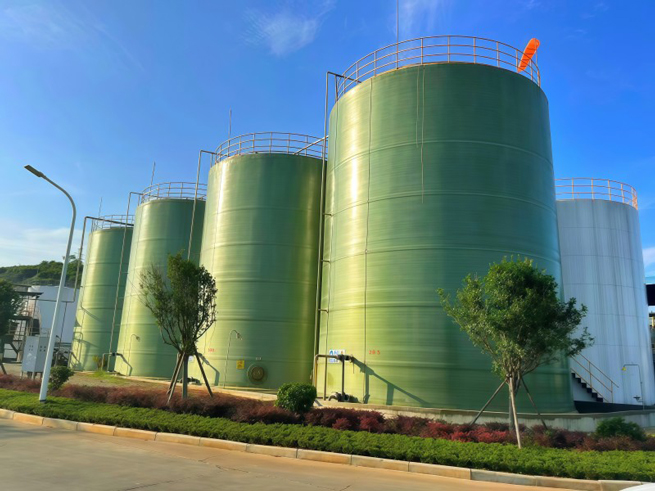
The manufacturing route depends on tank size, shape, chemical service, transport restrictions and installation location. Large tanks are commonly produced through a combination of contact molding, filament winding and secondary fabrication.
1. Reviewing the Operating Conditions
Manufacturing begins long before resin and glass fiber enter the workshop. The supplier must first understand the actual service conditions.
Important information includes:
Stored chemical and concentration
Normal and maximum temperature
Liquid density
Tank volume and dimensions
Internal pressure or vacuum
Indoor or outdoor installation
Wind and seismic requirements
Nozzle and manway positions
Mixer, ladder and platform requirements
Transport and lifting restrictions
These conditions determine the resin system, corrosion barrier, structural laminate and overall tank configuration.
For very large tanks, transportation may become one of the decisive factors. The tank may need to be divided into transportable sections or manufactured and assembled at the project site.
2. Selecting Resin and Reinforcement Materials
The resin is selected primarily for chemical compatibility. Common systems include unsaturated polyester, vinyl ester and epoxy resins.
Polyester resin is often used for water, wastewater and moderate chemical service. Vinyl ester resin is widely chosen for more demanding acids, alkalis, salts and industrial chemicals. Epoxy resin may be used in selected applications requiring strong adhesion, low shrinkage or specialized mechanical performance.
Different grades within the same resin family can have very different resistance limits. Specifying only “vinyl ester resin” is therefore not enough for a demanding chemical project.
Glass-fiber materials may include surface veil, chopped-strand mat, woven reinforcement and continuous roving. Each type performs a different function in the laminate.
3. Preparing the Mold or Inner Liner
The tank is formed around a mold, mandrel or inner liner corresponding to its internal dimensions.
The mold surface must be clean, stable and dimensionally accurate because irregularities may be transferred to the finished tank. Release materials are applied where required so that the cured tank can be separated without damaging the internal surface.
For some tank designs, the liner remains part of the finished product. In other cases, the mold is removed after curing.
4. Forming the Corrosion-Resistant Inner Layer
The inner surface is generally produced using contact-molding techniques. Resin and suitable reinforcement are applied in controlled layers, consolidated and inspected to reduce trapped air and dry areas.
The corrosion barrier is especially important around:
Tank bottoms
Roof transitions
Nozzles
Manways
Flanges
Internal supports
Bonded joints
These transition areas often require more attention than the middle of the cylindrical wall because changes in geometry can create local stress and make fabrication more complex.
5. Building the Structural Wall
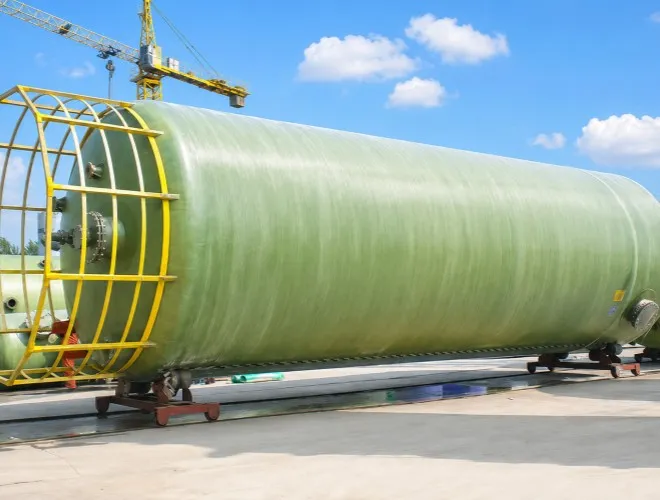
For cylindrical tanks, filament winding is commonly used to construct the structural wall.
Continuous glass-fiber rovings are impregnated with resin and placed around a rotating mold according to a predetermined winding pattern. The winding angle, fiber tension, resin content, winding speed and layer sequence are controlled according to the tank design.
Accurate fiber placement helps the tank make efficient use of the reinforcement. However, winding is not simply a matter of adding more glass fiber. Excessive tension may damage fibers or introduce undesirable internal stress, while insufficient tension may result in loose layers and poor consolidation.
Resin impregnation must also be controlled. Dry fibers, excessive resin, trapped air and uneven distribution can reduce the consistency of the laminate.
6. Manufacturing the Bottom, Roof and Nozzles
Tank bottoms and roofs may be manufactured separately or integrated with the shell, depending on the design.
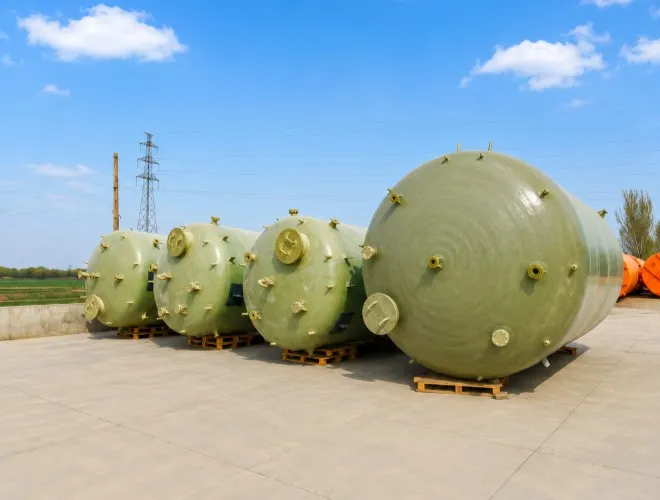
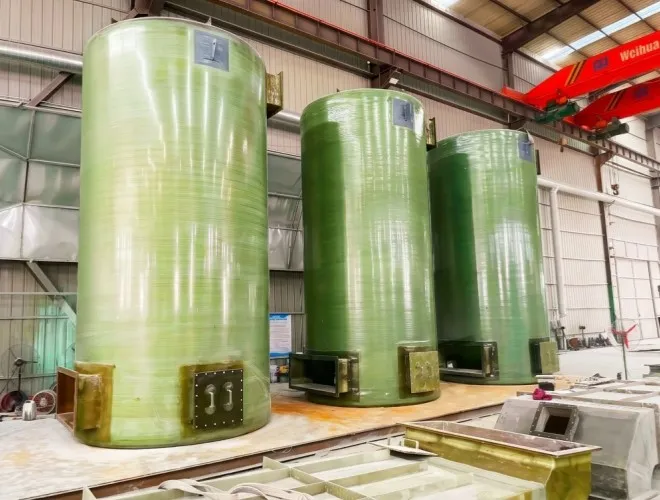
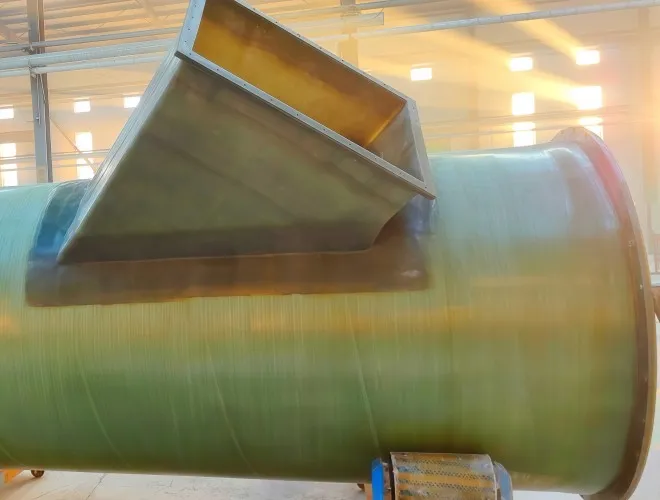
Nozzles, manways, vents, overflow connections, level-gauge interfaces, drains, lifting points and anchoring components are positioned according to approved drawings.
Local reinforcement is normally added around openings because holes interrupt the continuity of the structural fibers. Heavy piping, valves and mixers should not transfer uncontrolled loads directly into FRP nozzles.
When an agitator is required, its weight, torque and vibration should be considered before production rather than added after the tank has been completed.
7. Curing and Post-Curing
Thermosetting resin changes from liquid to solid through a chemical curing reaction. The curing process determines whether the laminate develops its intended chemical and mechanical properties.
Temperature, catalyst ratio, curing time and laminate thickness all influence the result. Large or thick sections require careful control because the resin reaction produces heat.
Depending on the resin system and project requirements, the tank may be cured at ambient temperature or receive additional post-curing. Insufficient curing can reduce hardness, heat resistance and chemical performance.
### 8. Finishing, Inspection and Testing
After curing, the tank is trimmed and prepared for assembly and inspection. Flanges may be finished, openings drilled and accessories installed.
Typical quality checks include:
Visual inspection
Dimensional verification
Laminate-thickness checks
Surface condition
Nozzle orientation
Flange alignment
Cure or hardness verification
Leak testing where applicable
Manufacturing-document review
Inspection should focus not only on the main tank wall but also on joints, nozzles, bottoms, roofs and other transitions.
For large tanks delivered in sections, trial assembly or dimensional verification may be performed before shipment to reduce installation difficulties at the site.
9. Packaging, Transportation and Site Assembly
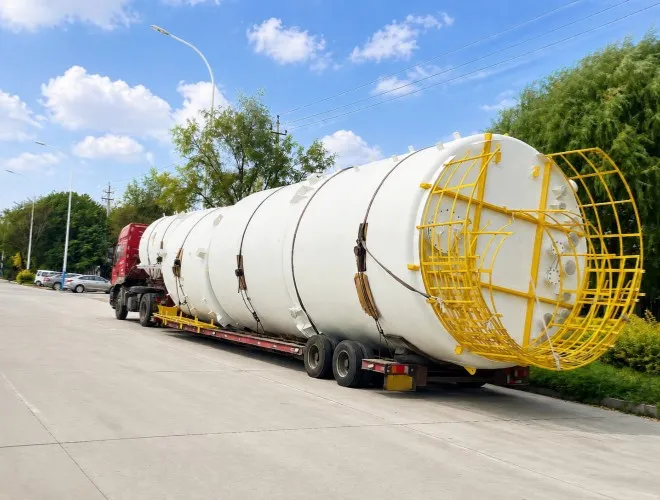
Large FRP tanks require dedicated transportation planning. Their relatively low weight simplifies lifting, but their large size and composite structure still require proper support.
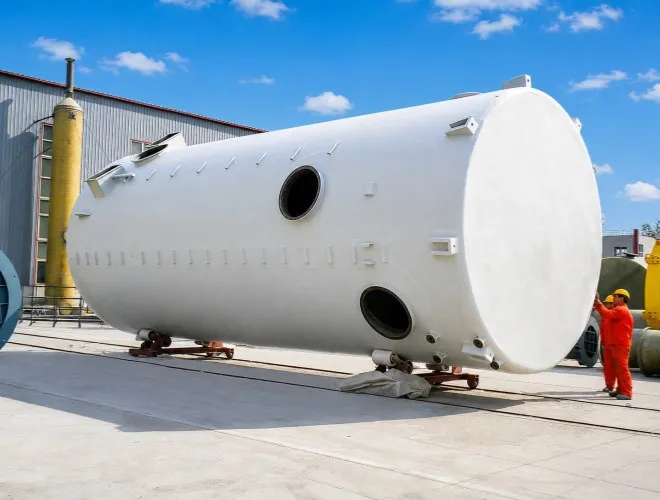
Transport frames, saddles, internal bracing and protected lifting points may be used to prevent deformation or impact damage. Flanges and nozzles should be covered and protected during transport.
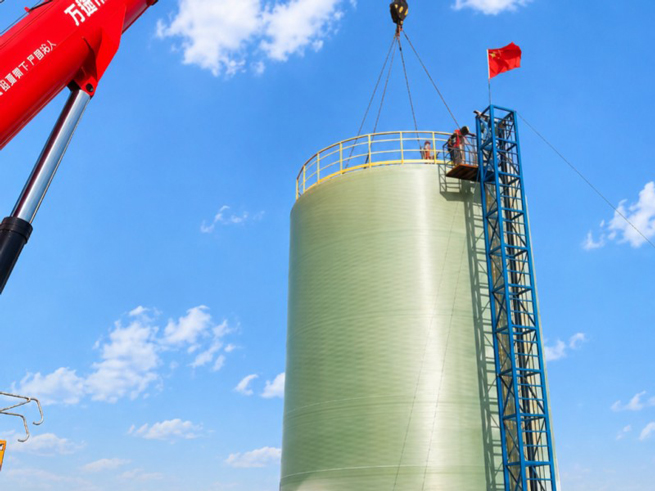
Where site assembly is required, joints must be completed by trained personnel under controlled conditions. Installation may be carried out by the manufacturer’s technicians or by a qualified local team working under remote technical guidance.
Corrosion Resistance
One of the main reasons for selecting an FRP storage tank is its resistance to corrosion.
Unlike carbon steel, FRP does not rust and does not rely entirely on an external coating to protect the tank wall. With the correct resin and corrosion barrier, it can handle many acids, alkalis, salts, wastewater and process chemicals.
However, no FRP resin is suitable for every chemical. Concentration, temperature and impurities must always be reviewed.
Lightweight but Structurally Capable
FRP has a lower density than steel, which can reduce transport, lifting and foundation loads.
This advantage becomes especially noticeable with large tanks. A lighter tank can simplify installation in existing plants, restricted areas or locations where heavy lifting equipment is difficult to arrange.
Low weight does not mean low strength. Glass fibers provide structural reinforcement, while their direction and quantity can be adjusted according to the load.
Flexible Customization
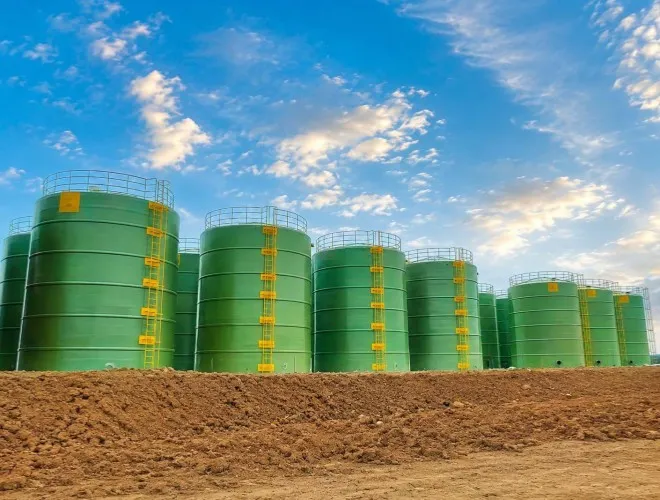
Large fiberglass tanks can be manufactured with customized:
Diameters and heights
Flat, conical or sloped bottoms
Open or closed roofs
Nozzle positions
Manways and vents
Platforms and ladders
Internal components
Sectional transport arrangements
This flexibility is valuable in industrial plants where the tank must fit existing foundations, pipelines and equipment layouts.
Lower Corrosion-Related Maintenance
FRP tanks generally do not require routine rust removal or repainting in the same way as coated carbon-steel tanks.
This can reduce maintenance work, shutdown time and coating-repair costs over the tank’s service life. The total value is often more meaningful than comparing the initial purchase price alone.
FRP tanks are not maintenance-free. Regular inspection is still needed to identify impact damage, leakage, surface ageing, nozzle movement or changes in the stored chemical.
Smooth Internal Surface
The resin-rich internal surface of an FRP tank is relatively smooth. This can reduce material buildup and make cleaning easier in many applications.
A smooth surface is also useful for wastewater, chemical dosing and water-treatment systems where drainage and contamination control are important.
Electrical and Thermal Characteristics
Standard glass-fiber-reinforced materials are generally electrically insulating. This can be useful in electrochemical and industrial environments.
Special conductive or antistatic structures can also be produced, but these properties require separate materials and design. They should not be assumed from standard FRP construction.
FRP also has lower thermal conductivity than many metals, although insulation may still be required where temperature control is important.
A credible evaluation of FRP tanks should include their limitations.
FRP resin systems have defined temperature limits and can be affected by fire or high radiant heat. Large atmospheric tanks may also be sensitive to vacuum if vents are blocked during rapid draining.
Sharp impact, improper lifting and unsupported piping can damage the laminate or nozzles. Outdoor surfaces require UV protection and routine inspection.
Manufacturing quality is equally important. Poor resin impregnation, trapped air, insufficient curing or inadequate reinforcement can reduce performance even when high-grade raw materials are used.
Large FRP storage tanks are commonly used for:
Chemical storage and preparation
Water and wastewater treatment
Acid and alkali storage
Brine and seawater systems
Mining and mineral processing
Air-pollution-control systems
Chlor-alkali and electrochemical projects
Municipal and industrial water infrastructure
Industrial wastewater collection
Desalination and coastal facilities
The final material system should always be selected according to the actual medium and operating conditions.
When comparing large FRP tank manufacturers, customers should look beyond tank volume and wall thickness.
The quotation should clearly identify:
1. The proposed resin grade
2. The chemical and temperature basis
3. The corrosion-barrier construction
4. The structural design conditions
5. Tank pressure or vacuum limitations
6. Nozzle and accessory details
7. Manufacturing and inspection requirements
8. Transport and site-installation arrangements
9. Drawings and technical documents
10. Warranty and after-sales support
A suitable large FRP tank is not necessarily the thickest or most expensive one. It is the tank whose materials, structure and manufacturing process correctly match the application.
meta Keywords
large FRP tank, large fiberglass tank, GRP storage tank, FRP tank manufacturing process, filament wound tank, fiberglass chemical tank, corrosion-resistant storage tank, industrial FRP tank, FRP chemical storage tank, large composite tank, vinyl ester tank, field-assembled FRP tank
Description
Learn how large FRP tanks are manufactured, from resin selection and corrosion barriers to filament winding, curing and inspection, and explore their key performance advantages.
 English