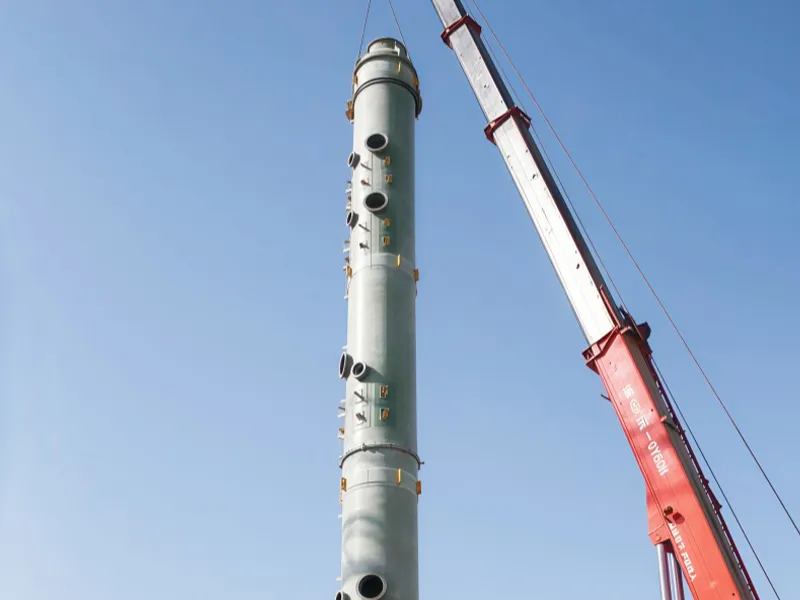
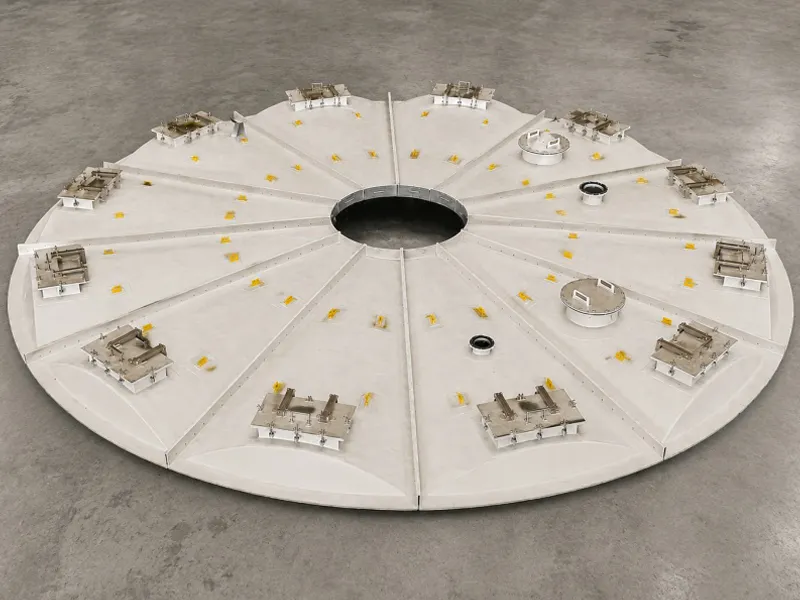
This project involved an ammonia-containing wastewater treatment system supplied for a Japanese industrial environmental equipment company. The system receives ammonia-bearing process wastewater generated by chemical or electronics manufacturing operations. Through temporary storage, controlled transfer, ammonia stripping and subsequent off-gas treatment, ammonia is separated from the liquid phase and treated appropriately.
Within the overall treatment process, the FRP tank is installed between the wastewater collection system and the ammonia stripping unit, where it serves as a front-end wastewater buffer tank. Ammonia-containing wastewater discharged from the production facility first enters the tank for temporary storage and level regulation. It is then transferred by pump to the downstream stripping tower at a relatively stable flow rate.
The customer did not simply require an ordinary water storage tank. The project required a process vessel capable of operating together with the pump system, level instruments, stripping equipment and emergency discharge system.
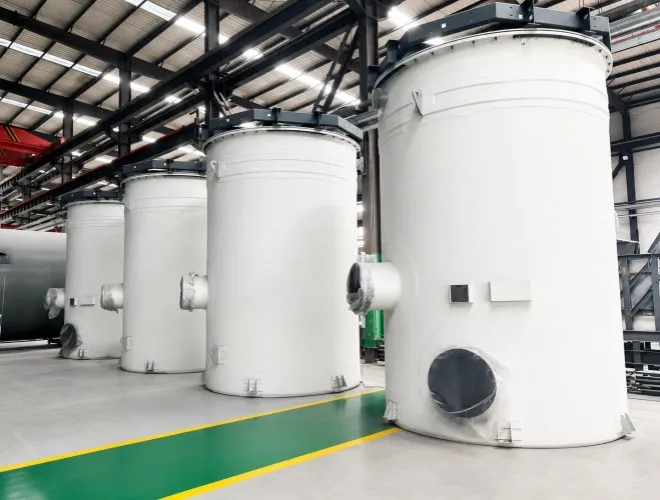
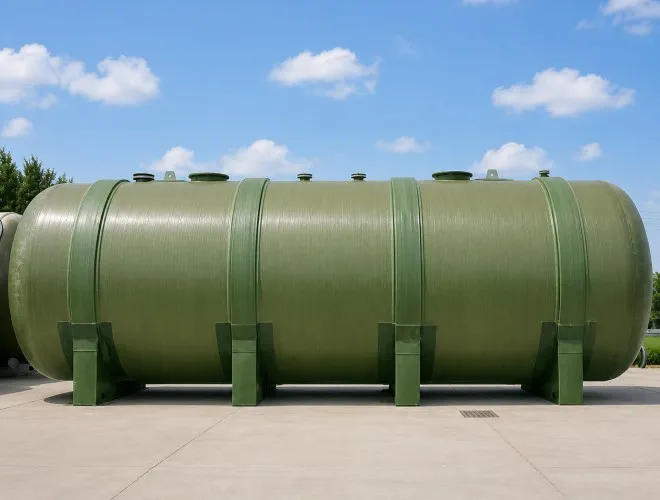
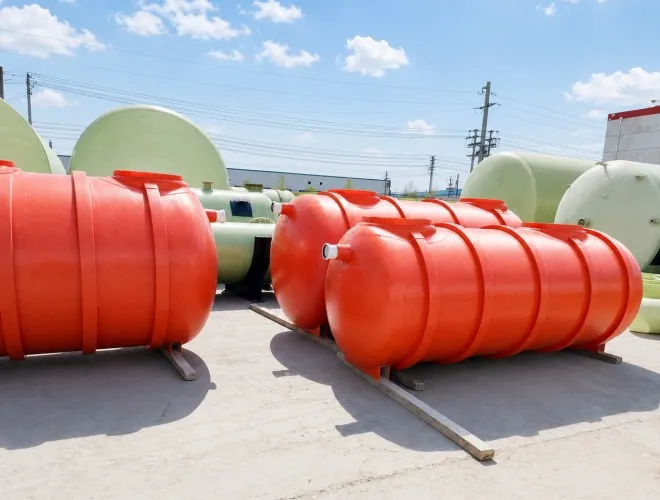
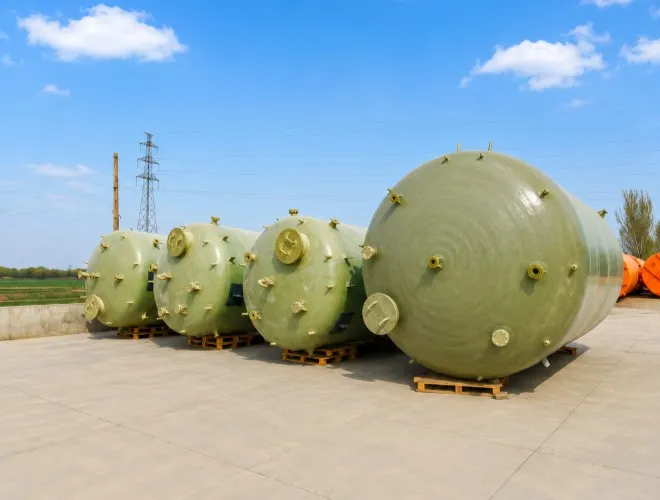
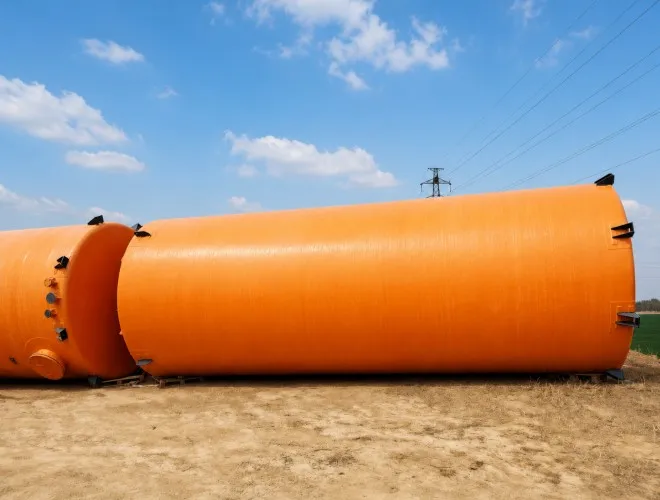
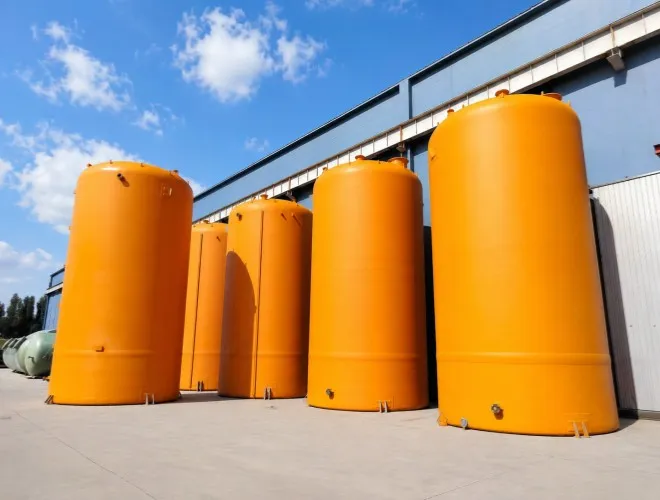
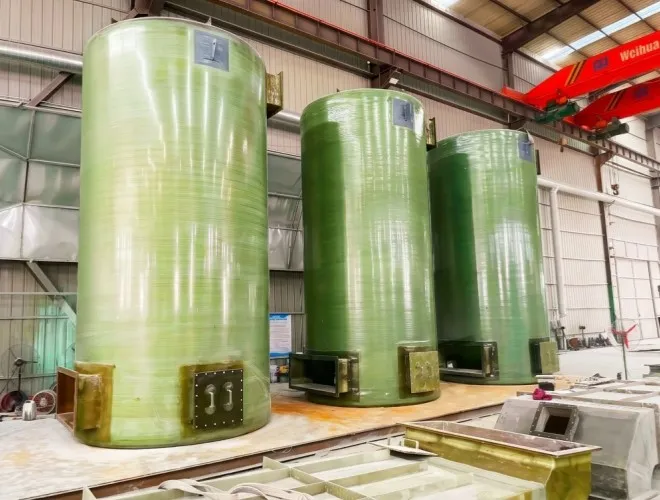
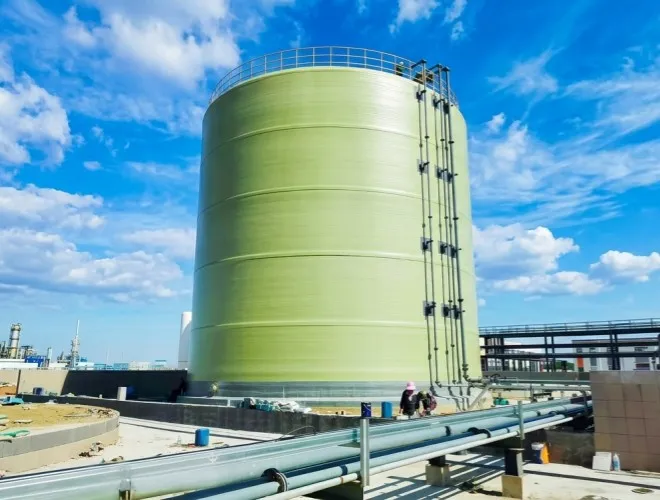
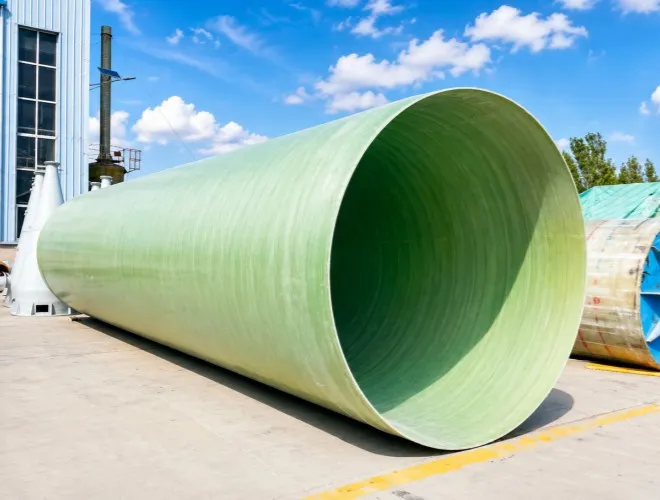
Based on the treatment capacity, site layout and interface conditions provided by the customer, Yingnai manufactured a vertical cylindrical FRP wastewater buffer tank for the project.
The tank was designed with the following engineering configuration:
Tank diameter of approximately 2.2 m
Overall equipment height of approximately 3.5 m
Nominal capacity of approximately 12 m³
Normal effective working volume of approximately 10 m³
Vertical flat-bottom construction
Closed top with a vent connection
Atmospheric-pressure operation
Installation indoors or in a sheltered area
Designed for temporary storage and continuous transfer of ammonia-containing industrial wastewater
At a treatment flow rate of approximately 5 m³/h, the 10 m³ effective working volume provides around two hours of process buffering.
Even when the upstream wastewater flow increases temporarily or the downstream stripping equipment requires flow adjustment, the tank can absorb process fluctuations within its designed operating range. This prevents sudden variations in wastewater flow from directly affecting the downstream treatment unit.
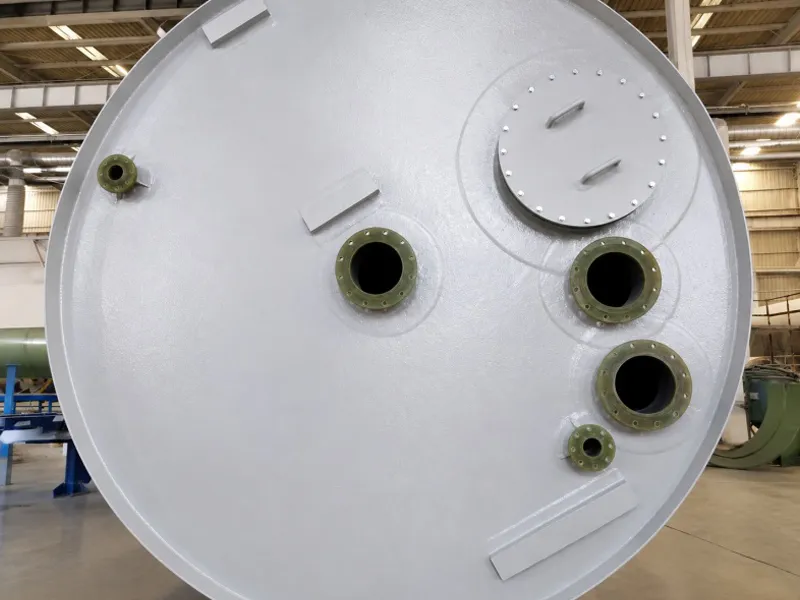
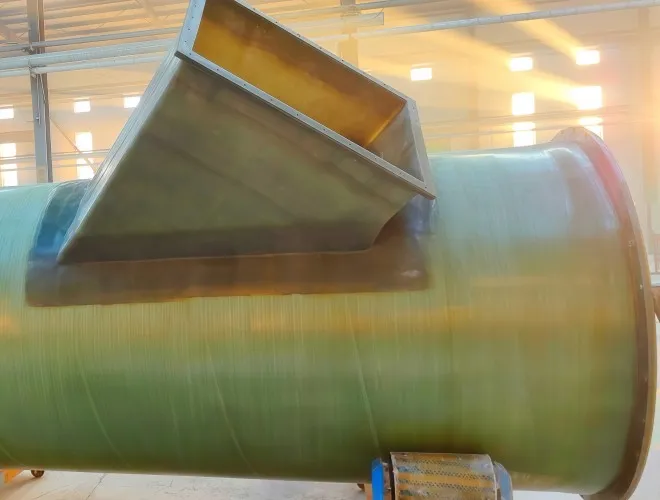
The tank is equipped with an inlet, pump suction outlet, overflow connection, bottom drain, vent, manway and level-instrument connections. The orientation and elevation of each nozzle were determined according to the customer’s piping layout.
Ammonia-containing wastewater from the production facility enters the FRP tank through the collection pipeline. During filling, the liquid level inside the tank is continuously monitored by a level transmitter, which sends signals to the control system.
When the liquid level reaches the preset pump-start point, the transfer pump starts and sends wastewater from the lower outlet of the tank to the ammonia stripping tower.
By regulating the pump and control valve, the wastewater flow entering the stripping tower remains within the specified range rather than fluctuating sharply with changes in the upstream discharge rate.
When the liquid level falls to the low-level set point, the transfer pump stops or changes operating status to prevent dry running. A high-level alarm indicates excessive upstream inflow or an abnormal condition in the downstream transfer system. Where necessary, overflow can be directed to the emergency containment system provided for the project.
The vent connection at the top of the tank maintains pressure balance between the inside of the tank and the surrounding atmosphere. Gases generated during filling and draining are routed to a centralized collection line or designated ventilation system according to the site’s environmental-control design.
This arrangement prevents the tank from being exposed to pressure or vacuum conditions for which it was not designed due to inadequate venting.
The bottom drain allows the tank to be emptied during shutdown, cleaning and maintenance. The manway provides access for internal inspection, cleaning and subsequent maintenance work.
Industrial wastewater discharge is often affected by production batches, equipment cleaning and process changeovers. As a result, the incoming flow may be intermittent rather than completely continuous.
If the wastewater were sent directly to the stripping tower, sudden flow variations could affect gas-liquid contact conditions inside the tower and interfere with system control.
By providing an appropriate effective working volume, the FRP tank converts intermittent inflow into a relatively stable continuous discharge, creating more consistent feed conditions for the downstream ammonia stripping unit.
In addition to ammonia, the wastewater may contain salts, acidic or alkaline components and other production residues. Continuous operation in a wet environment can also increase the corrosion-maintenance requirements of conventional metal tanks.
Yingnai reviewed the resin system according to the medium composition, concentration and operating temperature provided by the customer.
The tank uses an internal corrosion-resistant wetted laminate and an external glass-fiber-reinforced structural laminate. This configuration allows chemical resistance and liquid-load-bearing capacity to be addressed through separate but coordinated structural layers.
The tank needed to connect with the wastewater inlet pipe, transfer pump, overflow line, ventilation system, level instruments and drain piping.
Any deviation in nozzle orientation or elevation could prevent the field piping from being installed correctly.
Before production, Yingnai established a common directional reference based on the customer’s equipment layout drawing and nozzle schedule. The size, angle and elevation of each interface were confirmed, followed by dimensional verification after manufacturing.
The tank was designed with a combination of an internal corrosion-resistant laminate and an external structural reinforcement layer.
The wetted laminate is in direct contact with the wastewater. It provides a barrier against medium penetration and protects the reinforcing fibers behind it. The structural laminate was configured according to the tank diameter, liquid height, liquid density and installation conditions.
Local reinforcement was added around the inlet, outlet, manway and level-instrument connections to compensate for the effect of openings on the continuity of the tank wall.
The lower outlet area was arranged according to the pump suction requirements, helping to reduce residual liquid and allowing the tank to be emptied more effectively during shutdown.
Because connected valves and piping may generate additional loads, the technical documentation specified that heavy valves, pump assemblies and pipelines must be independently supported. This prevents their weight from being transferred directly to the FRP nozzles.
The principal manufacturing control points included:
1. Verification of resin and glass-fiber reinforcement materials
2. Impregnation quality and surface condition of the wetted laminate
3. Thickness and continuity of the tank-wall structural laminate
4. Tank diameter, height and vertical alignment
5. Nozzle orientation, elevation and flange condition
6. Tank bottom, tank roof and nozzle transition areas
7. Cure quality and equipment identification
After manufacturing was completed, the quality team inspected the tank in accordance with the approved drawings.
The inspection covered the overall appearance, principal dimensions, nozzle positions, manway, flanges and accessory condition.
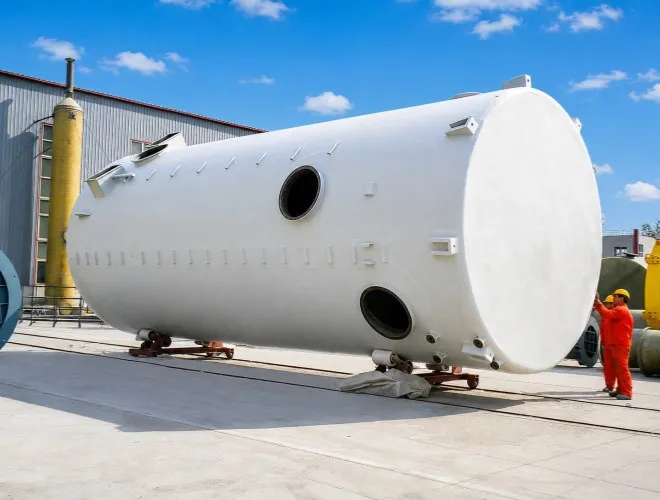
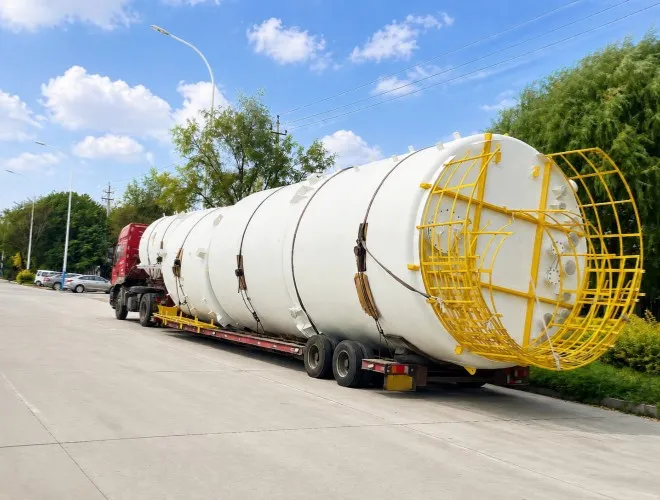
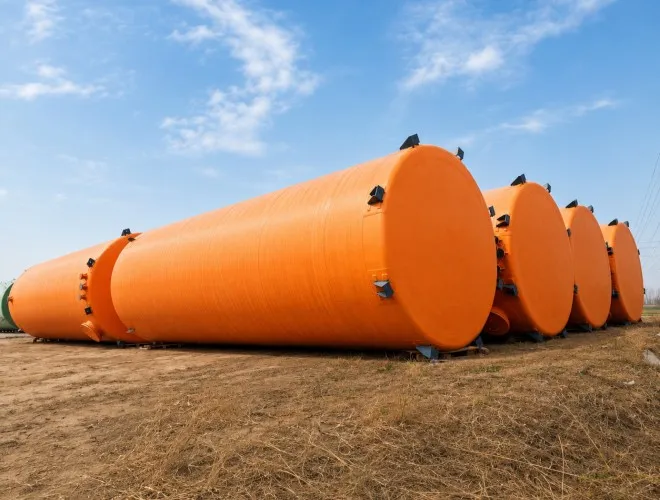
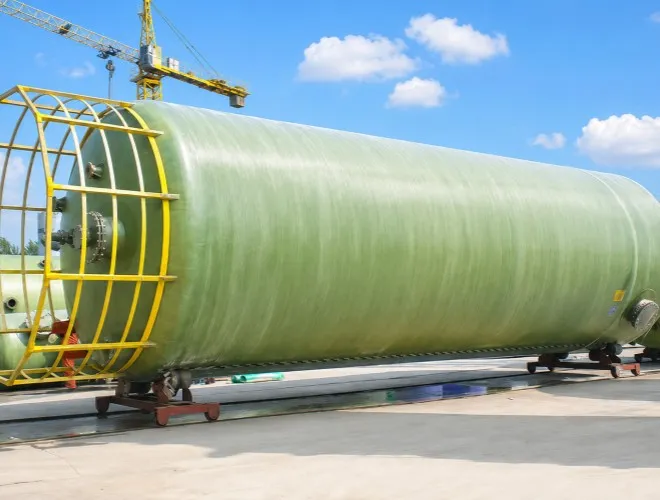
For long-distance international transportation, protective covers were installed on the nozzles, flanges and level-instrument connections. Transportation supports were provided beneath the equipment, while cushioning and securing measures were placed between the tank and the transport vehicle to reduce friction, impact and localized loading during shipment.
The delivery documentation included product identification, equipment drawings, lifting instructions, installation precautions and interface information.
After the equipment arrived at the project site, the technical team assisted in checking the foundation, lifting positions, equipment orientation and piping connection conditions based on the photographs and installation information provided by the customer.
After being incorporated into the treatment system, the FRP tank performs wastewater collection, flow buffering and stable feed-supply functions.
It creates a clear process connection between intermittent upstream wastewater discharge and continuous downstream treatment.
The main issues addressed by the project include:
Converting fluctuating wastewater inflow into a stable feed for the ammonia stripping tower
Providing approximately two hours of process-buffering capacity
Reducing the corrosion-maintenance burden associated with metal equipment exposed to ammonia-containing wastewater
Controlling transfer-pump operation through liquid-level interlocks
Reducing the risk of abnormal overfilling through an overflow connection and high-level alarm
Minimizing field piping modifications through customized nozzle arrangements
Reducing the difficulty of international transportation and site lifting through the relatively low weight of the FRP structure
Keywords
water treatment project, FRP tank, ammonia wastewater tank, fiberglass wastewater tank, FRP buffer tank
Meta Description
A Japanese ammonia-containing industrial wastewater treatment project used a customized FRP tank with an effective working volume of approximately 10 m³ for wastewater storage, flow buffering and stable feed to an ammonia stripping tower. This case study covers equipment configuration, operation, corrosion-resistant design, manufacturing inspection, international transportation and installation support.
 English