In chemical processing, water treatment, metallurgy, mining, electroplating, and many other industrial applications, the same liquid may be stored in either a vertical FRP tank or a horizontal FRP tank.
Both configurations can perform the basic storage function, but they differ significantly in footprint, foundation requirements, load distribution, transportation, support arrangement, nozzle layout, and maintenance access.
For that reason, the choice should not be based simply on which type is more common, or which one looks more suitable on a drawing.
The more useful questions are:
Where will the tank be installed? What will it store? How much capacity is required? How much space is available? Can the tank be transported to the site? What loads will it experience during operation?
Once these conditions are considered together, the choice between vertical and horizontal becomes much clearer.
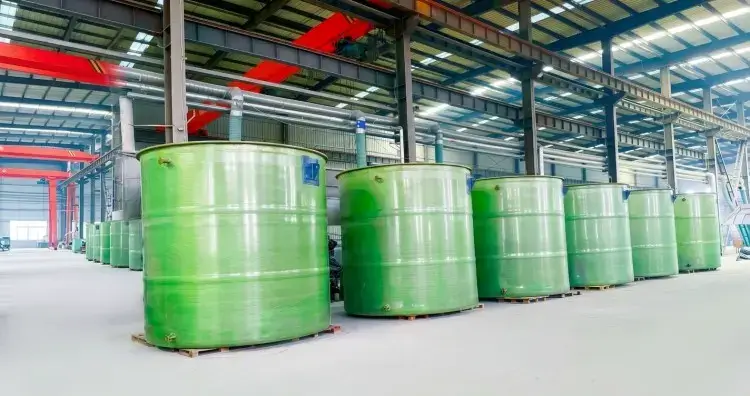
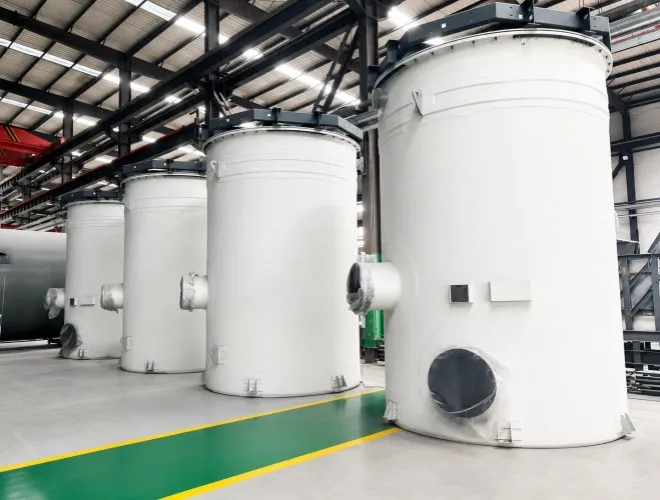
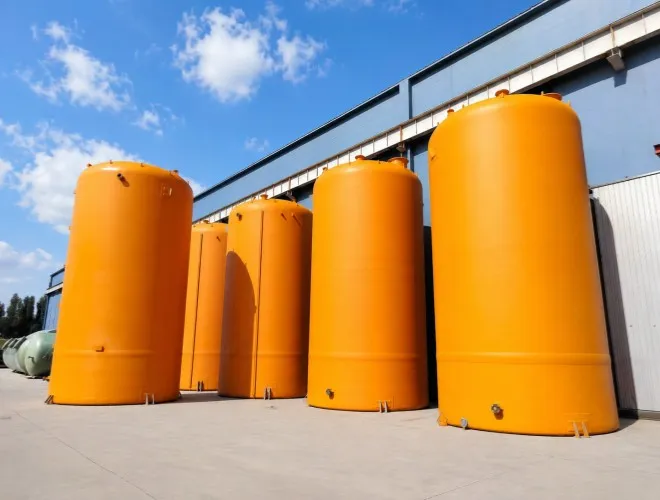
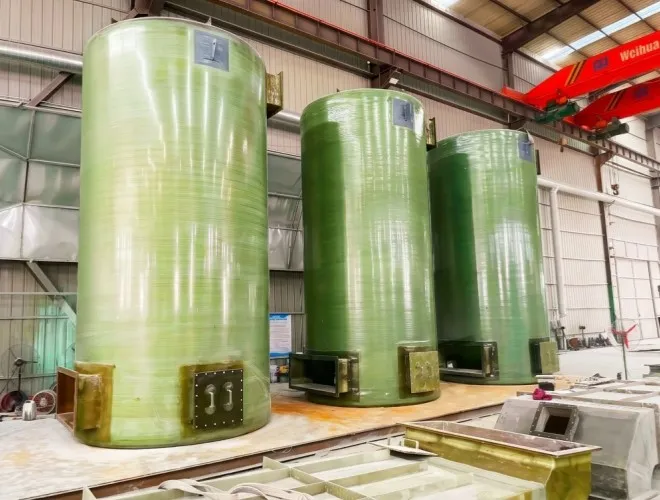
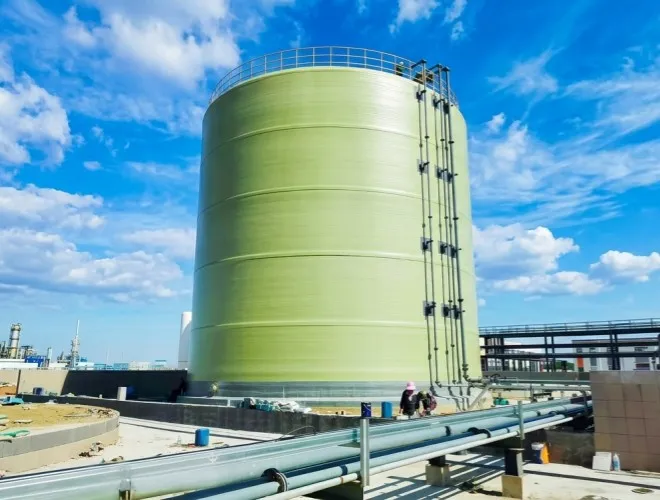
A vertical tank gains volume primarily through height, which makes it attractive where plant footprint is limited.
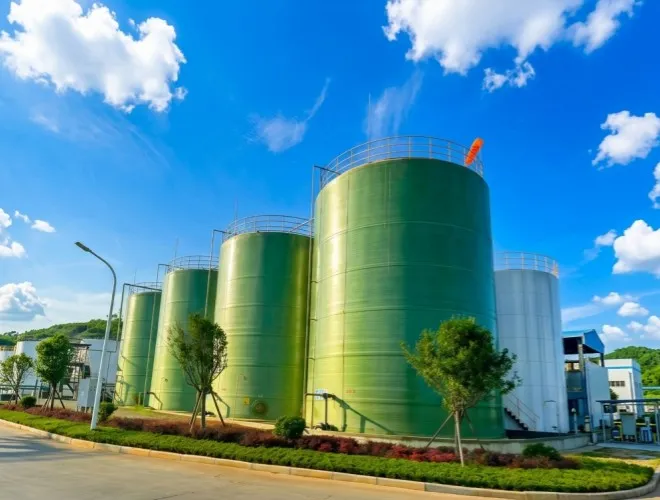
In chemical plants, wastewater treatment facilities, and process areas where several tanks must be installed close together, vertical tanks can provide substantial storage capacity without occupying excessive ground area.
For example, if a project requires several tens of cubic meters of storage and the site has limited horizontal space but no major height restriction, a vertical configuration may fit the overall layout more efficiently.
Vertical tanks also integrate naturally with many common process arrangements, including:
top inlet connections;
top venting;
side outlets;
bottom drains;
level instrumentation;
manways and roof-mounted accessories.
However, increasing tank height also changes the structural loading.
Hydrostatic pressure increases with liquid depth, which means the lower shell is subjected to greater internal pressure than the upper part of the tank.
For tall or large-diameter tanks, the structural laminate should therefore be designed according to actual liquid density and maximum operating level rather than assuming that the entire shell should have one uniform construction.
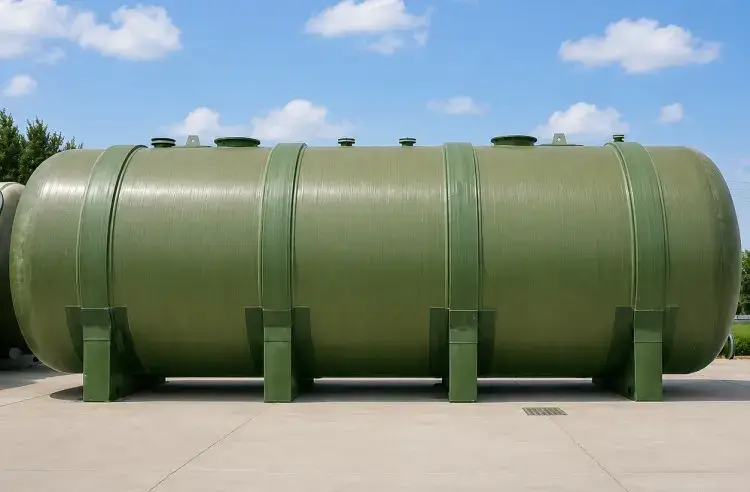
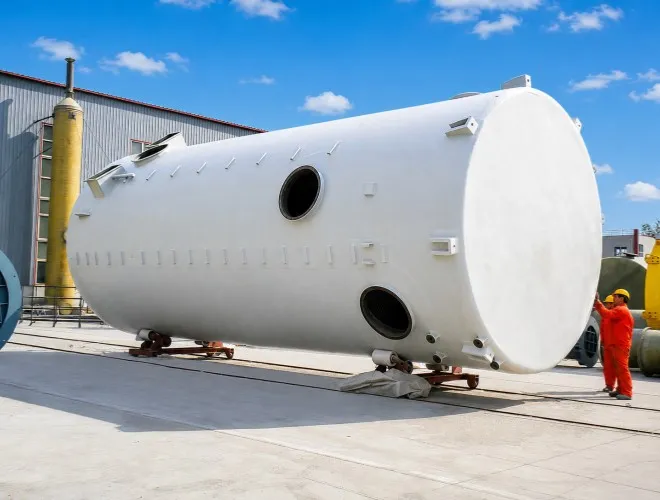
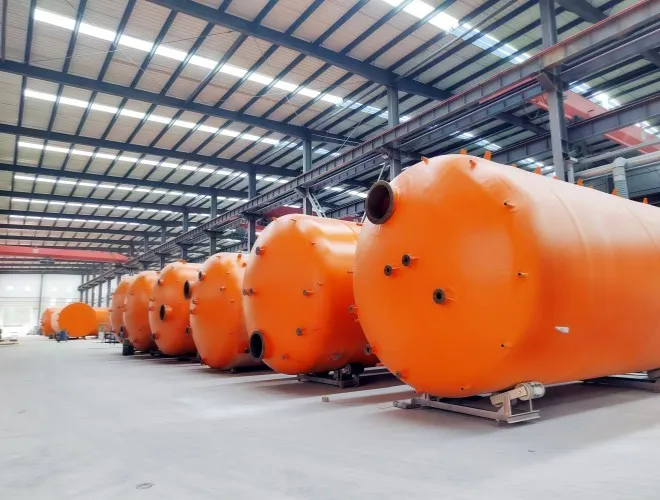
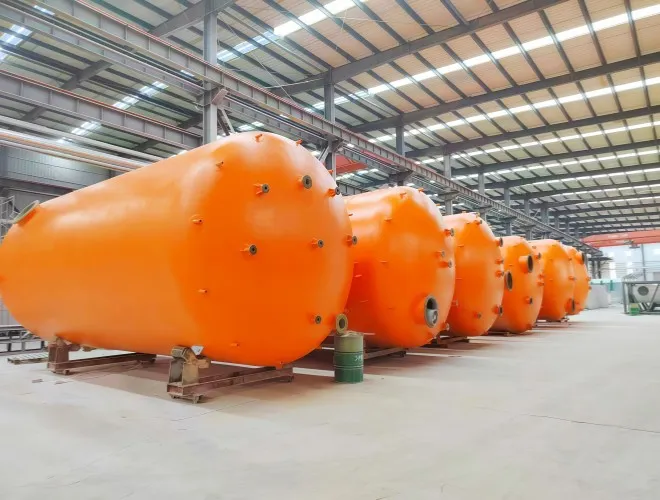
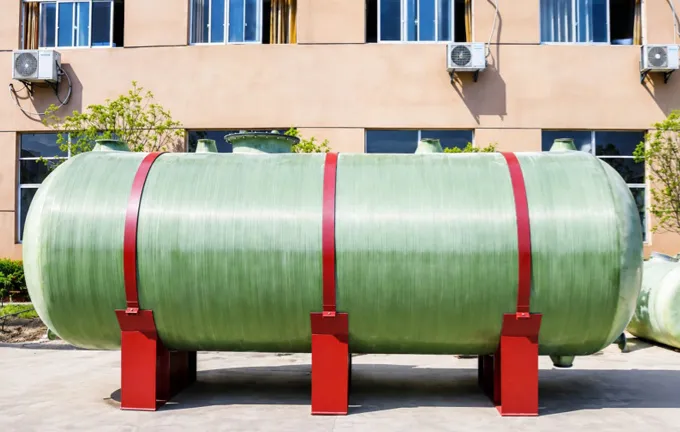
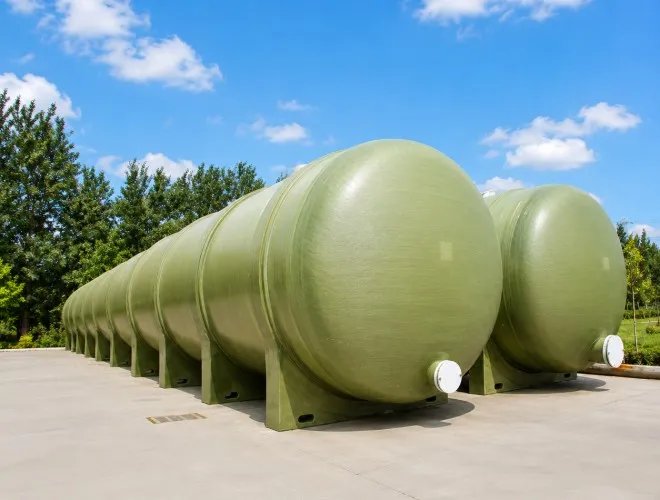
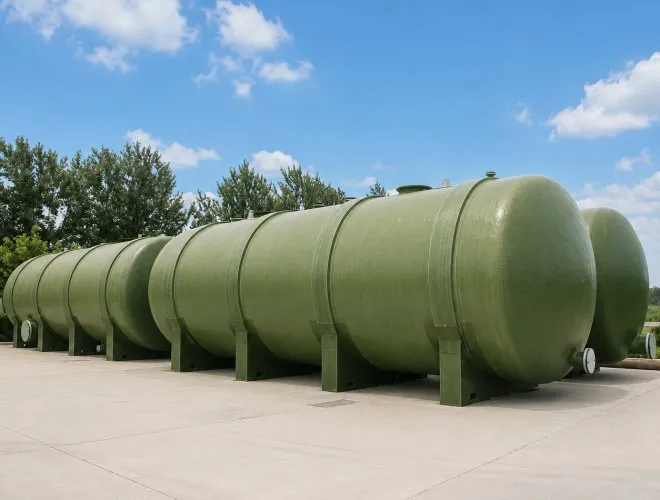
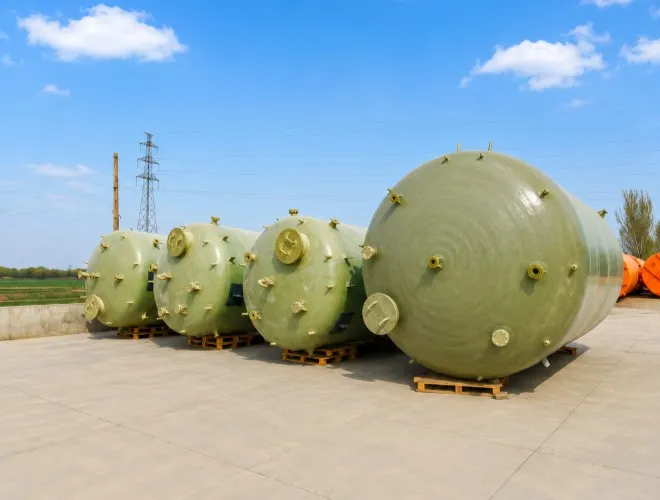
A horizontal tank extends its volume along the length of the vessel, so its overall height is lower.
This can be useful inside buildings, beneath pipe racks, below equipment platforms, or in areas where overhead clearance is limited.
Horizontal tanks are also practical where the required capacity is moderate and sufficient ground space is available.
Their structural behavior, however, is different from that of a vertical tank.
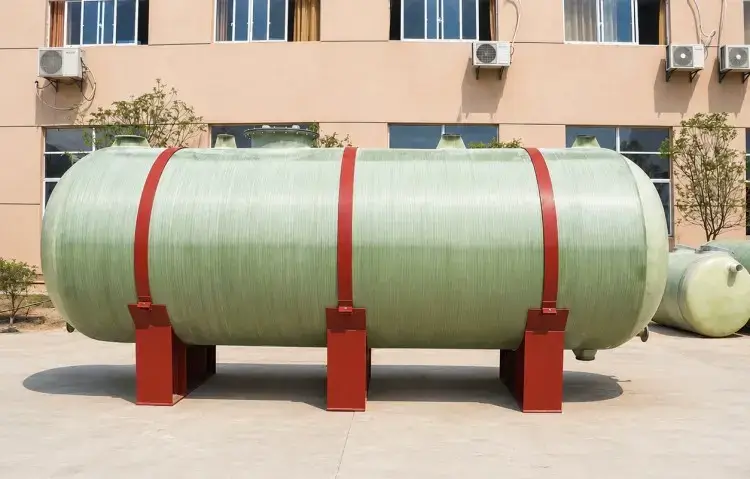
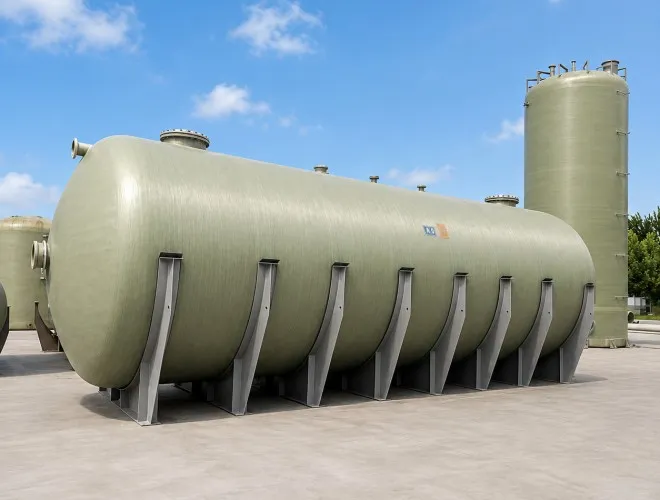
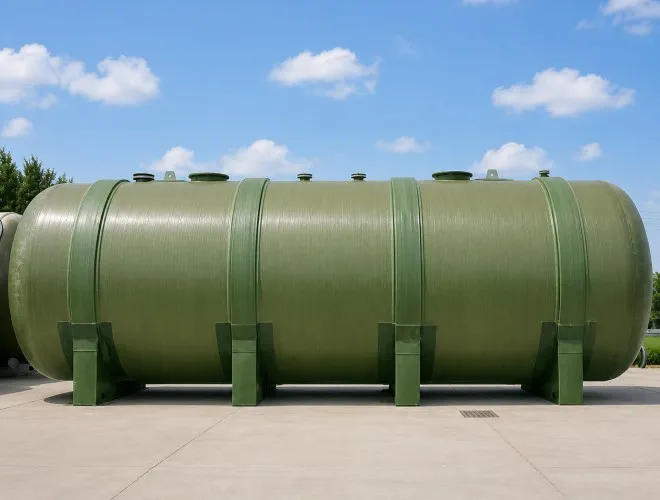
A horizontal vessel is normally supported on saddles or other localized supports. The liquid weight is transferred through the cylindrical shell into those support regions, which creates concentrated structural loads.
This means a horizontal tank should not simply be thought of as “a vertical tank turned on its side.”
Saddle spacing, support geometry, contact area, and local reinforcement all need to be considered as part of the vessel design.
The available space often provides the first indication of which configuration may be more practical.
ground area is limited;
sufficient overhead clearance is available;
storage capacity is relatively large;
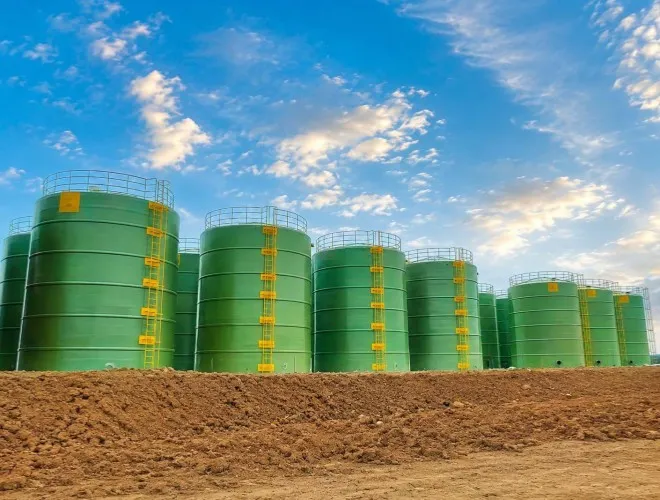
several tanks need to be grouped together;
the process layout benefits from vertical liquid-level variation.
building height is restricted;
more horizontal space is available;
the tank must fit beneath structures or platforms;
the size remains practical for transportation;
lower overall equipment height is preferred.
But space should only be the first filter.
A tank may physically fit into a location and still create problems later with foundations, transportation, access, or nozzle arrangement.
This is one of the most important points when comparing vertical and horizontal tanks.
Two tanks can have exactly the same working volume while having completely different:
liquid depths;
diameters;
lengths;
load distribution;
support conditions.
A vertical tank primarily carries liquid load through the bottom and cylindrical shell, with hydrostatic pressure increasing toward the lower part of the vessel.
A horizontal tank transfers weight through the shell toward the saddle supports, while also experiencing bending effects across the span between supports.
Capacity tells you how much liquid the tank can hold.
It does not tell you what shape the tank should have.
Structural selection should also consider:
liquid density;
normal and maximum liquid level;
tank diameter and length;
operating temperature;
external equipment loads;
support and installation method.
For dense acids, concentrated salt solutions, or mineral-processing liquids, the same volume can create much greater total structural loading than water.
Vertical tanks generally require a continuous, flat, and sufficiently strong support surface so that the bottom can transfer load to the foundation as evenly as possible.
If the foundation settles unevenly, additional stress may develop in the bottom and lower shell.
Horizontal tanks normally rely on saddles or defined support zones.
Because the load is concentrated into these areas, saddle location and local shell reinforcement become particularly important.
In both cases, one principle is critical:
The tank design and the foundation or support system must be considered together.
A structurally sound tank will not perform the same way on every possible foundation.
For large outdoor tanks, vessel height can make wind loading increasingly important.
Tall vertical tanks, especially those with a high height-to-diameter ratio, should be evaluated with the local wind environment, anchoring arrangement, and foundation conditions in mind.
In seismic regions, earthquake loading and liquid movement may also need to be considered.
Horizontal tanks generally have a lower profile, so their wind behavior differs from that of tall vertical vessels. However, this does not eliminate the need to evaluate external loads.
Saddles, anchors, foundations, empty weight, and full operating weight should still be checked against the project conditions.
For international projects, tank configuration should therefore not be selected independently of the installation location.
Vertical and horizontal tanks do not offer the same freedom for nozzle placement.
Vertical tanks often provide convenient locations for:
top filling;
venting;
level instruments;
manways;
side outlets;
low-point drains.
Horizontal tanks require more careful coordination between nozzle location, shell curvature, saddle position, and available access.
Before selecting the tank configuration, it is useful to define:
inlet location;
outlet and drain position;
manway size and orientation;
level instruments;
vent and overflow arrangement;
mixer requirements;
ladder or platform requirements.
If a large agitator is required, a vertical configuration may often provide a more natural arrangement around the vessel centerline.
However, the roof and shell must then be designed for the additional mechanical load.
For simple static storage, configuration can be driven more strongly by site and transportation constraints.
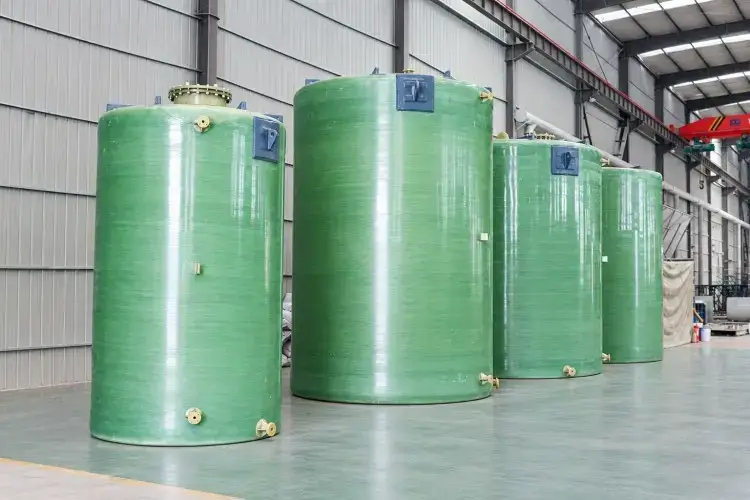
If the process requires the tank to be emptied as completely as possible, bottom geometry and outlet location become important.
A vertical tank can use a low-point outlet, sloped bottom, or other drainage arrangement to reduce residual liquid.
A horizontal tank has a different bottom geometry, so the lowest liquid point and drain position should be defined carefully during design.
This becomes especially important for liquids that tend to:
crystallize;
settle;
contain suspended solids;
require frequent cleaning.
The design should therefore consider not only how much liquid the tank can store, but also how effectively it can be emptied and cleaned.
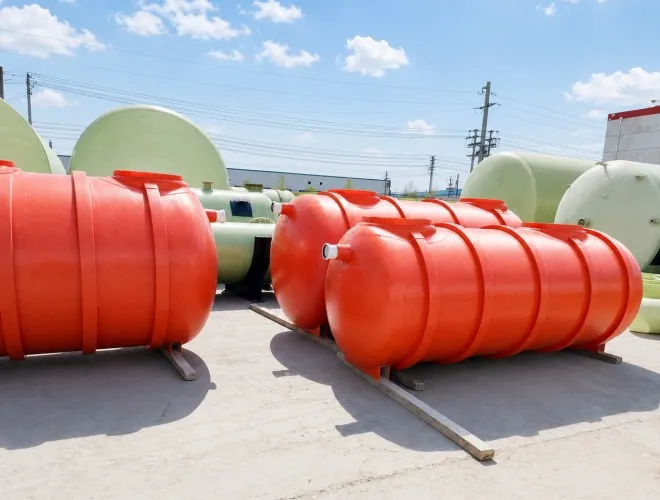
For small and medium tanks, complete factory fabrication followed by shipment is often convenient.
As dimensions increase, transportation limits can become a major design constraint.
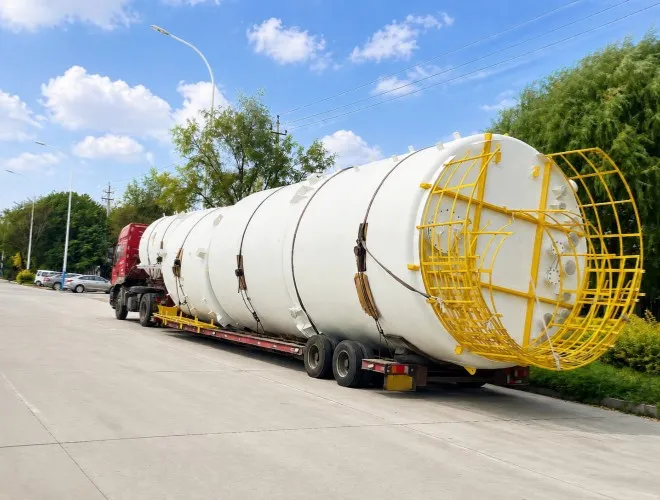
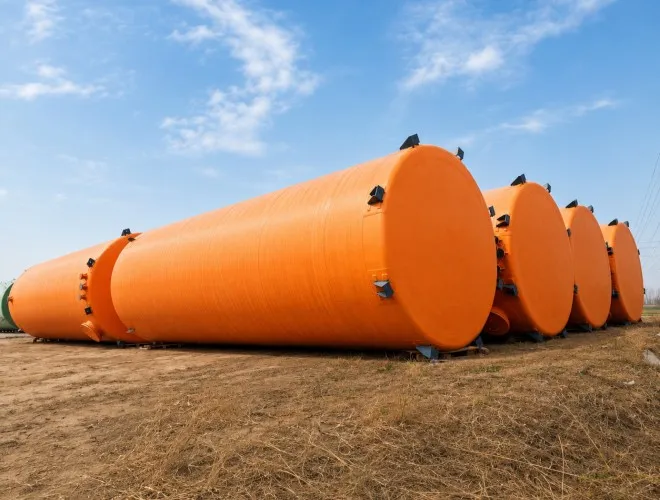
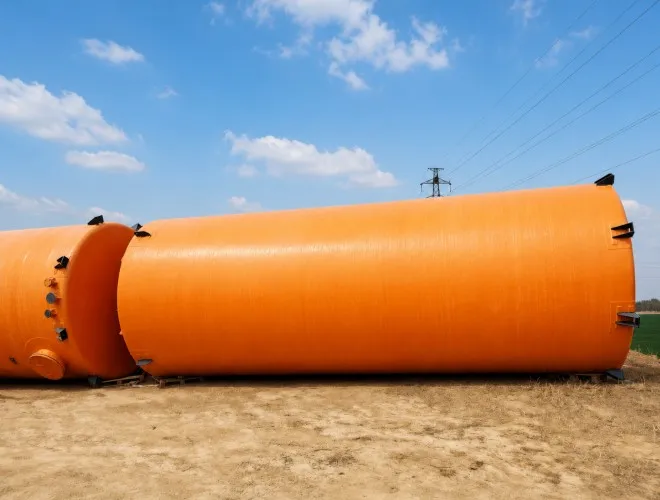
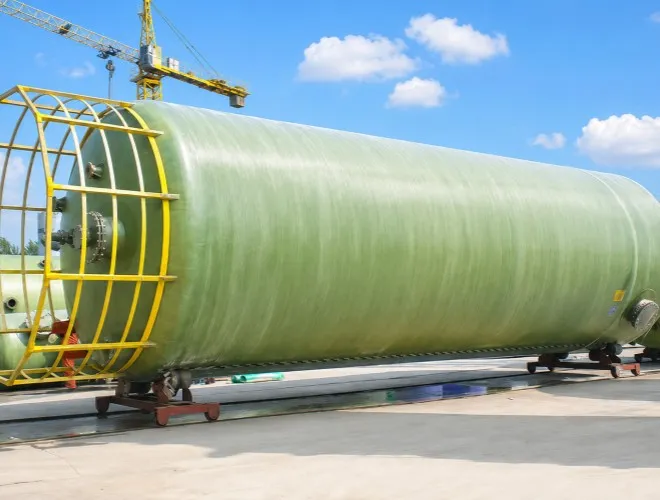
A vertical tank may be transported horizontally, but the vessel diameter still has to pass through road, bridge, and site-access restrictions.
A horizontal tank must satisfy both length and diameter limitations.
If either configuration exceeds practical transportation limits, the project may need to consider:
sectional fabrication;
site assembly;
or field fabrication.
For large equipment, transportation conditions should be checked early in the project rather than after the tank has already been manufactured.
Plant layouts often focus heavily on fitting equipment into the available space.
Future maintenance sometimes receives less attention.
Once the tank enters service, personnel still need access to:
manways;
valves;
instruments;
flanges;
drain connections;
vents;
ladders and platforms.
Vertical tanks may require more climbing access and elevated maintenance points.
Horizontal tanks are generally lower, but if they are installed too close to a wall or adjacent equipment, side nozzles and manways may become difficult to reach.
The most compact layout is not always the most practical layout.
Leaving reasonable inspection and maintenance space can be more valuable over the equipment's life than saving the last few centimeters of installation area.
Trying to rank vertical and horizontal tanks with one simple answer can be misleading.
A more useful approach is to compare them against the actual project requirements.
| Factor | Vertical Tank | Horizontal Tank |
|---|---|---|
| Ground footprint | Usually smaller | Usually larger |
| Height requirement | Higher | Lower |
| Large-capacity layout | Often advantageous | More affected by length and support requirements |
| Main support method | Continuous bottom support | Saddles or localized supports |
| Wind sensitivity | More important for tall tanks | Generally less pronounced |
| Nozzle arrangement | Flexible at top and sides | Must coordinate with shell curvature and supports |
| Transportation | Often limited mainly by diameter | Limited by both diameter and length |
| Maintenance access | May require elevated access | Often easier from ground level |
This table is useful for initial screening, but it does not replace structural design.
The final choice still depends on service conditions and site constraints.
If a project is still deciding between vertical and horizontal configurations, these questions can help narrow the choice:
What working capacity is actually required?
What are the maximum available height and footprint?
What are the liquid density and operating temperature?
Is agitation required?
Does the tank need complete drainage or frequent cleaning?
What are the local wind, seismic, and foundation conditions?
Can the completed tank be transported to the site?
Will manways, valves, and instruments remain accessible for maintenance?
Once these points are clearly defined, the most suitable configuration usually becomes easier to identify.
Vertical and horizontal tanks are simply two different ways of achieving the same basic storage function.
Vertical tanks generally use height more efficiently and reduce floor-space requirements.
Horizontal tanks are often better suited to height-restricted locations with sufficient lateral space.
Each configuration has its own structural logic for support, foundations, transportation, nozzle placement, and maintenance.
For Yingnai tank projects, the choice between vertical and horizontal configurations can be based on the stored medium, capacity, liquid density, available installation space, nozzle arrangement, foundation conditions, and transportation limits.
The goal should not be to choose whichever tank type is more common.
The goal is to select a configuration in which capacity, structure, site layout, transportation, installation, and maintenance all work together.
When those conditions are aligned, the chosen FRP tank configuration becomes part of the engineering solution rather than simply a different vessel shape.

 English